



Loose cords have a way of making even a clean home feel unfinished. A TV looks crooked when cables hang below it. A desk feels cluttered when chargers snake across the floor. And behind the couch, there is usually a tangled mess no one wants to talk about.
Most homeowners do not want to tear open walls or spend a fortune just to hide a few wires. They want practical fixes that look good, do not create safety issues, and fit a normal budget. The good news is that you can hide cords in almost any room with simple materials and a bit of planning.
This guide walks through realistic, proven ways to manage cords. There are no gimmicks and no complicated installs. You will also see where a solution is beginner friendly and when it is better to slow down or call for help.
What to Consider Before You Start
Before you buy anything or drill a single hole, take a few minutes to think through the situation.
Identify the Type of Cords
Not all wires should be treated the same.
Low voltage cords such as TV cables, HDMI, and speaker wire are easier to hide.
Power cords need more care and should never be run inside walls unless they are rated for that use.
If you are unsure what type of cord you are dealing with, assume it is a power cord and choose the safer option.
Think About Access
Ask yourself a few practical questions before hiding anything.
Will you need to unplug this often?
Will you rearrange furniture soon?
Is this a temporary setup or a long term solution?
Hidden cords are convenient until you need to reach them quickly.
Match the Solution to the Room
Different rooms benefit from different approaches.
A home office can handle visible cord channels.
A living room usually looks best with cleaner, less noticeable methods.
Bedrooms often need flexibility for lamps, alarms, and chargers.
Budget and Time Expectations
Most cord hiding solutions cost between ten and forty dollars per room and take about thirty minutes to two hours. Any option that involves walls or paint will take more time and increase cost.
Surface Solutions That Practically Disappear
These are the safest and most accessible options for most homeowners.
Paintable Cord Covers (Raceways)
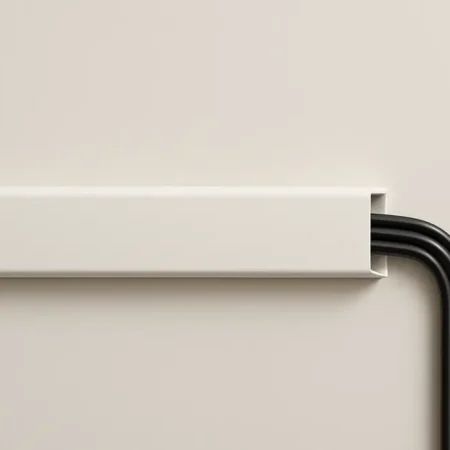
Cord covers are plastic channels that stick to the wall and snap closed over wires.
They work well because they require no drywall cutting, are affordable, and are easy to find. Once painted to match the wall, they blend in surprisingly well.
Basic installation involves measuring the cord path, cutting the channel to size, sticking it to the wall with the adhesive backing, and painting it after installation for best results.
Skill level is beginner. Cost is low. Time required is about forty five minutes.
A helpful tip is to paint the cover after mounting it. Pre painted pieces often need touch ups anyway.
Baseboard Cord Channels
Some cord covers are designed to sit just above the baseboard.
They work especially well in living rooms with wall mounted TVs and bedrooms where outlets are far from lamps. Because the eye already expects a line along the baseboard, these channels naturally disappear into the room.
Furniture Based Hiding Tricks
If you do not want to touch the walls at all, furniture can do most of the work.
Using Furniture as a Shield
TV consoles, bookshelves, and cabinets can block cords completely when used correctly.
Running cords behind furniture legs, securing cables to the back panel with clips, and placing power strips inside baskets or boxes within cabinets all help reduce visible clutter.
This method is low risk and ideal for renters.
Under Desk Cable Trays
In offices, cables tend to collect around your feet and create visual and physical clutter.
Installing a metal or fabric tray under the desk allows you to mount the power strip inside it and run a single cord down to the outlet. The desk looks cleaner immediately, and cleaning the floor becomes much easier.
Creative Low Profile Techniques
These solutions take a bit more planning but still avoid major construction.
Cord Clips Along Natural Lines
Small adhesive clips can guide cords along existing features such as window trim, door frames, and shelf edges.
When cords follow lines the eye already expects to see, they become far less noticeable.
Fabric Cord Sleeves
For clusters of cables, fabric sleeves bundle everything into one clean line.
They work well for standing desks, entertainment centers, and floor level cords. Neutral colors tend to blend best with furniture and flooring.
Hiding Wires in Plain Sight and Making Them Look Intentional
Sometimes full invisibility is not realistic. In those cases, the goal is to make cords look deliberate.
Match Cord Color to the Wall
White cords against white walls often disappear more than expected. The same applies to darker cords on darker walls.
If replacement cords are available for your device, checking color options can make a noticeable difference.
Decorative Cord Covers
Wood look or fabric wrapped covers can feel intentional rather than distracting.
They fit well in vintage style rooms, industrial spaces, and home offices. They may not vanish completely, but they stop being visual problems.
In Wall Options and Important Safety Considerations
Running cables inside walls offers the cleanest look, but it comes with risks.
What Can Be Hidden Safely
HDMI cables
Ethernet cables
Speaker wire
Low voltage audio and video cables
What Should Not Be Hidden
Standard power cords should never be placed inside walls unless you are using a rated in wall system.
A Safer Alternative
In wall cable management kits designed for TVs use proper materials and meet safety standards.
Skill level is intermediate. Cost is moderate. Time required is about one to two hours.
If drilling into walls feels uncomfortable, this is a good point to stop and choose a surface solution instead.
Room by Room Practical Tips
Living Room
Combine a TV console with cord covers for the cleanest look.
Hide power strips behind furniture instead of leaving them exposed.
Avoid running cords across walkways where they create tripping hazards.
Bedroom
Use nightstands with rear cutouts for lamps and chargers.
Clip lamp cords neatly along bed frames.
Keep chargers accessible rather than burying them behind furniture.
Home Office
Mount power strips under desks to reduce clutter.
Group cords by function such as monitors and chargers.
Leave slack for adjustable or standing desks.
Kitchen
Use adhesive clips under cabinets for small appliances.
Keep cords away from sinks and heat sources.
Avoid permanent installations unless absolutely necessary.
Common Mistakes to Avoid
Overloading power strips is a frequent problem. Hiding cords does not change electrical limits, so avoid stacking adapters or exceeding outlet capacity.
Cheap adhesives often fail over time, especially on textured walls. Always clean surfaces first and use reliable products.
Making cords too tight causes wear and makes future adjustments difficult. Always leave some slack.
Ignoring heat can be dangerous. Cables need airflow and should not be bundled tightly near electronics that run hot.
Safety Notes Worth Repeating
Never run standard power cords inside walls.
Keep cords away from sharp edges.
Replace damaged cables immediately.
Do not hide cords where they cannot be inspected.
Cord control should improve safety, not introduce hidden risks.
Final Thoughts: Clean Does Not Mean Complicated
You do not need a remodel to get rid of messy wires. Most cord problems can be solved with simple surface solutions, smart furniture placement, and a little patience.
The goal is not perfection. It is comfort and function. If cords are out of sight, easy to access, and safely managed, you have done the job right.
Start small. Tidy one room. Learn what works for your space. Over time, those small improvements add up to a home that feels calmer, cleaner, and more intentional without pretending wires do not exist at all.

Other Articles

The Luxury of Warmth: Is Radiant Floor Heating Right for You?
Weekend Upgrade: How to Frame Your Builder-Grade Bathroom Mirror



No Comment! Be the first one.