



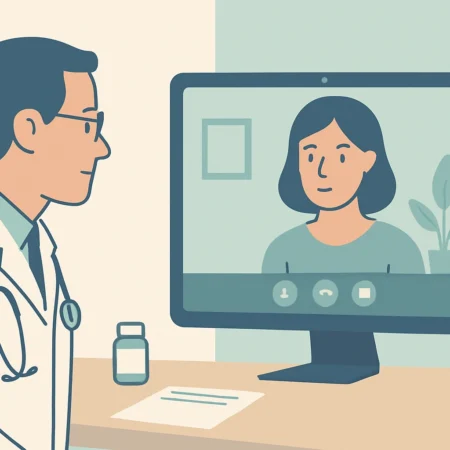
Telehealth has revolutionized how we access healthcare, bringing doctor visits into our living rooms. This convenience, however, comes with new complexities. When a prescription ordered during a virtual visit is incorrect and causes harm, a difficult question arises: Who is legally responsible? The answer is not always straightforward, involving the prescribing doctor, the telehealth platform, evolving regulations, and the technology itself.
Understanding liability in this digital age requires looking at traditional medical malpractice principles through a new lens and considering the unique risks of remote care.
The Unchanged Legal Foundation in a Changing System
Despite the digital medium, the core legal duty of a healthcare provider remains the same. When a doctor-patient relationship is established—whether in an office or via a video call—the provider has a “duty of care.” This means they must provide treatment that meets the accepted medical standard, which is what a reasonably skilled and careful doctor would do under similar circumstances.
A breach of this duty, which then directly causes a patient harm, can form the basis of a medical malpractice claim. The challenge with telehealth is defining what that “similar circumstance” is and how the standard applies when a physical exam isn’t possible.
Where Things Go Wrong: Common Sources of Telehealth Prescription Errors
Prescription mistakes in telehealth often stem from the inherent limitations of virtual visits and system flaws.
- The Diagnostic Gap: The most significant risk is misdiagnosis. Studies indicate that roughly 66% of telemedicine-related malpractice claims involve a failed or delayed diagnosis. Without the ability to physically examine a patient, doctors rely heavily on patient descriptions and what they can see or hear through a screen. Subtle symptoms can be missed, leading to an incorrect condition being treated and, consequently, the wrong medication being prescribed.
- Technology and Workflow Failures: The process of e-prescribing is prone to specific technical errors. One study found that 16.1% of electronic prescriptions containing free-text instructions had internal discrepancies between structured fields (like dose and frequency) and the doctor’s typed notes. The researchers estimated that most of these discrepancies could lead to adverse patient events. Poor video/audio quality can also lead to misunderstandings about symptoms or medical history.
- Follow-Up and Continuity Breakdowns: Telehealth can sometimes create a disjointed care experience. A provider may fail to order necessary follow-up tests, neglect to review past medical records for potential drug interactions, or not have a system to track a patient’s response to a new medication. This breakdown in care continuity can turn a simple prescription error into serious harm.
Untangling Liability: Who Might Be Held Responsible?
When a patient is harmed by a bad telehealth prescription, liability may fall on one or more parties.
The Prescribing Healthcare Provider The doctor or nurse practitioner who wrote the prescription is typically the primary focus. They are expected to:
- Conduct a sufficiently thorough virtual assessment.
- Take an accurate patient history.
- Know the limitations of telehealth and recommend an in-person visit when necessary.
- Ensure their license is valid in the state where the patient is physically located.
If they prescribe medication that falls below the accepted standard of care—for example, prescribing a powerful drug without a proper virtual evaluation or ignoring clear red flags in a patient’s history—they can be held directly liable.
The Telehealth Platform or Company The platform facilitating the visit may also share liability, depending on its business model and actions.
- Employer Model: If the platform employs the doctors directly, it can often be held “vicariously liable” for their negligence, just as a hospital can be for its staff.
- Marketplace Model: If the platform simply connects independent contractor doctors with patients, its liability is more limited. However, the company could face claims if it misrepresents a provider’s qualifications, uses deceptive marketing, or employs a faulty algorithm that influences care.
- Technology Provider: If the error is traced to a glitch in the platform’s own software—such as an e-prescribing module that corrupts data or sends a prescription to the wrong pharmacy—the platform could face a product liability claim.
The Role of Artificial Intelligence and Software Some platforms incorporate AI-based clinical decision support tools. This creates a new frontier for liability questions. Is the doctor liable for blindly following an AI’s incorrect suggestion, or is the software developer liable for a faulty algorithm? Legal experts are actively debating frameworks for this, but currently, the physician’s duty to apply independent clinical judgment remains paramount.
The Regulatory Landscape: Rules for Prescribing, Especially Controlled Substances
Laws governing telehealth are in flux, directly impacting prescribing rules. During the COVID-19 pandemic, many restrictions were temporarily lifted. While major Medicare telehealth flexibilities have been extended through 2026, a potential “telehealth policy cliff” looms in late 2025 if Congress does not act.
For controlled substances (like certain painkillers, stimulants, or anxiety medications), the Drug Enforcement Administration (DEA) has established new rules. Key provisions include:
- In-Person Visit Requirement: Generally, after an initial in-person medical evaluation, controlled medications can be prescribed via telehealth indefinitely. New rules propose a “special registration” process for providers to prescribe certain controlled substances without that first in-person visit, but with stricter requirements.
- Platform Accountability: For the first time, online platforms that facilitate prescriptions will be required to register with the DEA, adding a layer of oversight.
- State Laws Apply: Providers must still comply with the often-varying prescription and licensing laws of the state where the patient is located.
Practical Steps for Patients and Providers
For Patients:
- Verify the Provider: Confirm your telehealth doctor is licensed in your state.
- Prepare for the Visit: Have your medical history, current medications, and pharmacy information ready. Write down your symptoms and questions beforehand.
- Ask and Disclose: Clearly describe your symptoms. Disclose all medications and supplements you take. Ask what the doctor can and cannot assess virtually.
- Understand the Prescription: Before ending the visit, confirm the medication name, dose, and instructions. Ask why it’s been chosen and about potential side effects.
- Get Follow-Up Instructions: Know the plan for follow-up, refills, and when to seek in-person care.
For Providers (Risk Mitigation):
- Obtain Informed Consent: Specifically discuss the limitations of telehealth and document the patient’s consent to virtual care.
- Know Your State Laws: Ensure compliance with licensing and prescribing rules in the patient’s state.
- Document Meticulously: The medical record should thoroughly reflect the virtual exam, clinical reasoning, any limitations encountered, and follow-up plans.
- Err on the Side of Caution: Have a low threshold for recommending an in-person evaluation when a virtual assessment is insufficient.
- Verify Insurance Coverage: Confirm your malpractice insurance explicitly covers telehealth services.
Key Takeaways
The convenience of telehealth does not dilute the standard of care expected in medicine. When a prescription error occurs, liability is determined by applying enduring legal principles to novel digital circumstances. The prescribing clinician holds central responsibility, but the platforms that enable care may also be accountable, especially if their technology fails or their business practices are negligent.
As telehealth continues to evolve, so too will the legal precedents that define responsibility. For now, clear communication, thorough documentation, and a cautious awareness of telehealth’s limitations remain the best guides for safe care and clear liability lines.

Other Articles





No Comment! Be the first one.