



If you’ve ever found yourself scrolling through social media, paused by a grainy photo of a famous actor walking their dog or buying a coffee, and felt a genuine flicker of interest, you’re not alone. In our modern media landscape, the lives of celebrities have become a form of open-source narrative, where every public appearance, relationship milestone, or fashion choice is dissected for hidden meaning.
We don’t just admire their work; we feel an insatiable need to know them. But why do some figures become the epicenter of this endless curiosity, turning their lives into a cultural puzzle we feel compelled to solve?
The answer lies in a complex interplay of ancient psychology, modern media machinery, and our own very human need for connection and meaning.
The Psychological Blueprint: It’s in Our DNA to Follow
At its core, our fascination with celebrities is not a modern frivolity but a behavior rooted in our social DNA. Experts suggest we are “biochemical sitting ducks” for the star system, as our brains are evolutionarily primed to pay attention to alpha figures, the leaders, the successful, the extraordinary members of the “pack”.
This instinct manifests in several key psychological phenomena.
Social Comparison Theory
As clinical psychologist Dr. Mehezabin Dordi explains, we have a natural tendency to compare ourselves to others, and celebrities often represent an “ideal of beauty, success, and lifestyle” that many aspire to. Watching them provides a constant, if often unrealistic, point of reference for our own lives and ambitions.
Parasocial Relationships
More profound is the concept of parasocial relationships. These are one-sided bonds where a fan extends emotional energy and interest toward a celebrity who is completely unaware of their existence. The media, especially television and social media, creates the powerful “illusion of a face-to-face relationship”.
We watch them in our homes, follow their curated stories, and feel we understand their personalities. This perceived intimacy transforms them from distant icons into pseudo-friends or confidants, making their “real” lives feel tantalizingly close and relevant.
When Admiration Turns Intense
This parasocial dynamic can range from harmless admiration to something more intense. Psychologists measure this spectrum with tools like the Celebrity Attitudes Scale, which identifies stages from casual entertainment to “intense-personal” feelings (viewing the celebrity as a soul mate) and even “borderline-pathological” behaviors.
For most, it’s a harmless diversion. But for some, as psychologist Eric Hollander notes, the focus on a celebrity can become a substitution for real-life connections, leading to potential issues with self-esteem, anxiety, and social functioning.
The Modern Echo Chamber: How Media Fuels the Fire
While the predisposition might be innate, today’s media ecosystem acts as a relentless accelerant. We have moved far past the era when, as psychologist Abby Aronowitz points out, a star’s life was hidden from the public. Now, we have a 24-hour news cycle dedicated to serving every morsel of a celebrity’s existence.
Paparazzi and fan phones ensure that even the most mundane act, a stroll, a coffee run, a trip to the pharmacy, is captured and commodified. As noted paparazzo Manav Manglani states, “It’s all about what and whom people love and get inspired by; we just help them stay connected”.
The Vicious Cycle of Relevance
This content creates a vicious cycle of relevance: media outlets cover it because it generates clicks and audiences, which in turn demands more content.
Social Media and the Illusion of Access
Furthermore, social media has demolished the last remaining barriers. Platforms offer a “direct connection” that intensifies the culture of obsession.
When a celebrity posts a “candid” photo or shares a personal thought, it feels like a direct message to us, deepening the parasocial bond. A spontaneous fan sighting can go viral in minutes, creating a shared global moment that makes followers feel part of an exclusive club.
This environment turns silence into a potent strategy and mystery into momentum, keeping the public hooked even when there is no concrete news.
The Celebrity as Co-Conspirator: Crafting the Aura of Mystery
It would be a mistake to view celebrities as merely passive victims of this curiosity. Many are active architects of their own enigmatic allure. In an age of overexposure, calculated visibility becomes a sophisticated tool.
Many “spontaneous” sightings or “leaked” moments are, in fact, carefully orchestrated. PR consultants and celebrities themselves understand the power of a well-timed, “candid” appearance to promote a project, shift a narrative, or simply stay culturally relevant.
“These moments allow individuals to feel part of something exclusive and aspirational,” notes PR consultant Arva Kadi, which is why the excitement persists even when we suspect the encounter was staged.
The Accessible Mystery
This dance between revelation and concealment creates what we might call the accessible mystery.
Celebrities offer just enough glimpses into their “normal” lives, eating street food, haggling at a market, playing with their children, to seem relatable and down-to-earth. Yet, these glimpses are carefully filtered.
This curated authenticity sustains the fantasy: they are just like us, but better; their world is touchable, but still enchanted. They manage to be both an aspirational ideal and a pseudo-friend, a combination that is incredibly potent for maintaining public fascination.
When Curiosity Curdles: The Shadow Side of Obsession
For all its entertainment value, the machinery of celebrity curiosity is not without significant costs. The same forces that create relatable icons can also inflict real harm.
The Public Cost: Celebrity Worship Syndrome
For the public, an unhealthy immersion in these parasocial worlds can lead to what researchers term Celebrity Worship Syndrome. Studies have linked high levels of celebrity worship with poorer mental health, including symptoms of depression, anxiety, and social dysfunction.
The constant comparison to curated, airbrushed lives can distort self-image and erode self-worth. When the object of worship stumbles or falls, some fans can experience profound distress, feeling the loss as personally as that of a close friend.
The Celebrity Cost: Privacy and Safety
For the celebrities themselves, the price is a loss of privacy and, at the extreme end, personal safety. Research into the harassment of public figures shows a continuum that begins with fan mail and can escalate to threatening letters, inappropriate visits, and physical stalking.
The line between a devoted fan and a problematic obsessive is frustratingly blurry, both in psychology and in law. The very accessibility that fuels fandom can also open the door to peril.
A More Conscious Curiosity: Finding the Balance
So, where does this leave us, the perpetually curious public? Is our fascination inherently toxic? Not necessarily. Like most things, it exists on a spectrum.
Celebrity influence can be powerfully positive. When figures like Princess Diana interacted with HIV patients or Deepika Padukone spoke about mental health, they used their platform to normalize taboo issues and drive social change. A celebrity’s advocacy for health research or a social cause can raise awareness far more effectively than any government campaign.
In this light, admiration can inspire us to set higher goals and engage with important issues.
Mindful Consumption
The key, as experts emphasize, is mindful consumption. It’s the difference between enjoying the glamour of a red carpet and letting a celebrity’s curated life become the benchmark for your own happiness.
It’s recognizing the parasocial relationship for what it is, a narrative, a performance, a one-way street.
Redirecting Curiosity Toward Real Life
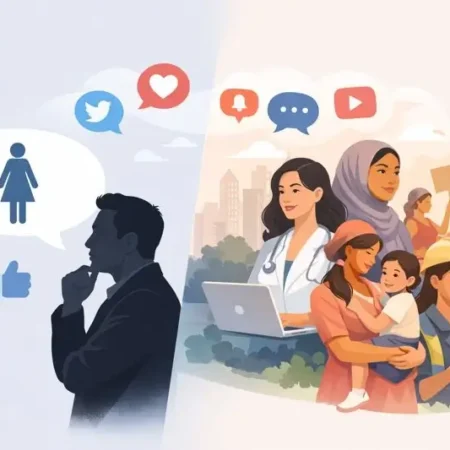
Perhaps the most valuable insight is to redirect a fraction of that relentless curiosity inward and toward the people around us. As the Harper’s Bazaar analysis wisely concludes, the “lopsided cycle of endless attention” to a few famous individuals can keep us from seeing “the truly extraordinary things people around us may be doing”.
The most compelling stories, the most genuine connections, and the most admirable triumphs often exist far from the glare of flashbulbs.
Closing Thought
In the end, the question “Does anyone have tea on…?” reveals less about the celebrity in question and more about ourselves. It speaks to our desire for narrative, our yearning for connection, and our endless search for idols in a complex world.
By understanding the mechanics behind this curiosity, we can engage with celebrity culture not as passive consumers, but as thoughtful observers, able to enjoy the spectacle without losing sight of our own, wonderfully unscripted, realities.

Other Articles




No Comment! Be the first one.