Your toilet is running. Again.
You can hear it from the hallway — that constant, quiet hiss of water that never quite stops. Maybe you already replaced the flapper. Maybe you watched two YouTube videos, poked around inside the tank, and it’s still going. You’re not doing something wrong. You just haven’t found the right problem yet.
This guide covers every common reason a toilet keeps running — including the ones that trip people up after they’ve already attempted a fix. No plumber required. Most of these repairs cost under $20 and take less than 30 minutes.
If you enjoy hands-on home projects like this, you might also want to check out how to build a wooden bench without screws — another satisfying DIY job that costs very little and doesn’t require professional help.
Why Is My Toilet Still Running? (Start Here)
Before you grab any tools, take the lid off the tank and just watch for 30 seconds.
Still water? The problem is probably subtle — a slow fill valve issue or a float that’s slightly off. Water still trickling into the bowl? That’s almost always a flapper or flush valve seat problem. Water running over the overflow tube? Your float is set too high.
Most running toilets come down to one of three parts:
Faulty or Worn-Out Flapper
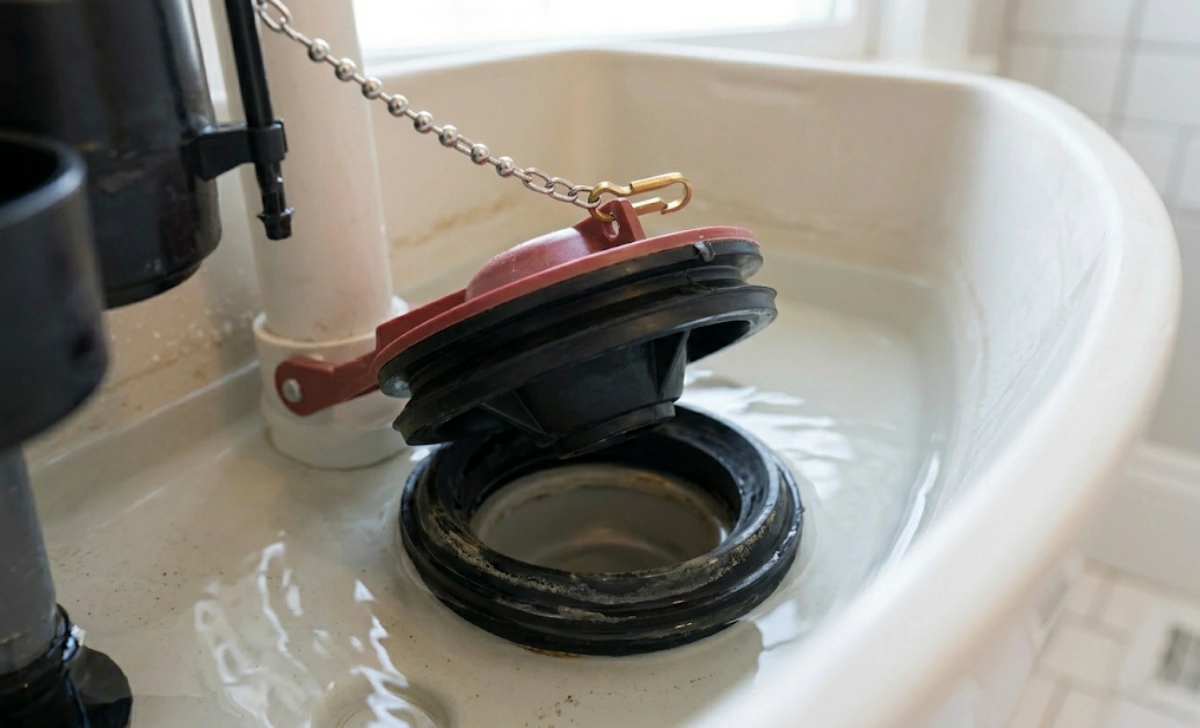
The flapper is the rubber seal at the bottom of the tank. Every time you flush, it lifts to release water into the bowl, then drops back down to seal the tank for refilling. When the rubber wears out — and it does, usually within 3–5 years in chlorinated water — it stops sealing cleanly.
The tricky part? A worn flapper can look completely fine while still leaking. Don’t trust your eyes alone on this one.
Fill Valve Not Shutting Off
The fill valve is the tall mechanism that refills the tank after a flush. When it starts to fail, it either runs continuously or cycles on and off at random intervals. If you can hear the tank refilling even when nobody’s used the toilet, the fill valve is usually the culprit.
Float Ball or Float Cup Set Too High
The float tells the fill valve when to stop filling. If it’s set too high, water rises above the overflow tube and constantly drains into the bowl — creating a running sound that mimics a flapper problem but isn’t one.
All three parts are cheap, replaceable, and don’t require a plumbing license to fix.
How To Fix a Toilet That Keeps Running After Replacing the Flapper
This is probably the most frustrating scenario. You did the “right” fix, spent $8 on a new flapper, installed it, and it’s still running. So what’s actually going on?
Step 1 — Check the Flapper Chain Length
The chain connecting the flapper to the flush handle needs just a little slack — about half an inch. Too short, and the flapper can’t fully close. Too long, and it can get trapped underneath the flapper itself, holding it open.
Take a look. If the chain is kinked, tangled, or obviously too long, adjust the clip to a link higher up. That alone fixes the problem about 30% of the time.
Step 2 — Inspect the Flush Valve Seat
The flapper closes against a circular plastic ring called the flush valve seat. Over time, mineral deposits or small cracks can form on that ring — and even a brand new flapper won’t seal properly against a damaged seat.
Run your finger around the valve seat. If it feels rough, gritty, or you can see visible buildup, clean it with white vinegar and a cloth. If it’s visibly cracked, the whole flush valve needs replacing — a bigger job, but still doable with a kit from any hardware store.
Step 3 — Check the Refill Tube Position
The refill tube is the small, flexible plastic hose that runs from the fill valve into the overflow tube. If the end of that tube is pushed too far down and sits below the water line inside the overflow pipe, it can siphon water out of the tank without you ever hearing a trickle — causing a silent leak that wastes water just as fast as an audible one.
Clip it securely to the top edge of the overflow tube so the water from the tube drops into the pipe from above, with about half an inch of clearance from the water surface.
Step 4 — Confirm the Water Level
The water in the tank should sit about one inch below the top of the overflow tube. If it’s higher than that, water is constantly spilling over into the bowl — and it looks exactly like a flapper problem when it isn’t.
Adjust the float (covered below) to bring the water level down. Simple fix, easy to overlook.
Ghost Flushing Toilet Fix — What’s Causing It and How To Stop It
If your toilet randomly refills itself every 20–30 minutes, even when nobody’s used it, that’s called ghost flushing. It sounds odd. It’s actually pretty common.
What Actually Causes Ghost Flushing?
What’s happening: water is slowly leaking from the tank into the bowl through a worn flapper. When the water level drops low enough, the fill valve kicks in to top it back up — hence the mysterious “flush” sound at 2 a.m.
Flappers degrade from chlorinated water over time. A flapper that looks intact can still let water pass. Replace it with a universal flapper — they run about $5–$10 and take five minutes to swap out.
How To Diagnose It in Under 2 Minutes
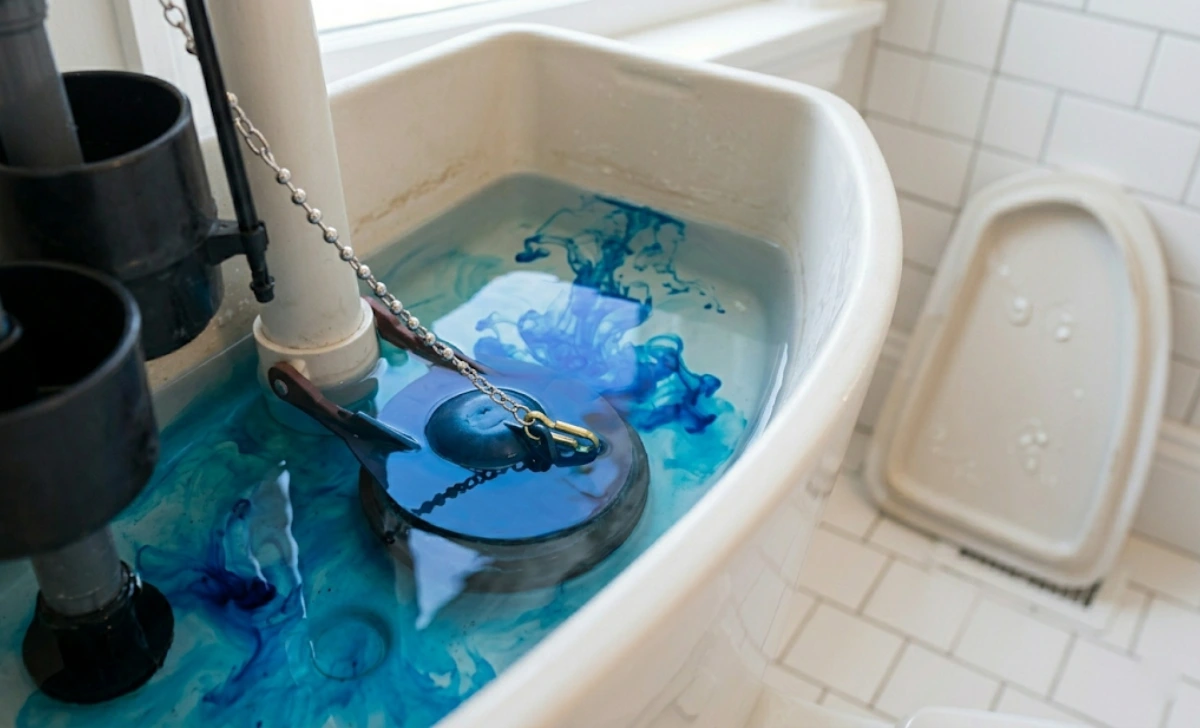
Drop a few drops of food colouring into the tank. Don’t flush. Wait 15 minutes. If colour appears in the bowl, your flapper isn’t sealing — even if it looks perfectly fine.
Prefer a non-dye method? Grab a pencil. Mark the current water level on the inside back wall of the tank. Turn off the water supply at the wall valve, wait an hour, then check the mark. If the water line has dropped below your pencil line, you have a slow leak into the bowl — the flapper is your prime suspect.
Colour stays in the tank (and the water level holds steady)? The flapper isn’t your problem. Shift your attention to the fill valve or the float height instead.
Toilet Runs for a Few Seconds Then Stops — Is That Normal?
Short answer: no, not really.
What you’re experiencing is the fill valve doing a micro top-up — usually because the flapper is leaking just slightly, or the water level is sitting right at the edge of the overflow tube. It’s a smaller version of the ghost flushing problem.
Quick Fix — Before You Touch Anything
Try this first: remove the tank lid and gently press the flapper down with your finger. If the running stops immediately, the flapper isn’t sealing fully — even if it looks fine. That’s your target.
If pressing the flapper down makes no difference, the issue is almost certainly the fill valve or float level, and you’ll want the steps in the next section.
If the toilet runs every few minutes, do the food colouring test above. If it’s happening only once or twice an hour, the fill valve itself may be slowly wearing out — at that point, replacing it is the most reliable long-term fix.
Your Toilet Fill Valve Won’t Stop Running — Here’s the Fix
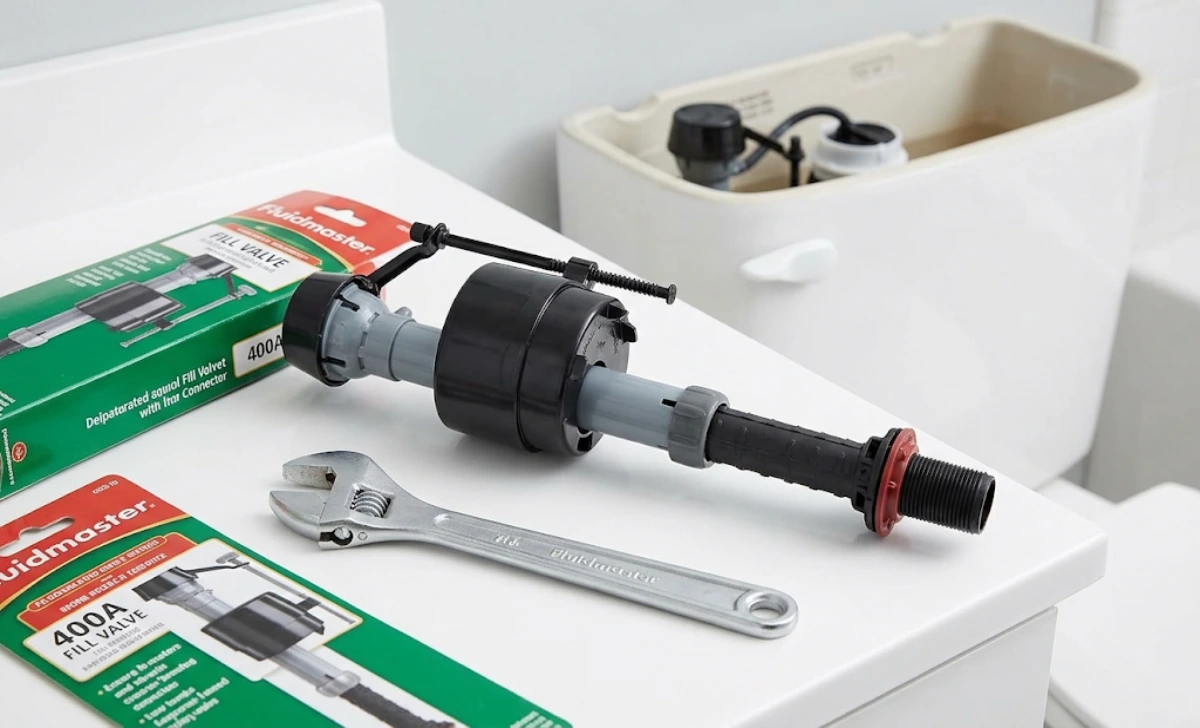
If the water keeps running and the flapper isn’t the issue, the fill valve is your culprit.
Tools You’ll Need
- Adjustable wrench
- Pliers (needle-nose or standard — helpful for loosening the locknut)
- Flat-head or Phillips screwdriver (depending on your valve’s adjustment clip)
- Replacement fill valve (Fluidmaster 400A is the most widely used — fits most toilets, costs around $10–$15)
- Towels, a small bucket, and a sponge to soak up residual water
- Optional: rubber gloves to keep your hands dry and clean
Step-by-Step Fill Valve Replacement
1. Shut off the water supply. The shut-off valve is behind and below the toilet. Turn it clockwise until it stops.
2. Flush the toilet to empty most of the tank, then use your sponge and bucket to remove the remaining water from the bottom.
3. Disconnect the water supply line from the bottom of the tank. Have a towel ready — some water will drip out.
4. Unscrew the old fill valve. There’s a plastic lock nut underneath the tank. Turn it counterclockwise by hand or with pliers.
5. Install the new fill valve. Insert it into the hole, tighten the lock nut underneath.
⚠️ Warning: Tighten the plastic lock nut hand-tight plus a quarter turn with your wrench. Do not overtighten it — excessive force can crack the porcelain tank or distort the rubber cone gasket, causing a whole new leak you didn’t have before.
6. Reconnect the supply line, turn the water back on slowly, let the tank fill, and watch. The fill valve should shut off cleanly when water hits about one inch below the overflow tube.
Takes about 15–20 minutes start to finish. Genuinely one of the easier plumbing jobs in the house.
Need a detailed walkthrough on adjusting the float specifically? [Internal Link: How To Adjust a Toilet Float — 3-Minute Fix With No Parts]
How Much Water Is a Running Toilet Actually Wasting?
More than you’d think.
A toilet with a slow, steady leak can waste 200 gallons of water per day. That’s roughly 6,000 gallons a month — showing up on your water bill whether you notice the sound or not.
Even a toilet that only runs for a few seconds every hour can waste 30+ gallons daily. It adds up fast, and it’s worth fixing today, not next weekend.
While a plumber typically charges between $100 and $300 just for a service visit plus labor, the parts for every fix described in this guide total under $30 — and often under $15. You’re not just saving water; you’re keeping that service call money in your pocket.
When Should You Actually Call a Plumber?
Most running toilet problems fall squarely in the DIY category. But there are a few situations where calling a pro makes sense:
- The flush valve seat is cracked, and you’re not comfortable replacing the full flush valve assembly
- Water is leaking from the base of the toilet (that’s a wax ring issue — a completely different repair)
- The toilet is older than 15–20 years, and parts are hard to find or incompatible
- You’ve replaced both the flapper and fill valve, and it’s still running — at that point, something unusual is going on
Truth is, if you’ve followed every step above and nothing’s working, a plumber can diagnose it in about 10 minutes. Sometimes the $75 service call is worth it just to know what you’re actually dealing with.
While you’re tackling home improvements room by room, organizing a small kitchen is another high-impact project that makes everyday life noticeably easier without spending much money.
Wrap-Up
A running toilet is almost always fixable at home. Start with the flapper — check the chain, do the food colouring (or pencil mark) test, and inspect the valve seat. If that doesn’t solve it, adjust the float to drop the water level. Still running? Replace the fill valve. That sequence covers about 95% of running toilet problems with no special skills and no expensive tools.
To prevent a repeat performance down the road: make it a habit to check the flapper’s flexibility once a year. If it feels hard and brittle (instead of soft and pliable), swap it out before it starts leaking. A quick annual inspection costs nothing and saves you from unexpected midnight refills.
For your next bathroom fix, check out [Internal Link: How To Adjust a Toilet Float — 3-Minute Fix With No Parts] — it pairs directly with what’s covered here and takes less time than making a cup of coffee.
Once the bathroom is sorted, the kitchen is usually the next room people want to get under control — here’s a practical guide to making a small kitchen work better without a full remodel.
You’ve got this.
FAQs
My toilet is running, but the flapper looks completely fine. What’s going on?
A flapper can look perfectly intact and still fail. Rubber degrades from chlorinated water and loses its seal long before it visually cracks or warps. Do the food colouring test — drop a few drops in the tank, don’t flush, wait 15 minutes. Colour in the bowl confirms the flapper is leaking regardless of how it looks. If the test comes back clean, shift your attention to the fill valve or the water level instead.
Is it safe to keep using a running toilet while I wait to fix it?
Yes, it’ll still flush normally. But it’s wasting water and adding to your bill every hour. A steady leak can hit 200 gallons a day — so the sooner you fix it, the better.
How do I know if it’s the flapper or the fill valve causing the running?
Listen carefully. If water is trickling into the bowl — you can hear or see it — that’s almost always the flapper. If the fill valve keeps cycling on and off but the water stays in the tank, that’s a fill valve or float issue.
Can I use any replacement flapper, or does it have to match my toilet brand?
Most universal flappers (like Fluidmaster or Korky) fit the majority of toilets. That said, Toto and some Kohler models use proprietary flappers and canister seals that don’t work with universal parts. Check your toilet model number — usually stamped inside the tank lid or on the inside wall of the tank — before heading to the hardware store to make sure you’re buying the right fit for your specific brand.



No Comment! Be the first one.