Planning a wedding in a gymnasium? The first thing you need to sort out is the floor. Hardwood gym floors are expensive to maintain, and one wedding — with stiletto heels, folding chairs, and drink spills — can cause serious damage that costs thousands to repair.
This guide walks you through the best covering materials, 2026 rental costs, a step-by-step installation process, and how to pick the right size for your guest count. Whether you’re working with a tight budget or want a stunning wood-grain dance floor, you’ll find a clear path forward here. The same principles apply if you’re hosting a graduation, corporate banquet, or community gathering — protecting the floor is always the first priority.
Why You Need to Cover a Gym Floor for a Wedding
Gymnasium hardwood floors — typically maple — represent a major investment. Replacing or refinishing one costs tens to hundreds of thousands of dollars. At a wedding, several things threaten that floor simultaneously:
- Stiletto heels puncture the finish and gouge the wood
- Folding chairs and table legs scratch and dent the surface
- Beverage spills seep into seams, causing warping and mould growth
- Wheeled carts used for catering drag across the finish
Without a proper covering, you risk shortening the floor’s refinishing cycle significantly — and the venue will hold you financially responsible. While hardwood is the most common gym flooring, some facilities use synthetic poured surfaces or rubber flooring; check with your venue, as the protection principles remain similar, though rubber may require specific moisture-barrier considerations.
Best Gym Floor Covering Materials for Weddings
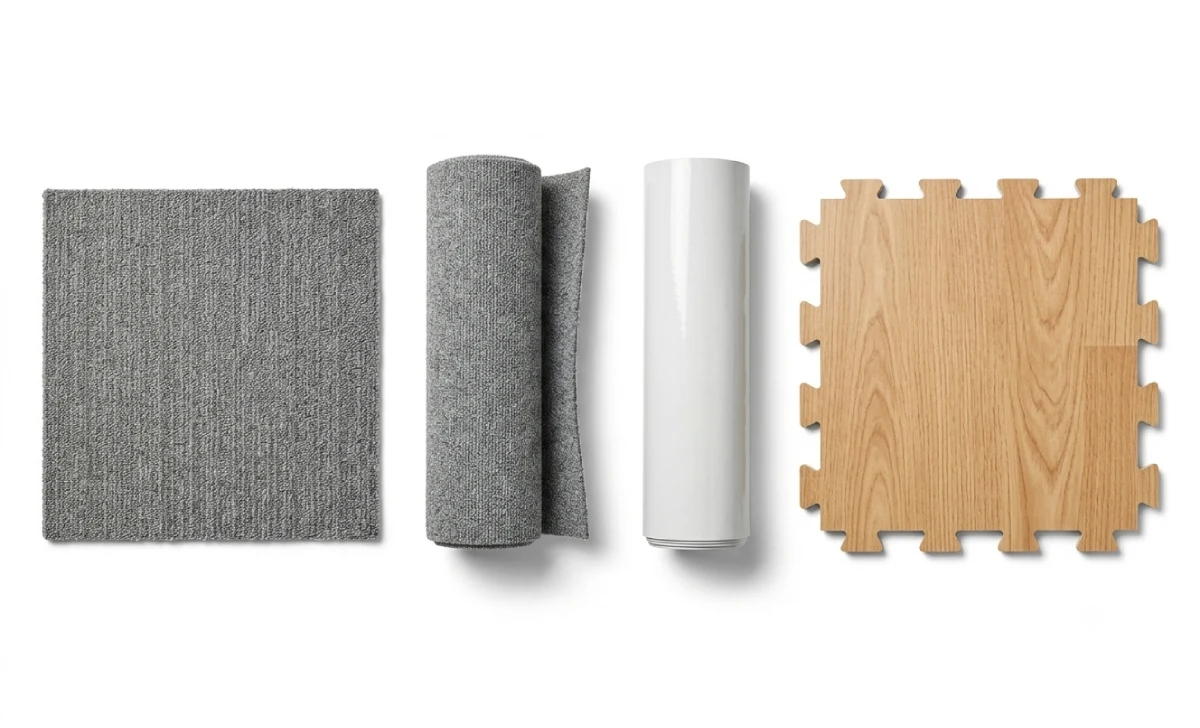
There are four main options, each suited to different priorities. Certain products like the GymPro EcoRoll carpet system or the EZ Tile and Cam Lock dance floor panels are industry standards, but the following categories cover the full spectrum of choices:
| Material | Best For | Key Benefit | Watch Out For | Setup Time (Full Court) |
|---|---|---|---|---|
| Carpet Tiles | High-traffic general areas | No tape or adhesive needed | Absorbs spills | 30–45 mins |
| Carpet Rolls (e.g., GymPro EcoRoll) | Large spaces, noise control | Better sound dampening & fire-retardant options | Requires hook tape at seams | 30–40 mins |
| Vinyl Rolls (32 oz, 10ft wide) | Spill-prone zones | Fully waterproof | Less sound absorption | ~1 hour (with dispenser) |
| Portable Dance Floor (EZ Tile / Cam Lock) | Dancing area only | Elegant wood grain look | Higher cost, needs assembly | 1–2 hours |
Carpet Tiles
Carpet tiles measure approximately 39⅜ × 78¾ inches and dry-lay directly onto the gym floor — no adhesive, no tape, no connector strips needed. A non-slip backing holds them in place. You can vacuum them clean or spot-treat with a carpet cleaner. They also absorb more sound than vinyl, which helps with acoustics during speeches and music.
A cart that holds up to 65 tiles makes transport and setup significantly faster.
Carpet Rolls (e.g., GymPro EcoRoll)
Carpet rolls unroll quickly across large areas. They use reusable hook tape (hook-and-loop seaming tape) to connect seams and come in neutral gray tones that pair well with wedding décor. These are the best option when noise control matters — the roll absorbs more sound than any other material type, and many variants are manufactured with fire-retardant properties for added safety. A storage rack lets you unroll and re-roll without any lifting strain.
Vinyl Rolls (32 oz, 10 Feet Wide)
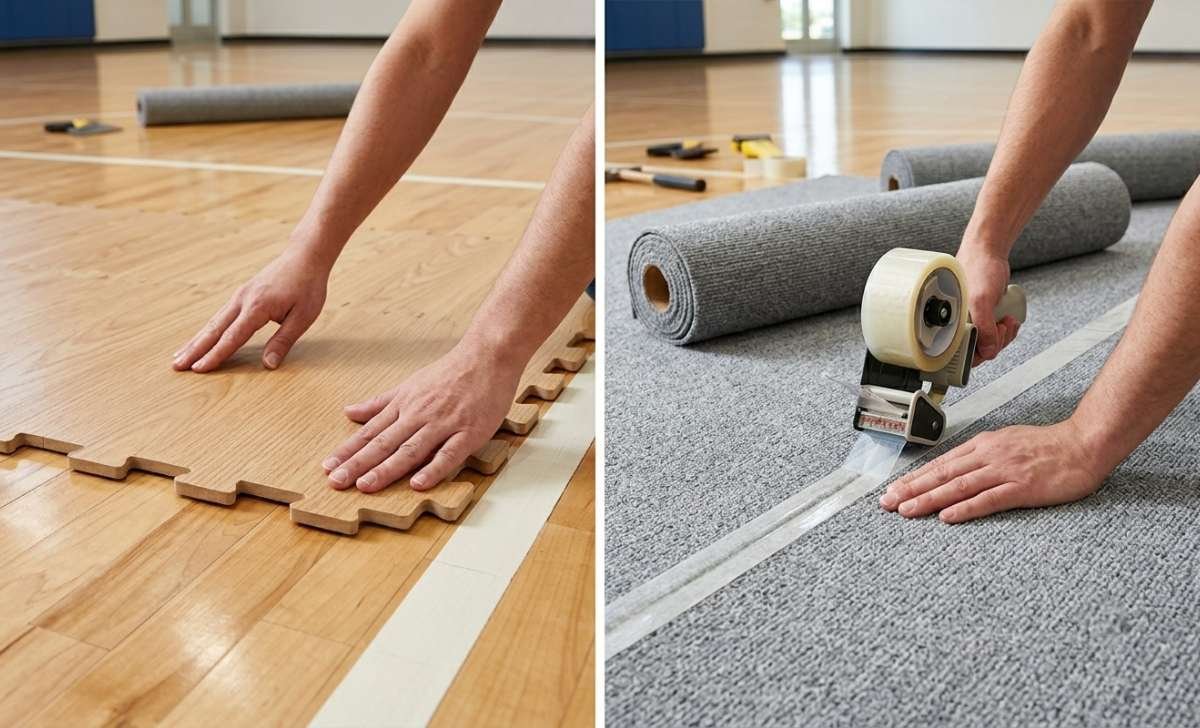
Vinyl is the go-to choice when spill protection is the top priority. It’s fully waterproof, slip-resistant, and resistant to mildew, fungus, and bacteria. Seams lay flat and tape down with transparent floor tape that leaves zero residue on the hardwood underneath. A walk-behind tape dispenser speeds up installation on large floors, eliminating the need to bend down repeatedly.
Portable Dance Floor Tiles
Two systems dominate this category:
- EZ Tiles (1×1 foot): Interlock without tools, fast to install and remove, available in six wood grain finishes.
- Cam Lock Tiles (3×3 foot panels): Connect tightly with cam lock technology, require a T-handle hex key, available in five wood grain finishes. The cam lock mechanism ensures a snug, gap-free surface.
Both systems use border ramps and trim pieces (such as Max Tile Border Ramps) to create smooth transitions and eliminate tripping hazards at the edges.
Step-by-Step: How to Cover a Gym Floor for a Wedding
Step 1: Clean the Floor Thoroughly
Before anything goes down, the floor must be spotless and completely dry. Use a scrubber or buffer with an appropriate cleaning product that won’t damage the finish. Remove all debris and make sure no moisture remains.
If moisture gets trapped between the plastic and the hardwood, it will cause moisture entrapment, leading to warping, finish clouding, and rapid mould growth. Only use breathable or moisture-resistant systems explicitly designed for gym floors. If you are renting, always confirm the material is vapor-permeable. Trapped humidity can damage the floor within hours and void the venue’s insurance policy.
Step 2: Map Out Your Coverage Zones
You don’t necessarily need to cover every square inch. Prioritize:
- General areas: Anywhere tables and chairs will be placed
- High-traffic zones: Entrances, exits, food service areas. For these specific choke points, consider Courtside Runners or protective mats to reinforce the covering.
- Staging/bleacher areas: Dedicated mats work well here.
- Dance floor: A separate portable tile system for this zone.
Pro Tip: Do not cover the floor entirely wall-to-wall. Leave a 2 to 3-foot border around the perimeter. This gives you easy access to power outlets, fire extinguishers, and HVAC vents, and makes rolling out the material significantly easier.
If you’re covering a full court for a large wedding, full-court vinyl or carpet rolls make the most sense.
Step 3: Install Carpet Tiles (If Applicable)
Start at one corner and dry-lay tiles in rows. The non-slip backing holds everything in place without any fasteners. No tape is needed unless you want extra security along outer edges. Plan your layout so seams fall in low-traffic spots.
Step 4: Install Carpet or Vinyl Rolls (If Applicable)
Unroll material from one end of the gym to the other. For carpet rolls (like the GymPro EcoRoll), connect seams with reusable hook tape for a secure flat finish. For vinyl, overlap edges slightly and seal with transparent floor tape — the walk-behind tape dispenser saves significant time here, as it applies consistent pressure without kneeling. A safety storage rack holding up to six vinyl rolls keeps the setup area organised.
Step 5: Install the Portable Dance Floor
Snap EZ tiles together by hand, working outward from the centre point of your designated dance area. For cam lock panels, use the T-handle hex key to tighten each connection (the cam lock technology provides a rigid, seamless interlock). Once the surface is complete, attach border ramps (such as Max Tile Border Ramps) around all four sides. These ramps create a gradual rise from floor level to tile height — critical for preventing trip hazards, especially in low lighting.
Step 6: Tape and Inspect
Do a full walk-through before guests arrive. Check that:
- All seams lie flat
- Border ramps are secured
- No tiles have shifted
- No tape edges are peeling
Transparent floor tape blends with most floor colours and removes cleanly after the event.
2026 Dance Floor Rental Costs
This is where most articles leave you guessing. Here are actual figures:
By Dance Floor Size
| Size | Approx. Guests | White Floor | Wood Floor |
|---|---|---|---|
| 12’×12′ | ~36 | $250 | $225 |
| 15’×15′ | ~56 | $300 | $265 |
| 18’×18′ | ~81 | $350 | $315 |
| 21’×21′ | ~110 | $400 | $375 |
| 24’×24′ | ~144 | ~$450 | ~$425 |
| 30’×30′ | ~225 | ~$600 | ~$550 |
By Event Size
| Event | Guests | Cost Range |
|---|---|---|
| Small | Up to 50 | $200–$400 |
| Medium | 50–100 | $400–$800 |
| Large | 100+ | $800–$1,500+ |
Professional rental companies typically charge $800–$2,000+ and include delivery, setup, and takedown. Budget marketplace options (Facebook, local classifieds) run $200–$500 but require self-installation.
Specialty Options
- LED Dance Floor: $1,000–$6,000+
- LED Video Dance Floor: $5,000–$8,000+
- Dance Floor Wrap (custom design): $500–$2,500
- Vinyl Wrap per sq. ft.: $4–$8
For comparison, if you’re budgeting the full wedding venue transformation, costs scale quickly once you add lighting, draping, and speciality flooring together.
What Size Dance Floor Do You Need?
A common rule in event planning: roughly 10–15% of guests will be on the dance floor at any given time. Use that to size your floor:
| Floor Size | Comfortable Capacity |
|---|---|
| 12’×12′ | ~36 guests |
| 15’×15′ | ~56 guests |
| 18’×18′ | ~81 guests |
| 21’×21′ | ~110 guests |
| 24’×24′ | ~144 guests |
| 30’×30′ | ~225 guests |
For a 100-guest wedding, the 18’×18′ or 21’×21′ works best depending on how much dancing you expect.
How to Protect the Gym Floor from Wedding Damage
Stiletto Heels — Zero Tolerance
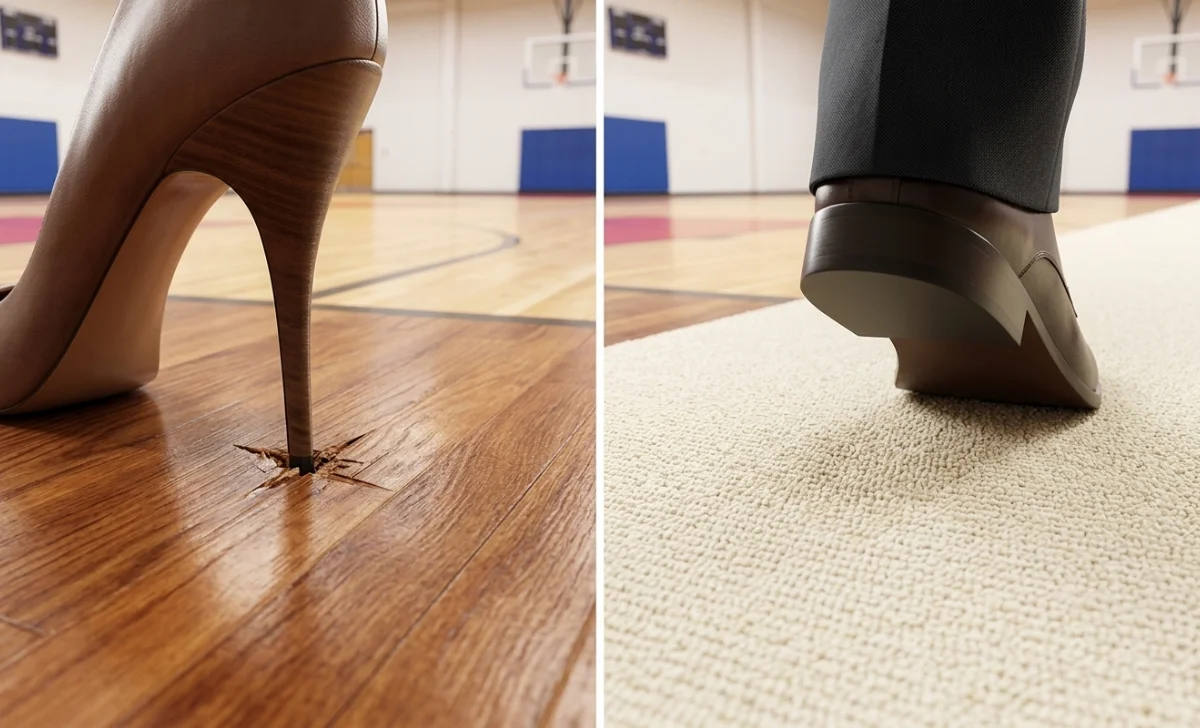
This point cannot be overstated: stiletto heels will puncture a hardwood gym floor. The narrow heel concentrates enormous pressure on a single point, driving straight through the finish and into the wood beneath.
The solution:
- Post clear signage at all entry points prohibiting stilettos
- Include the prohibition in your rental contract with the venue
- Set up a small basket of flat shoes or disposable slippers near the entrance as a practical alternative
Chairs, Tables, and Furniture
Place felt pads under every furniture leg — chairs, tables, staging, and lounge pieces. Even with floor covering in place, heavy furniture can press through thinner materials and transfer pressure to the hardwood below. Wheel carts used by catering staff should stay on covered areas only.
Moisture and Spills
Waterproof vinyl covering handles surface spills well. But the bigger concern is moisture trapped underneath the covering. Always:
- Confirm the floor is fully dry before laying any material
- Use breathable or moisture-resistant systems (never sealed plastic)
- Remove all covering promptly after the event — don’t leave it overnight
If water gets trapped under covering for hours, you risk mould growth and finish damage that a simple mop won’t fix. Proper moisture management is critical for any event, from weddings to large-scale assemblies.
Budget-Friendly Alternatives
Not every gym wedding needs a $1,500 professional dance floor. Here are practical lower-cost options:
| Option | Estimated Cost | Notes |
|---|---|---|
| Fake grass / astro turf rental | Budget tier | Covers large areas inexpensively |
| PVA vinyl cover | $4–$8/sq. ft. | Basic but effective waterproofing |
| Raised dance floor (partial coverage) | $225–$400 | Cover only the dancing zone |
| Carpet tiles (purchase) | $2–$5/sq. ft. | Own them permanently for future events |
For DIY wood aesthetics on a budget, interlocking wood-grain tiles offer a similar visual effect to custom dance floors at a fraction of the cost.
Stretch Your Budget with Decor, Not Floor Size
If you need to cut costs, install a smaller dance floor and invest in lighting instead. String lights at roughly $10/meter and LED uplights at ~$50/unit transform how a gym looks more than any other single element. Fabric draping along walls costs up to 80% less than floral ceiling installations and hides the gym’s industrial look effectively.
Storage and Cleanup After the Event
Removing and storing floor covering correctly protects your investment and keeps the gym floor safe post-event.
- Remove all covering the same night or early the next morning — never leave it for days
- Store carpet tiles on vertical or horizontal racks in a covered area. For vinyl rolls, use a safety storage rack with rollers (which can hold up to six rolls) to prevent creasing and edge damage.
- For carpet tiles, utilize a dedicated storage cart (e.g., a cart that holds up to 65 tiles) to simplify transport and organization between events.
- Label storage racks clearly so material is ready for the next event
- Vacuum carpet tiles or use a carpet cleaner before storing
- Check that transparent tape left no residue — it should pull clean, but inspect anyway
Poor storage leads to creasing, edge warping, and premature wear. Covered, labelled racks and carts extend product life significantly.
Conclusion
Covering a gym floor for a wedding takes some planning, but it’s straightforward once you know which material suits each zone. Carpet tiles handle general seating areas with no tools required. Vinyl rolls take care of any spill-prone zones near the bar or buffet. A portable wood-grain dance floor gives your main dancing area a clean, polished appearance that photographs well and holds up under heavy foot traffic all night.
The two biggest mistakes people make are skipping the stiletto prohibition and leaving coverings down too long after the event. Both lead to expensive damage that a quick fix won’t resolve. Get the floor protection right, add string lights and fabric draping above it, and most guests won’t even realise they’re celebrating in a gymnasium. The space works — it just needs a little preparation to get there. Whether it’s a wedding, a formal dinner, or a community gathering, these principles keep the venue safe and the event seamless.
FAQs
What is the best gym floor cover for a wedding?
Carpet tiles for general seating areas, vinyl rolls for spill protection, and a portable dance floor for the dance zone. Using a combination gives you the best results. Products like GymPro EcoRoll for carpet areas and EZ Tile or Cam Lock systems for dancing are reliable industry benchmarks.
How much does it cost to rent a dance floor for a wedding?
The average range is $300–$1,500+. Small events (up to 50 guests) typically run $200–$400. Medium events (50–100 guests) run $400–$800. Large events (100+) run $800–$1,500+.
What size dance floor do I need for 100 guests?
An 18’×18′ or 21’×21′ floor works best. The 21’×21′ comfortably accommodates around 110 guests on the dance floor.
Can high heels damage a gym floor even with covering?
Thin coverings may not stop stiletto damage. Prohibit stilettos regardless of floor covering and provide flat shoe alternatives for guests.
Do carpet tiles need tape or adhesive?
No. Carpet tiles dry-lay without adhesive and hold position through their non-slip backing alone.
Can I leave floor covering down overnight?
No. Remove coverings promptly after the event to prevent moisture buildup, warping, and potential mould growth. Never trap moisture underneath with non-breathable plastic.
Are all gym floors hardwood?
No. While maple hardwood is the gold standard, some gyms use synthetic poured surfaces or rubber flooring. Always verify your venue’s floor type to ensure the protective covering you choose is compatible with that specific surface.



No Comment! Be the first one.