You’ve published 40 blog posts and your traffic graph still looks like a flat line. You’re not lazy, and you’re not a bad writer — you’re just missing the system that turns a blog from a diary nobody reads into a lead-generating asset. This article breaks down exactly why small business blogs fail, and gives you a step-by-step small business blog strategy to fix it, starting this week.
The Reality Most Small Business Owners Don’t Want to Hear
Here’s the uncomfortable truth: most business blogs never generate meaningful traffic. According to HubSpot’s 2025 State of Marketing report, companies that blog consistently see far more inbound leads than those that publish sporadically — but “consistently” is the operative word, and most small businesses simply don’t manage it.
The bigger problem isn’t effort. It’s direction. Owners write about “5 Tips for Spring Cleaning Your Business” because it feels productive, not because a single customer typed that phrase into Google. That’s the core reason small business blogs fail: effort without a strategy behind it.
Before you write another post, it helps to understand your starting point. Running through a free SEO audit checklist takes less than an hour and tells you exactly where your blog is bleeding potential traffic — broken links, missing meta tags, thin content, and more.
7 Reasons Your Business Blog Is Failing Right Now
You’re writing for yourself, not what customers actually search
If your post titles sound like diary entries (“Our Journey This Quarter”) instead of answers to real questions (“How Much Does X Cost in 2026”), Google has nothing to rank you for. Search engines match content to intent, not enthusiasm.
You publish inconsistently, and Google has stopped trusting you
Three posts in January, then silence until June — that pattern tells search engines your site isn’t a reliable, ongoing resource. Fresh, regular publishing signals authority; inconsistency signals abandonment.
Your content is too thin to compete
A 400-word post has almost no chance of outranking a competitor’s 1,500-word guide that actually answers the question in depth. Thin content might exist, but it rarely ranks.
You never promote anything – “publish and pray” doesn’t work
Hitting publish is step one, not the finish line. Without distribution, even a great post sits invisible on page one of your own website, waiting for search engines to notice it — which can take months.
You set no clear goals and have no way to measure success
If you can’t say whether last month’s blog effort brought in 5 leads or 0, you’re not managing a marketing channel — you’re just producing content into the void.
Your old posts are out of date and killing your credibility
A 2022 post citing outdated pricing, tools, or algorithm rules actively damages trust. Google’s helpful content system, refined through 2024–2025 updates, rewards freshness and penalizes stale, low-value pages.
You’re trying to do it all alone with zero time or skills
Writing, keyword research, formatting, promotion, and analytics is a full job description — not a side task squeezed in between client calls.
The Difference Between a Blog That Collects Dust and One That Compounds
A blog that fails is a collection of random posts. A blog that works is a system — keyword research feeding a calendar, feeding a content standard, feeding a distribution habit, feeding measurement, feeding the next round of research.
Think of it like a flywheel: each part makes the next part easier, and every post adds compounding value instead of starting from zero. This is the same logic behind building out a marketing funnel guide — content only works when each stage feeds the next one, rather than existing in isolation.
How to Build a Blog System That Won’t Fail
Pillar 1: Simple keyword research (even with free tools)
You don’t need an enterprise SEO subscription to start. Google’s “People Also Ask” boxes, Google Search Console’s Performance report, and free tools like Ubersuggest or AnswerThePublic all reveal real questions your customers are typing.
Tool tip: Google Search Console (free) shows queries you already rank for on page 2 — often the fastest wins available.
Pillar 2: A realistic content calendar – consistency over volume
One well-researched post every two weeks, published on schedule, beats four rushed posts crammed into one month followed by silence.
Pillar 3: A minimum depth standard that matches what ranks
Before publishing, check what’s currently ranking for your target keyword. If the top 5 results average 1,800 words with a table and an FAQ section, your 500-word post won’t compete — match or exceed the depth.
Pillar 4: A repeatable distribution checklist
Every post needs the same five-minute post-publish routine: share to social, add to your email newsletter, drop into relevant community groups, and internally link from older posts.
Step-by-Step: Fix Your Blog Starting This Week
- Find what your customers are actually typing into Google. Pull your top 10 customer questions from sales calls, emails, and reviews, then check their search volume with a free tool.
- Match every keyword to a specific page or post. One primary keyword per post — never split intent across two topics in one article.
- Spot content gaps your competitors missed. Search your top keyword, read the top 5 results, and note what they left out — that gap is your angle. Targeting long-tail keyword research specifically at this stage helps you find gaps with realistic ranking odds instead of competing head-on with bigger sites.
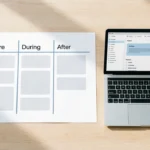
- Build a one-sheet blog plan you can actually stick to. One page, one column for topics, one for target keyword, one for publish date. No fancy software required.
- Refresh outdated posts before you publish anything new. Update stats, pricing, and screenshots in your three highest-traffic old posts — this often lifts rankings faster than new content.
- Turn “published” into “promoted” with a simple distribution habit. Use a checklist (social, email, community, internal links) every single time, no exceptions.
| Random Blogging | Systemized Blogging | |
|---|---|---|
| Topics | Whatever feels inspiring | Based on real search queries |
| Schedule | Sporadic bursts | Fixed, realistic cadence |
| Depth | Whatever length feels done | Matches top-ranking competitors |
| Promotion | None | Checklist after every post |
| Measurement | None | GA4 + KPI tracking |
How to Stay Consistent Without Burning Out
When and how to outsource to a writer or VA
If research takes you longer than writing, outsource keyword research and outlines first — that’s the highest-leverage task to hand off, even on a tight budget.
Using AI as your writing sidekick (without losing your voice)
AI tools like Claude or ChatGPT are excellent for first drafts and outlines, but always edit in your own examples, tone, and specific customer stories — generic AI output rarely converts on its own.
Recording short voice notes to create posts 3x faster
Talk through your answer to a customer question for five minutes, transcribe it with a free tool like Otter.ai, then edit the transcript into a post. It’s faster than staring at a blank page.
Audience-First Content: Give People What They Actually Want
Develop content ideas from real customer questions
Your sales team, support inbox, and reviews are a free content calendar — mine them monthly.
Write problem-solving guides, not company updates
“We hired a new hire” helps no one searching Google. “How to Choose X for Your Small Business” helps everyone.
Format for scanners – short paragraphs, strong headings, clear CTAs
Most readers skim first, read second. Short paragraphs, bold key phrases, and bullet points keep them on the page long enough to convert.
Encourage conversation and feedback to build community
Ask a question at the end of every post and reply to every comment — this signals engagement to both readers and search engines. Pairing this with organic social promotion of your posts builds the kind of ongoing conversation that keeps readers coming back.
Measuring What Matters: KPIs, Tracking, and Testing
Stop guessing. Set up Google Analytics 4 (GA4) — free — to track organic sessions, average engagement time, and blog-to-lead conversions. Tag every promotional link with UTM parameters so you know exactly which channel (email, social, community) actually drove the click.
Key KPIs to track monthly:
- Organic sessions per post (via GA4)
- Click-through rate (CTR) from Search Console — a low CTR with high impressions often means your title or meta description needs work, not your content
- Conversion rate from blog visit to lead or email signup
- Keyword ranking movement for your target terms
Adopt a Test → Measure → Optimize mindset: try two headline formats over two months, measure which drove more clicks and time-on-page, then double down on the winner. Paid tools like Ahrefs or SEMrush add competitor tracking; free alternatives like Google Search Console and GA4 cover 80% of what a small business actually needs.
Frequently Asked Questions
Why do most small business blogs fail to get any traffic?
Most fail because they’re written around what the owner wants to say, not what customers are actively searching for — combined with inconsistent publishing and zero promotion after hitting publish.
How long should a business blog post be in 2026?
There’s no universal number — match or slightly exceed the average length of the current top 5 ranking posts for your target keyword. That’s often 1,200–2,000 words for competitive topics.
Is blogging still worth it if I’m a local service business?
Yes — local-intent blog posts (like “best time to schedule X in [city]”) consistently drive qualified, low-competition traffic that converts well, since the searcher is already close to a decision.
Why does my well-written post have zero visitors?
Usually one of three things: no one is searching that exact phrase, you haven’t promoted the post at all, or the page hasn’t been indexed yet — check Google Search Console to confirm.
Can AI really help without making my content sound generic?
Yes, if you treat it as a drafting assistant, not a final writer — feed it your real customer stories and specific numbers, then edit heavily for voice and accuracy before publishing.
Your Blog Is the Highest-ROI Employee You’ll Ever Hire – If You Manage It Right
The gap between a blog that fails and one that compounds for years isn’t talent — it’s the system behind it. Keyword research, a realistic calendar, a depth standard, and a distribution habit, repeated consistently, is the entire difference.
If you haven’t documented your overall approach yet, start with a one-page marketing plan that ties your blog into your broader lead-generation goals — it takes an afternoon and saves months of directionless posting.

Other Articles

Find Guest Post Opportunities: 7 Manual Methods
One-Page Marketing Plan: Free Notion Template (2026)
No Comment! Be the first one.