
A rare, deadly virus spread between people on a cruise ship, and almost nobody saw it coming. If you’ve heard the words “hantavirus” and “cruise ship” in the same sentence and felt a flicker of worry about your own travel plans, you’re far from the only one. This is the story of the MV Hondius outbreak: how it began, the couple whose South American road trip turned out to be the first chapter, the virus that made history by jumping from person to person, and the genetic detective work that’s still trying to pin down exactly where it all started. By the end, you’ll know what happened, what it means for the Andes virus going forward, and what it does — and doesn’t — mean for your next trip.
What Happened on the MV Hondius Cruise Ship?
On April 1, 2026, the Dutch-flagged expedition ship MV Hondius left Ushuaia, Argentina, the southernmost city on the continent, carrying close to 150 passengers and crew from 23 countries. The plan was a 33-day voyage toward Antarctica and a string of remote South Atlantic islands. A crew drawn from so many different nations is typical for expedition cruising, and it reflects how heavily operators in this industry rely on hiring talent across borders — a setup that comes with its own set of employment and tax considerations when hiring abroad for the companies involved.
Ten days in, a 70-year-old Dutch passenger died on board. At the time, it looked like an isolated tragedy. It wasn’t. By the time the World Health Organisation was formally notified on May 2, health officials were tracking a cluster of severe respiratory illness that would eventually grow to 13 reported cases — 11 confirmed and two probable — with a case fatality rate of roughly 23 Percent.
The Timeline of Cases and Deaths
The outbreak unfolded in stages as the ship made its way north and east across the Atlantic:
- April 11: A 70-year-old Dutch man died on board, the first fatality.
- April 24: The ship reached Saint Helena, where 30 passengers disembarked, including the man’s wife.
- April 26: The wife died two days later in a hospital in Johannesburg, South Africa.
- April 28: A second passenger died on board.
- May 2: A British passenger in critical but stable condition was evacuated to Johannesburg for treatment, and the outbreak was reported to WHO.
- May 3–6: The ship spent three days docked at Praia, Cape Verde, but no one disembarked there because local health facilities couldn’t manage a safe evacuation.
- May 6: With approval from Spanish health authorities, the Hondius set sail for Tenerife in the Canary Islands.
The Quarantine Response at Nebraska
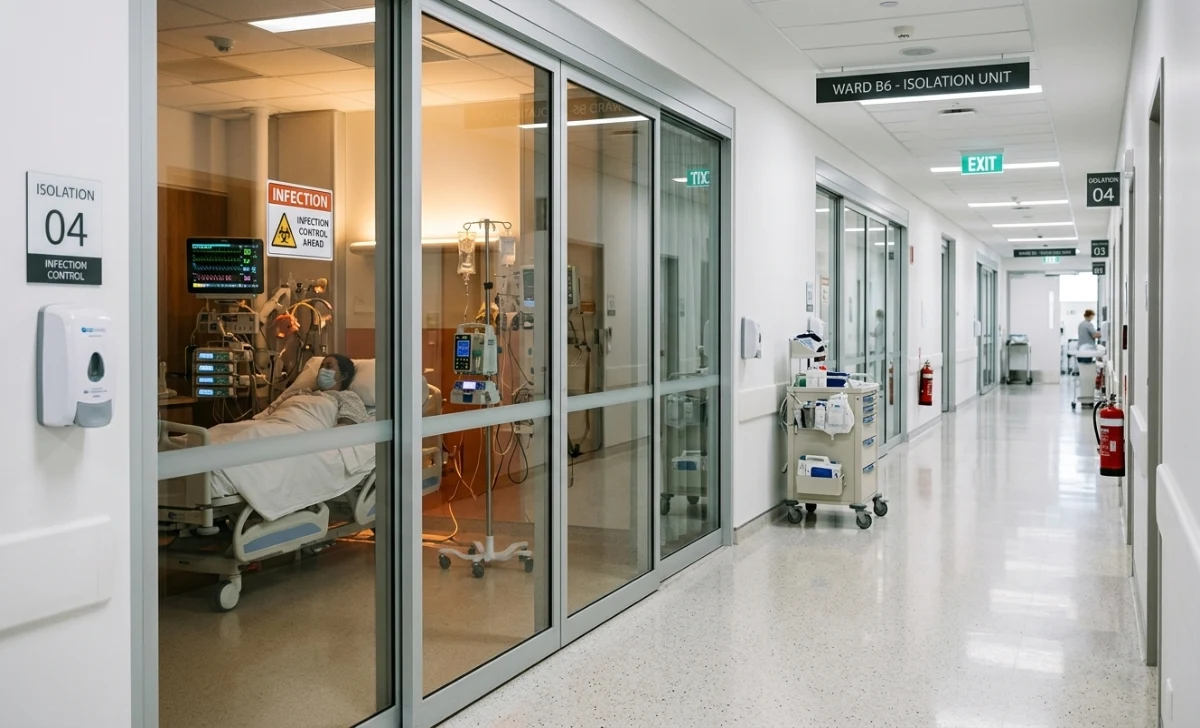
When the Hondius reached Tenerife, 18 people — 17 Americans and one British national living in the US — were transferred ashore in a carefully staged evacuation, wearing protective gowns and masks as they were ferried to the port of Granadilla de Abona. From there, they were flown to the National Quarantine Unit at the University of Nebraska Medical Centre, a federally funded facility built for exactly this kind of situation.
On arrival, the group was checked for early warning signs — fever, muscle aches, diarrhoea — and placed under monitoring. By mid-May, the CDC confirmed the 18 evacuees would remain at the Nebraska facility through at least May 31, the 21-day mark of their observation period, and issued formal quarantine orders for two of them under federal public health law. Meanwhile, additional confirmed cases continued to surface in France, Spain, and Canada among people who had already returned home — a sign of just how long this virus can stay hidden before it shows itself.
Who Were the First Hantavirus Cruise Passengers?
Before they ever set foot on the Hondius, the first two people to fall ill were a retired Dutch couple who had spent months travelling overland through Argentina and Chile. They were experienced travellers with a shared passion for birdwatching, and their trip had taken them through some of South America’s most remote backcountry before they boarded the cruise in Ushuaia.
The Couple’s Journey Through South America
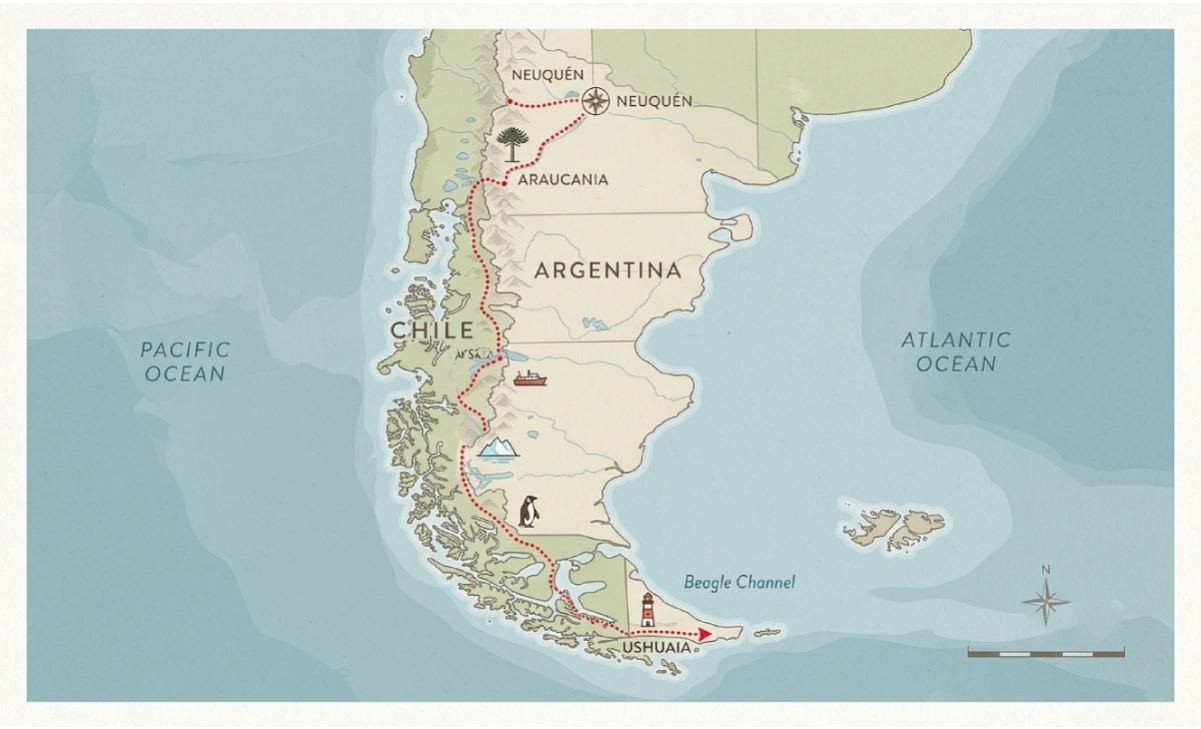
Reconstructing their route became one of the most important pieces of the entire investigation. According to Argentina’s Ministry of Health, the couple’s overland trip included a stretch through Chile and a return into Argentina’s Neuquén province in late January, an area where hantavirus cases have turned up before. From there, they continued travelling for roughly another three and a half weeks before recrossing into Chile and eventually making their way down to Ushuaia to board the ship on April 1.
That itinerary matters enormously, because it places them in a known hantavirus hot zone weeks before the outbreak’s first symptoms appeared — far earlier, and far farther away, than the popular early theory about how this all started.
What Is the Andes Hantavirus and Why Is It So Dangerous?
Hantaviruses are a family of viruses carried by rodents, usually picked up through contact with their droppings, urine, or saliva. Most strains can only move from rodents to people — never between two people. The Andes virus, the strain confirmed aboard the Hondius, is the exception. It’s the only hantavirus on record that can spread from one person to another, typically through close, prolonged contact such as sharing a small cabin or caring for someone who’s sick.
Once it takes hold, Andes virus usually causes hantavirus pulmonary syndrome (HPS), a severe illness that attacks the lungs and heart. Depending on the outbreak, HPS has a case fatality rate somewhere between 20 and 40 per cent — numbers that explain why health agencies moved so quickly once person-to-person spread was suspected.
| Feature | Andes Virus | Sin Nombre Virus (US) | Puumala Virus (Europe) |
|---|---|---|---|
| Primary transmission | Rodent contact, plus rare person-to-person | Rodent contact only | Rodent contact only |
| Geographic range | Argentina, Chile, southern South America | North America | Northern and Central Europe |
| Typical incubation | 1 to 8 weeks (median ~18 days) | 1 to 5 weeks | 2 to 4 weeks |
| Severity | HPS, fatality rate ~20–40% | HPS, similarly severe | Milder kidney-related illness (nephropathia epidemica) |
Hantavirus Pulmonary Syndrome (HPS) Symptoms
Early symptoms of HPS look a lot like the flu, which is part of why the disease is so easy to miss at first:
- Sudden fever, often between 38°C and 40°C
- Severe muscle aches, especially in the back, thighs, and hips
- Headache and chills
- Nausea, vomiting, and diarrhoea
If the illness progresses, things can change fast. Within roughly two to ten days of those first symptoms, HPS can develop into respiratory failure, with fluid building up in the lungs. That short window between “feeling like the flu” and “needing intensive care” is one of the main reasons doctors urge anyone with a possible exposure to seek care early rather than waiting it out.
Where Did the Outbreak Actually Start — And Why Does It Matter?
When news of the outbreak broke, one explanation spread almost as fast as the virus itself: that the Dutch couple had picked it up while birdwatching near a landfill in Ushuaia, just before boarding the ship.
The Ushuaia Theory — And Why It Doesn’t Add Up
On paper, it’s a tidy story — birdwatchers, a landfill full of rodents, a cruise departing from that exact city. But virologist Gustavo Palacios of the Icahn School of Medicine at Mount Sinai says the theory never quite held together. Andes hantavirus has never been documented in or around Ushuaia, and the area simply isn’t known habitat for the rodent species that carries it. There’s also a timing problem: if the couple were exposed in Ushuaia right before departure on April 1, and the husband became seriously ill by April 11, that would mean an unusually short incubation period for a virus that typically takes one to eight weeks to cause symptoms.
The Neuquén Connection
So researchers started looking elsewhere — and the couple’s own travel records pointed the way. Argentina’s Ministry of Health confirmed that the strain circulating on the Hondius matches Andes virus variants previously detected in Chubut, Río Negro, and Neuquén provinces, plus parts of southern Chile. The Dutch couple had passed directly through Neuquén in their motor home in early February, months before boarding the ship — and right in the middle of a region where this exact strain has shown up before.
There’s just one catch: if Neuquén in early February is where they were exposed, that implies an incubation period of around 60 days — far longer than anything previously documented for Andes virus.
How Are Scientists Investigating the Origin of the MV Hondius Outbreak?

This is where the story stops being a simple news report and turns into an active scientific investigation, one that’s still unfolding. Here’s how researchers have approached it, step by step:
- Genomic sequencing of patient samples. When scientists compared the viral genomes recovered from Hondius passengers against a database of previously sequenced Andes virus samples, the closest matches weren’t from Ushuaia at all — they came from a 2018 case involving two brothers who fell ill in Villa Meliquina, Neuquén province, over 2,000 kilometres north of where the cruise began.
- Follow-up sequencing in the region. After finding that match, Argentine researchers sequenced newer samples from the same area and found they were also closely related to the outbreak strain. As Palacios put it, that tells researchers the virus is still circulating in that part of Neuquén today.
- Rodent surveillance in Chile. Lissette Ulloa-Zepeda, a doctoral researcher at the University of Development who has been building genetic surveillance of Andes virus in rodent populations, published sequences from long-tailed pygmy rice rats trapped back in 2013 in Toltén, in Chile’s Araucania region — which borders Neuquén and lies directly along the route the Dutch couple travelled. Those sequences turned out to be even closer matches to the outbreak strain.
- Swabbing the couple’s motor home. Adriana Delfraro, a virologist at Uruguay’s University of the Republic, led an effort to swab the motor home the couple had rented, looking for traces of the virus or evidence of rodents. So far, no droppings or obvious rodent remnants have turned up, though Delfraro notes that testing this long after the fact is genuinely difficult.
- Mapping the itinerary against the incubation window. Researchers are now working backwards from the symptom-onset dates to figure out which legs of the couple’s months-long trip line up with a plausible exposure window — and whether the 60-day estimate holds up.
Genomic Evidence Points to a New Region
Taken together, the genetic data tells a fairly consistent story: this strain of Andes virus most likely originated somewhere along the Chile-Argentina border in the Araucania-Neuquén corridor — a region with a documented history of Andes virus cases — rather than near Ushuaia, where the cruise actually departed.
The Rodent-in-the-Motor-Home Theory
The motor home remains a central piece of the puzzle. If the couple picked up the virus while staying in or near the vehicle during their time in Neuquén or Araucania, it would help explain both the genomic match and the unusually long gap between likely exposure and the first symptoms. So far, though, the physical evidence from the swabbing hasn’t confirmed it — which is part of why researchers describe this as one of the more interesting open questions in recent outbreak history.
What Does This Outbreak Mean for Cruise Travellers and Public Health?
Is the 42-Day Quarantine Enough?
For weeks, the WHO’s standard guidance called for a 42-day monitoring period for healthy passengers who’d left the Hondius, and most countries followed it. But the possible 60-day incubation period tied to the Neuquén theory — combined with a confirmed person-to-person case in France where symptoms appeared roughly 38 days after the last contact with an infected passenger — pushed WHO to extend its recommended monitoring window for close contacts to 60 days.
Not everyone thinks that’s strictly necessary. Thomas Ksiazek, a researcher at the University of Texas Medical Branch who wasn’t part of the investigation, says a 60-day incubation period is possible but unlikely to be common, and that since people generally only become infectious once symptoms start, watching for symptoms may be enough on its own.
What Cruise Lines and Health Agencies Are Doing
WHO epidemiologist Maria Van Kerkhove summed up the working theory at a briefing: the assumption is that the affected passengers were infected before boarding and then joined the cruise already carrying the virus, rather than picking it up on the ship itself. That matters, because it shifts the focus of prevention away from the ship and toward how travellers move through hantavirus-endemic regions before they ever reach a port.
On the response side, South African health officials traced 62 people who may have had contact with infected passengers; 42 were located and tested negative, while the remaining 20 were still being followed up at last report. Argentina, for its part, sent samples and technical materials to laboratories across Europe, Africa, and the Americas to run an estimated 2,500 diagnostic tests, while also dispatching teams to trap and test rodents near Ushuaia. The episode also serves as a reminder for any organisation with staff scattered across multiple countries — whether that’s a cruise operator, a research team, or a remote-first company — that having a business continuity plan for remote teams ready before an emergency hits makes the response far less chaotic.
For everyday travellers, both the CDC and ECDC have been consistent on one point: the overall risk to the general public — in the US and across the EU and EEA — remains very low. This was, as far as anyone can tell, the first hantavirus outbreak ever documented on a cruise ship, and it required a very specific combination of factors to happen at all.
What Should You Know About Hantavirus Symptoms and Quarantine?
When to Seek Medical Attention
If you’ve spent time in rural South America — especially Argentina or Chile — and develop flu-like symptoms within eight weeks of returning, tell your doctor about your travel history specifically. Early symptoms (fever, fatigue, body aches, nausea) can look like a dozen other things, but the speed at which HPS can progress to respiratory failure means early hospitalisation makes a real difference in outcomes.
Reducing Your Risk
- Avoid sweeping or disturbing areas with visible rodent droppings; if cleanup is unavoidable, ventilate the space first and wear a properly fitted respirator and gloves.
- Be cautious in enclosed spaces like sheds, cabins, or vehicles that have been sitting unused, especially in rural parts of South America.
- If you’re travelling with someone who develops a sudden high fever and severe muscle aches after this kind of trip, encourage them to seek care quickly and mention any rodent exposure.
- Keep food stored in sealed containers when camping or staying in rustic accommodations to avoid attracting rodents in the first place.
- If you’re planning a cruise to South America or Antarctica, this outbreak doesn’t mean the trip itself is risky — the exposure almost certainly happened on land, well before anyone boarded.
If your trip is disrupted and you end up booking last-minute flights, hotels, or medical care in another country, keeping an eye on live exchange rates can help you avoid surprises when those charges hit your card back home.
Conclusion
- The MV Hondius outbreak was caused by Andes virus, the only hantavirus known to spread from person to person.
- Of 13 reported cases (11 confirmed, 2 probable), three people died — a case fatality rate of about 23 per cent.
- Eighteen people, including 17 Americans, were evacuated to the National Quarantine Unit at the University of Nebraska Medical Centre for monitoring.
- Genomic evidence now points toward the Araucania-Neuquén border region of Chile and Argentina as the likely source — not Ushuaia, where the cruise departed.
- The possibility of a 60-day incubation period has already led WHO to extend its monitoring guidance for close contacts, even as some experts argue symptom-based monitoring may be sufficient.
- Health agencies in the US and EU both describe the risk to the general public as very low.
This outbreak is a reminder of how quickly a rare disease can move once it has the right conditions — and also of how genomic sequencing, international data-sharing, and old-fashioned travel-itinerary detective work can come together to chase down where it actually started. The investigation into the MV Hondius hantavirus outbreak isn’t finished, and the answer to exactly where and how that first couple was exposed could reshape what scientists thought they knew about how long Andes virus can hide before it strikes.
If you found this breakdown useful, it’s worth sharing with anyone planning travel through South America or a Southern Hemisphere cruise. For the latest official updates, the WHO and CDC outbreak pages remain the most reliable sources as the investigation continues.




No Comment! Be the first one.