
You wake up on a Monday morning. You grab your phone, open your notes app, and stare at a to-do list that’s 23 items long. You don’t even know where to start. So you scroll Instagram for 20 minutes, feel guilty, and then rush through your day half-stressed and half-distracted. Sound familiar? You’re not lazy. You’re just overwhelmed. And overwhelm doesn’t come from having too much to do — it comes from not knowing what actually matters today. If you’ve ever felt pressured by other people’s morning routines, you already know how exhausting that comparison can be. That’s exactly where the 1-3-5 Rule comes in.
What Exactly Is the 1-3-5 Rule?
The 1-3-5 Rule is a simple daily planning method. Every single day, you plan to accomplish just 9 tasks — 1 big thing that is your main priority, 3 medium things that are important but lighter, and 5 small things that are quick tasks still worth getting done. That’s it. Nine tasks total. No more, no less. Instead of drowning in a chaotic list of 30 things, you go into your day with a clear, focused plan. You know your big win for the day. You know what supports it. And you have a handful of small things to tick off too. It’s simple, but don’t let that fool you — it works.
Who Came Up With This Rule?
The 1-3-5 Rule was popularized by Alex Cavoulacos, co-founder of The Muse, a career advice platform. She shared it as a way to make to-do lists actually functional — not just a running log of stress. Since then, it’s been adopted by productivity coaches, entrepreneurs, students, and busy parents worldwide. It works across industries and lifestyles because it’s built around how humans actually think and work, not some perfect robot version of us.
Why Do Normal To-Do Lists Fail Us?
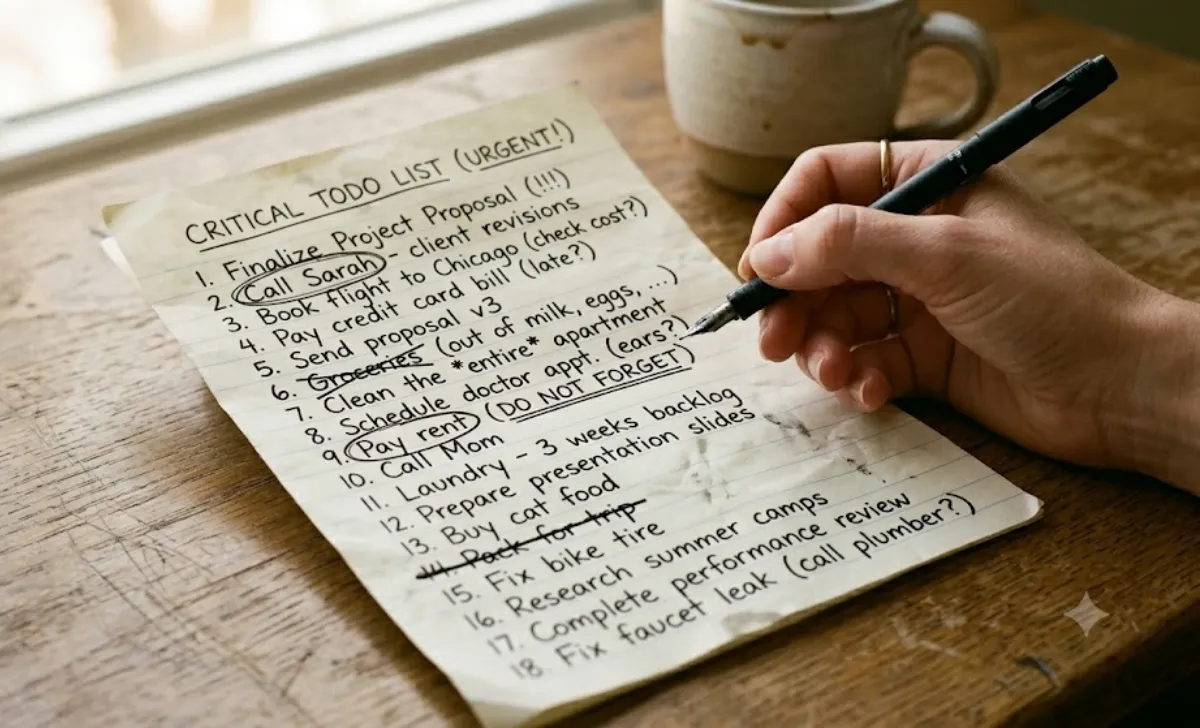
Before we dig deeper into the 1-3-5 Rule, let’s talk about why your current to-do list might be making things worse. Most people write to-do lists that mix emails, errands, big projects, and tiny tasks all in one messy jumble — reply to 12 emails, call the bank, finish the client proposal, book the dentist, go grocery shopping, review the budget, clean the kitchen, send an invoice, and so on. Exhausting just reading it, right? The problem isn’t the tasks. It’s that everything looks equally important. There’s no weight to it. Your brain sees a wall of things and immediately goes into panic mode. And when everything feels urgent, nothing gets done — or you burn yourself out doing everything poorly. The 1-3-5 Rule fixes this by forcing you to prioritize before your day even begins.
How to Use the 1-3-5 Rule (Step by Step)
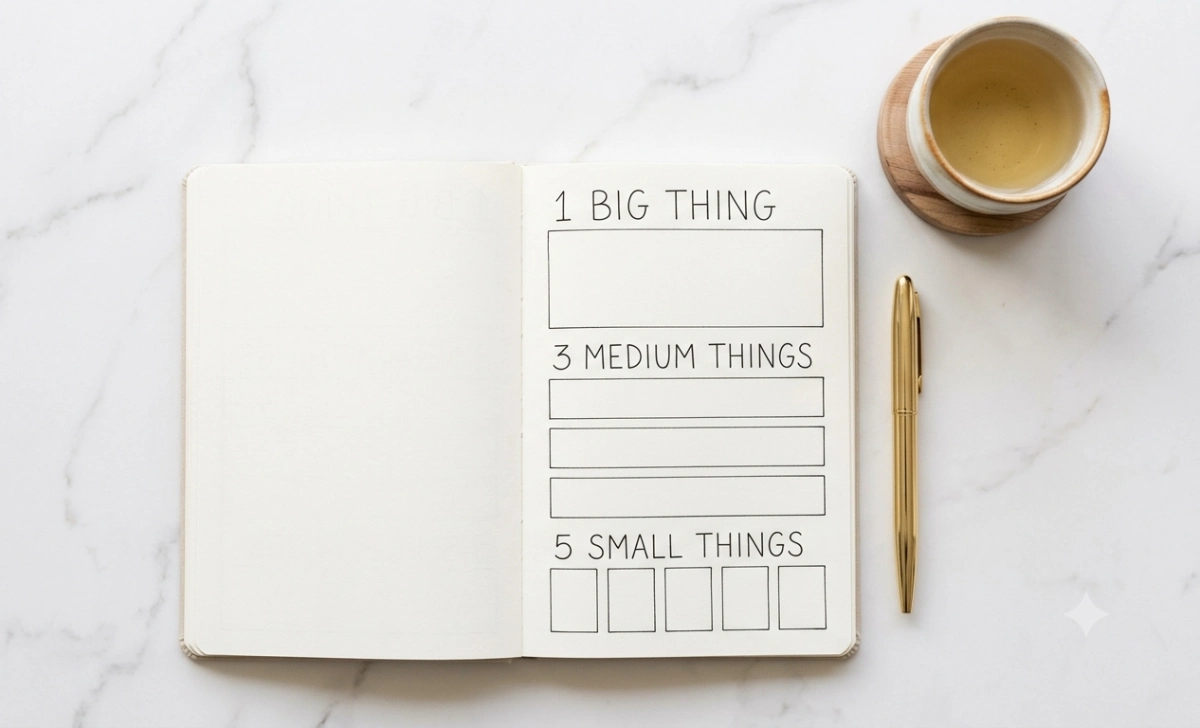
Here’s how to actually put it into practice. Don’t overthink it — the whole point is simplicity. The first step is to choose your 1 Big Thing. Ask yourself: “If I only got one thing done today, what would make this day feel like a success?” This is your anchor task. It’s usually the one you’ve been avoiding, the deadline that’s creeping up, or the project that will move your life or career forward the most. Your big thing might take 2 to 4 hours, and that’s perfectly okay — it’s supposed to feel significant. Examples include finishing the first draft of a presentation, completing a job application, deep cleaning your home, or having that important conversation you’ve been putting off.
The second step is to pick your 3 Medium Things. These are tasks that matter, but they support your day rather than define it. They typically take 30 to 60 minutes each — things like replying to important emails, reviewing a document, going grocery shopping, or attending a team meeting. The third step is to list your 5 Small Things. These are the quick wins — tasks that take under 15 to 20 minutes each. They feel satisfying to check off and keep the small stuff from piling up, like scheduling a dentist appointment, paying a bill online, responding to a text you’ve been ignoring, or watering your plants.
The fourth and most underrated step is to write it all down the night before. Here’s the secret weapon most people miss — plan the night before, not the morning of. When you start your day already knowing your 1-3-5, you’re not wasting mental energy figuring out what to do. You just start. That small shift is huge. In fact, small shifts like this are exactly what micro habits change your entire day from the ground up.
A Real-Life 1-3-5 Example
Let’s say you’re a freelance designer with a bunch of things on your plate. Your 1 Big Thing for the day would be to complete and send the client logo revisions. Your 3 Medium Things might be reviewing the contract for a new project, updating your portfolio website, and sending an invoice for last month’s work. And your 5 Small Things could be replying to two client emails, pinning design inspiration to your board, backing up your files, scheduling a call with a potential client, and posting on social media. See how that feels? Focused. Manageable. Realistic. Compare that to a 20-item list with no order or priority — and the difference is crystal clear.
Why the 1-3-5 Rule Works So Well
The 1-3-5 Rule works because it respects your energy. Not all hours are equal. You have a limited amount of mental energy each day, and this rule works with that reality, not against it. You’re not pretending you can do everything — you’re being honest about what’s actually possible. If you really want to level up your productivity, learn to track energy not just hours — because how you feel matters more than how long you work. It also removes decision fatigue. Every time you look at a messy to-do list and ask “what should I do next?”, you’re using up brainpower. The 1-3-5 Rule removes that friction so you always know what’s next.
On top of that, it gives you a genuine sense of accomplishment. Finishing 9 meaningful tasks feels a lot better than finishing 3 out of 23. That progress matters for your confidence and your motivation. And perhaps most importantly, it keeps you from overcommitting. How many times have you promised yourself you’d do 15 things in a day and then felt like a failure by evening? The 1-3-5 Rule keeps your expectations grounded and realistic, so you end the day feeling proud rather than defeated.
Common Mistakes to Avoid
Even a simple system has a few pitfalls worth knowing about. The first is making your “big thing” too vague. “Work on project” isn’t a task — it’s a category. Get specific. “Write the intro section of the report” is a real task. The second mistake is treating all 9 tasks as equally important. Remember, the 1 is king. Even if you only finish your big thing and two small tasks, that’s still a productive day. The third is adding more tasks after you’ve hit 9. Resist the urge to pile more on — if something new comes up, write it down for tomorrow and protect your plan. And the fourth mistake is planning in the morning when you’re already distracted. Whenever you can, plan the night before. Your morning self will thank you.
Can You Adapt the 1-3-5 Rule?
Absolutely. Life isn’t one-size-fits-all, and neither is this rule. Some people swap it to a 1-2-3 Rule on heavy days when the big task is really intense. Others use a 2-4-6 structure when they have a lighter workload and want to get more done. The core principle stays the same — prioritize by size and impact — and that guide works no matter how you adjust the numbers. Students use it for study sessions. Parents use it to manage home tasks alongside work. Entrepreneurs use it to stay focused on growth while still handling admin. It fits pretty much everywhere you take it.
How to Start Tonight
You don’t need a special app or a fancy planner to try this. Grab a piece of paper, open your notes app, or use a sticky note. And please — stop buying planners you never actually use. Write down your 1 Big Thing, your 3 Medium Things, and your 5 Small Things for tomorrow. Fill it in tonight. Wake up tomorrow with a plan. That’s it — no 47-step system, no $200 productivity course. Just nine tasks and a clear head.
Final Thoughts: Small Structure, Big Peace of Mind
Here’s the truth — feeling overwhelmed isn’t a sign that you’re failing. It’s a sign that you care. You have goals, responsibilities, and a life you’re trying to manage. That’s real, and it’s hard sometimes. But you don’t need to do everything. You just need to do the right things. The 1-3-5 Rule won’t magically clear your schedule or double your hours. What it will do is give you clarity, calm, and a sense of control that makes every day feel more intentional. Start small. Start tonight. Pick one big thing for tomorrow, and build from there. You’ve got this — one task at a time.

Other Articles

Leather Chaise Lounge: The Complete Buying Guide (2026)




No Comment! Be the first one.