If your living room turns into a greenhouse every afternoon, your windows are probably to blame. Standard double-pane glass lets a surprising amount of solar energy pass straight through, and most of that energy shows up in your home as heat, not light. According to the U.S. Department of Energy, up to 30% of a home’s heating and cooling energy escapes through windows — more than any other surface in the house. Add in a few gaps around the frame, and your air conditioner ends up fighting a battle it can never fully win.
The good news is that you don’t need to replace every window in your house to fix this. In this guide, we’ll walk through 12 tested ways to insulate your windows and keep summer heat where it belongs — outside. You’ll find real cost ranges, honest pros and cons, and guidance on which methods work best for your climate, your budget, and whether you rent or own your home. By the end, you’ll have a clear plan instead of a random list of tips.
Why Do Windows Let So Much Heat Into Your Home?
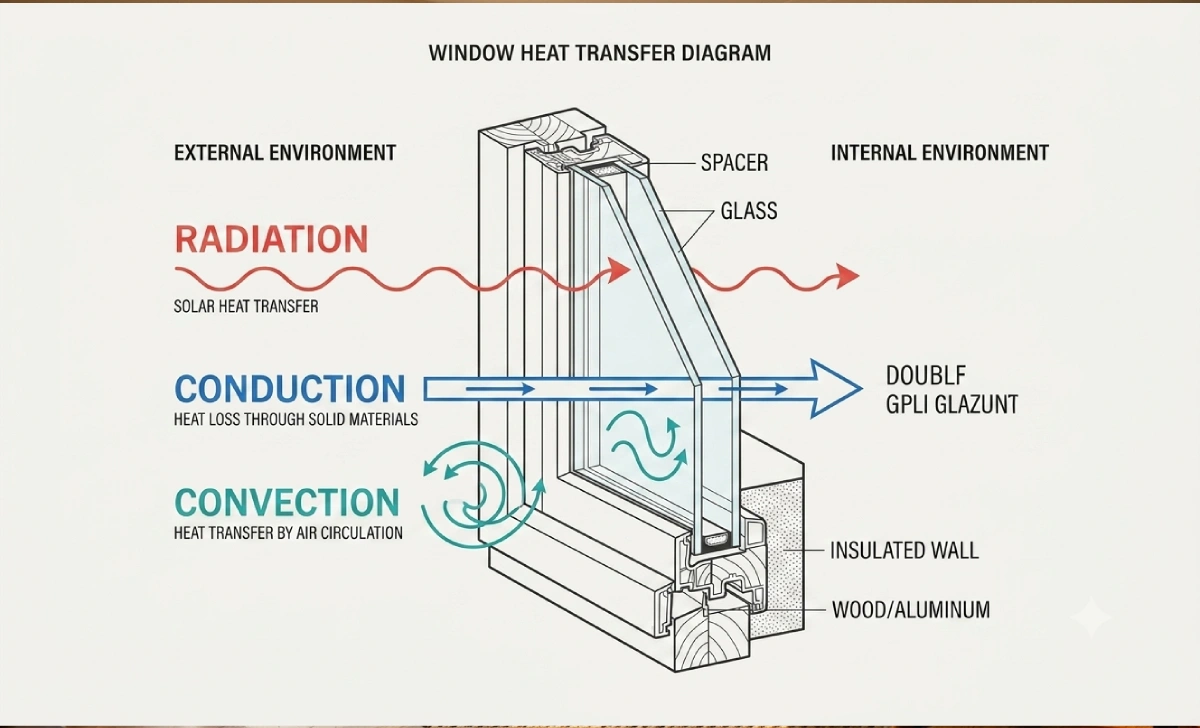
Before you pick a fix, it helps to understand the problem. Heat gets into your home through windows in three main ways: radiation, conduction, and convection.
Radiation — primarily infrared energy — is the sun’s heat travelling straight through the glass, the same way it warms your skin at the beach. Conduction happens because glass is a poor insulator — it passes heat through itself easily, much like a metal spoon left in a hot pan. Convection is heat moving through small gaps and cracks around the window frame, carried by air currents.
Glass simply isn’t built to hold heat back. A standard single-pane window has an R-value of roughly 0.9 — the common measure of a material’s resistance to heat flow — while an insulated wall sits around R-13 to R-19. That means a single-pane window loses about 20 times as much heat as an equal-sized section of wall, and even double-pane glass loses around 10 times as much. That’s a big gap, and it explains why rooms with large or south-facing windows often feel hotter than the rest of the house. Windows that face south and west tend to catch the most direct sun, so they’re usually the first ones worth treating.
Once you understand which of these three forces is doing the most damage in your home, it’s much easier to pick the right combination of fixes rather than guessing. For most homes in hot climates, radiation is the biggest culprit — which is why reflective solutions like window film and exterior shading tend to deliver the most noticeable results.
12 Best Ways to Insulate Windows to Keep Heat Out
Some of these methods cost nothing but an afternoon of your time. Others are bigger investments that pay off over years. Here’s the full lineup, starting with the most popular options.
1. Apply Window Film to Reflect Solar Heat
Window film is one of the most direct fixes available. It’s a thin layer applied to the glass that contains micro-layers of metal or ceramic, reflecting a large share of solar energy — including infrared heat — before it passes through. The best films can reduce heat gain by up to 78% and block up to 99% of harmful UV rays that would otherwise fade your furniture, floors, and artwork.
You can buy DIY kits for a weekend project — most use either a static-cling film that presses onto the glass with a soap-and-water solution, or an adhesive-backed version that bonds more permanently — or hire a professional installer for a cleaner, longer-lasting result. Many professional installers, including authorised 3M dealers, offer a consultation to match the film to your specific windows. Better films manage to cut glare and block heat while still letting in a reasonable amount of visible light, so your room doesn’t feel like a cave.
When comparing films, look at the light-to-solar-gain (LSG) ratio. A higher LSG means the film blocks more heat relative to the light it lets through — an LSG above 1.0 is good, and above 1.25 is excellent. If you live in a climate with both hot summers and cold winters, consider a Low-E (low emissivity) film: it reflects infrared heat outward during summer and helps retain indoor warmth in winter, making it a true year-round option.
Window film tends to pay off fastest in hot climates, where your air conditioner runs for months at a time.
- Effectiveness: High
- Cost: $10–$50 per window (DIY); $300+ (professional)
- Best for: Homeowners and renters alike, especially in sunny rooms
2. Install Cellular Shades (Honeycomb Shades)
Cellular shades are often called the most energy-efficient window covering you can buy, and it’s easy to see why. Their pleated design forms small honeycomb-shaped pockets that trap air, and that trapped air acts like a buffer between the hot glass and your room.
Properly installed cellular shades can block up to 60% of the sun’s heat. Unlike window film, they’re adjustable — you can close them during a heat wave and open them back up in winter to let the sun warm your space naturally. Single-cell shades are the most affordable option, while double- and triple-cell versions cost more but insulate better.
- Effectiveness: High
- Cost: $30–$150+ per window
- Best for: Rooms where you want flexibility between seasons
3. Use Blackout Blinds or Drapes
Blackout blinds are thicker and heavier than standard blinds, which gives them a genuine insulating edge. Many have a light-colored or reflective side that faces outward, bouncing sunlight and heat back before it ever reaches the room.
They’re not as adjustable in performance as cellular shades, and they work best in rooms where you don’t mind losing natural light, like bedrooms or media rooms. Still, for the price, they offer a solid amount of heat blocking.
- Effectiveness: Moderate to high
- Cost: $20–$100 per window
- Best for: Bedrooms and rooms that don’t need daytime light
4. Seal Gaps with Weatherstripping and Caulk
The gaps and cracks around your window frames are some of the most common places for air to leak in and out of your home, and sealing them is one of the cheapest, quickest fixes on this entire list.
There are two main tools for the job, and they handle different parts of the window. Weatherstripping works on the moving parts — the sash, the slider, any surface that needs to open and close. Foam tape, V-strips, felt, and tubular rubber are all common types, and the right one depends on your window style and the size of the gap.
Caulk handles the fixed parts: the seam where the window frame meets the wall, and any visible cracks that are not supposed to move. A tube of silicone or latex caulk and a caulk gun are all you need, and one tube can seal several windows. Make sure the surface is clean and dry before you apply it.
Sealing these gaps cuts down on convection, since less warm air can sneak in through the cracks. It’s worth doing this step before you invest in shades or curtains, since sealed gaps make every other method on this list work better.
- Effectiveness: Moderate (but improves every other method)
- Cost: $5–$25 per window
- Best for: Every home, as a first step
5. Install Bubble Wrap on Windows
This is about as budget-friendly as window insulation gets. The trapped air pockets in bubble wrap create a real insulating layer. To apply it, clean your window, lightly mist it with water, and press the bubble side against the glass — it will cling in place without any tape or glue, and you can peel it off later.
Standard bubble wrap works fine, though you can also buy versions designed specifically for windows, some with reflective coatings that boost the heat-blocking effect. The tradeoff is visibility: your window will look frosted rather than clear, so this method works best in rooms where you don’t need to see outside, like a laundry room, garage, or basement window.
- Effectiveness: Moderate
- Cost: Under $15
- Best for: Renters, basements, and rooms with low visibility needs
6. Add Draft Snakes (Draft Dodgers)
Draft snakes are long, filled tubes of fabric placed along the bottom of a window to block air leaks at the sill. They’re inexpensive, often handmade, and can be sewn or bought in a style that matches your decor.
On their own, a draft snake won’t stop radiant heat coming through the glass, but paired with weatherstripping or shades, it closes one more gap that air can sneak through.
- Effectiveness: Low to moderate (best combined with other methods)
- Cost: Free–$20
- Best for: A quick add-on to any other method
7. Use Insulating Shutters
Shutters have been used to manage heat in warm climates for centuries, and interior shutters with an insulating core still work well today. When closed, they create a rigid air barrier similar to what cellular shades provide, but with more durability and a cleaner look.
They cost more upfront than blinds or curtains, but they last for years and can be paired with other treatments, like film, for even better results.
- Effectiveness: High
- Cost: $150–$400+ per window
- Best for: Homeowners looking for a long-term, low-maintenance option
8. Install Thermal Curtains or Insulated Draperies
Thermal curtains include a foam or fleece layer sandwiched between the decorative fabric and a reflective backing. For the best results, hang them so they fit snugly against the wall on all sides, and let them sit about an inch away from the glass. That small air gap is what actually traps the heat before it reaches the room.
Make sure the reflective side faces the window, not the room. And if you have a choice, an opaque curtain will slightly outperform a translucent one.
- Effectiveness: Moderate to high
- Cost: $30–$120 per window
- Best for: Living rooms and bedrooms where style matters
9. Apply Styrofoam or Foam Board Panels
For rooms where looks matter less than performance, rigid foam board cut to fit inside the window frame offers some of the strongest insulation on this list. The goal here isn’t a decorative touch — it’s a physical barrier that stops radiant heat cold.
This method works best in garages, storage rooms, or windows you rarely need to see through. You can attach the panels with removable adhesive strips, so taking them down later is simple.
- Effectiveness: Very high
- Cost: $10–$30 per window
- Best for: Garages, storage areas, rarely used rooms
10. Upgrade to Energy-Efficient Windows
If your windows are old and drafty, a full replacement is the most expensive option here, but it’s also the most complete fix. When comparing energy-efficient windows, pay attention to three numbers: the U-factor, which measures insulation — look for 0.30 or lower; the solar heat gain coefficient (SHGC), which measures how much solar heat passes through — 0.25 or lower is ideal for hot climates; and the light-to-solar-gain (LSG) ratio we mentioned earlier. Windows that carry an Energy Star certification have already met strict efficiency benchmarks for your climate zone, so that label is a reliable shortcut when shopping.
Many energy-efficient windows also use a Low-E (low emissivity) coating on the glass — the same reflective technology found in Low-E window films — to block infrared heat while letting visible light through. Double-glazed windows lose about half as much heat as single-glazed ones, and triple glazing adds another 30% improvement, though it’s often not worth the extra cost for most homes. This is a bigger investment, but it usually pays for itself over time through lower cooling and heating bills.
- Effectiveness: Very high
- Cost: $300–$1,200+ per window
- Best for: Homeowners planning a longer-term upgrade
11. Use Window Insulation Film Kits (Shrink-Film Kits)
These clear plastic film kits are usually marketed for winter use, but they work in summer too. The film is taped around the window frame, then shrunk tight with a hair dryer, creating a sealed pocket of still air between the film and the glass.
They’re inexpensive, easy to remove without damaging your window frame, and don’t block your view the way bubble wrap does.
- Effectiveness: Moderate
- Cost: $10–$25 per window kit
- Best for: Renters wanting a nearly invisible fix
12. Add Awnings or Exterior Solar Screens
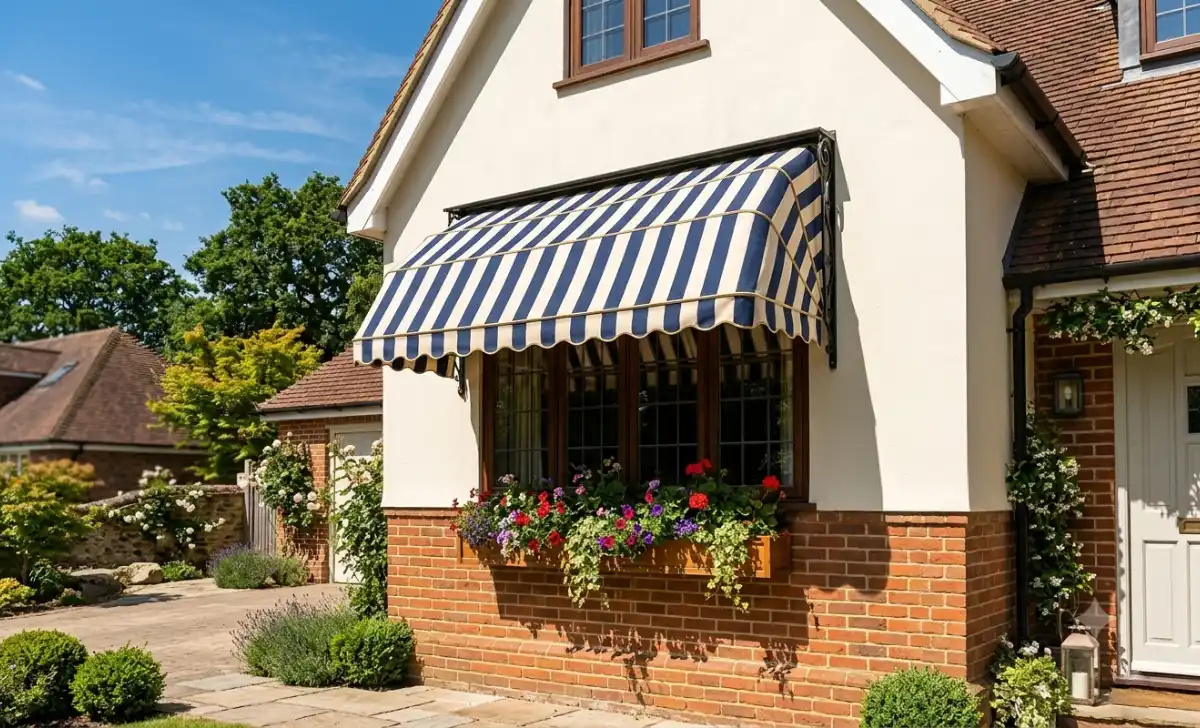
Every method so far works from inside the home, which means the heat has already made it through the glass before it gets blocked. Exterior solutions stop that heat before it ever reaches your window.
Awnings can cut solar heat gain by 65–77% on south-facing windows and a similar amount on west-facing ones. Solar screens are mesh coverings mounted on the outside of the window that block anywhere from 50–90% of solar heat while still letting you see out. If you live somewhere with long, hot summers, this is one of the highest-impact upgrades you can make.
- Effectiveness: Very high
- Cost: $50–$300+ per window
- Best for: Hot climates and south- or west-facing windows
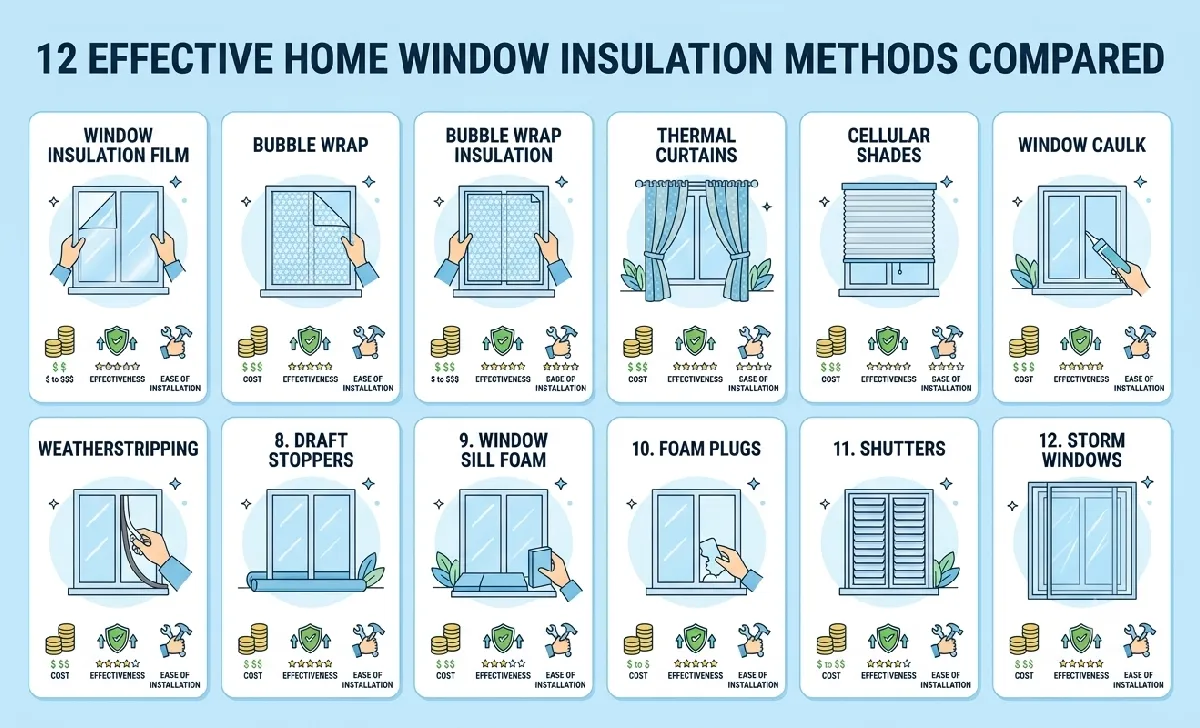
Comparison Table: Which Window Insulation Method Is Best for You?
| Method | Heat Blocked | Cost | Install Difficulty | DIY-Friendly | Keeps Natural Light | Removable |
|---|---|---|---|---|---|---|
| Window film | Up to 78% | $10–$300+ | Moderate | Yes | Yes | Yes |
| Cellular shades | Up to 60% | $30–$150+ | Easy | Yes | Partial | Yes |
| Blackout blinds | Moderate–High | $20–$100 | Easy | Yes | No | Yes |
| Weatherstripping & caulk | Moderate | $5–$25 | Easy | Yes | Yes | Yes |
| Bubble wrap | Moderate | Under $15 | Very Easy | Yes | No | Yes |
| Draft snakes | Low–Moderate | Free–$20 | Very Easy | Yes | Yes | Yes |
| Insulating shutters | High | $150–$400+ | Moderate | Some | No (closed) | No |
| Thermal curtains | Moderate–High | $30–$120 | Easy | Yes | No (closed) | Yes |
| Foam board panels | Very High | $10–$30 | Easy | Yes | No | Yes |
| Energy-efficient windows | Very High | $300–$1,200+ | Hard | No | Yes | No |
| Shrink-film kits | Moderate | $10–$25 | Easy | Yes | Yes | Yes |
| Awnings / solar screens | Very High | $50–$300+ | Moderate | Some | Yes | Depends |
If you’re renting, the DIY-friendly and removable options — window film, cellular shades, bubble wrap, draft snakes, and shrink-film kits — are your safest bets.
How to Choose the Right Window Insulation for Your Climate
Not every method fits every home. Your climate should shape your final choice.
- Hot climates with long cooling seasons: Window film and energy-efficient windows offer the best long-term value because they work passively, all day, every day. Exterior awnings or solar screens add even more protection on the sunniest walls.
- Mixed climates with hot summers and cold winters: Cellular shades and thermal curtains give you the most flexibility. Close them in summer to block heat, then open south-facing treatments during winter days to let the sun warm your rooms naturally. Low-E window films and storm windows are also worth considering in these regions, since they improve insulation year-round without a full window replacement.
- Mild climates: Weatherstripping, caulk, and draft snakes may be all you need. Bubble wrap and shrink-film kits are good low-cost backups for the hottest weeks of the year.
How Much Does Window Insulation Cost? A Budget Breakdown
Here’s a rough guide to what you can expect to spend, organised by budget tier.
- Free–$15: Draft snakes, bubble wrap, caulk, or simply rearranging furniture away from direct sun
- $15–$75: Weatherstripping, shrink-film kits, and DIY window film
- $75–$300: Cellular shades, blackout blinds, thermal curtains, and insulating shutters (per window)
- $300+: Professionally installed window film or full window replacement
Weatherstripping and window film often pay for themselves within a single cooling season through lower energy bills. Full window replacement is a bigger commitment and may take five to ten years to fully pay off, but it also solves other problems, like drafts and outdated seals.
If upfront costs are a concern, it’s worth knowing that the Weatherization Assistance Program (WAP) helps qualifying households cover materials and installation for energy-efficient upgrades. A professional home energy audit — offered by many utility companies, sometimes at no cost — can also pinpoint exactly which windows are losing the most energy, so you know where to spend your budget first.
If you’re already planning bigger home upgrades this year, it helps to see how window insulation stacks up against other projects in cost and payoff. For comparison, a kitchen remodel runs far higher than any window treatment on this list, which puts weatherstripping and window film into perspective as some of the best-value improvements you can make. If you’re weighing window upgrades against other big-ticket home projects, it helps to see how the numbers stack up against something like a kitchen remodel cost before deciding where to put your budget first.
A Quick Note on Maintenance
Window insulation is not a set-it-and-forget-it project. Caulk and weatherstripping can dry out, shrink, or peel away over time, so it’s worth checking them at the start of each cooling and heating season. While you’re at it, inspect around electrical outlets on exterior walls, exhaust fans, and any pipes or cables that pass through to the outside — air leaks often hide in places you don’t think to look. A few minutes of inspection twice a year keeps every method on this list working at its best.
The Bottom Line
Insulating your windows to keep heat out is one of the highest-impact, lowest-cost changes you can make to your home. You don’t need to tackle everything at once. Start with a free or cheap fix today, like weatherstripping, caulk, or bubble wrap, and build toward a longer-term upgrade, like cellular shades or window film, when your budget allows. The payoff is a cooler home, a lighter cooling bill, and less UV damage to your furniture and floors along the way.
FAQs
Does window film really keep heat out?
Yes. Quality window films can reduce solar heat gain by up to 78% and block up to 99% of harmful UV rays before they enter your home. Reflective films tend to perform the best, and professionally installed options offer more durability. Look for a high light-to-solar-gain ratio — above 1.0 is good, above 1.25 is excellent — for the best mix of visibility and heat blocking.
How long does window film last?
Quality window films installed by professionals can last 15–20 years. DIY films, especially static-cling versions, tend to last 3–7 years before they need replacing. Films on south- or west-facing windows that receive intense, direct sun every day may degrade faster than those on shaded sides of the house.
Can I use bubble wrap to insulate my windows?
Yes. Medium-to-large bubble wrap sticks to a clean, lightly misted window and creates a real insulating air layer. Reflective versions built specifically for windows can block even more heat. Keep in mind your view will be blurred, so this works best for windows you don’t look through often.
What is the most effective window insulation for summer?
Cellular shades block up to 60% of solar heat and are one of the most efficient coverings you can buy. Window film with a strong LSG rating is another top performer. For the best results, pair an exterior option, like awnings or solar screens, with an interior one, like cellular shades or film.
How do I insulate windows without replacing them?
Weatherstripping, caulk, window film, cellular shades, bubble wrap, draft snakes, shrink-film kits, and insulating shutters all work without touching the window itself. Start with weatherstripping and caulking, since sealing air leaks makes every other method more effective.
Will insulating my windows block natural light?
It depends on the method. Window film, open cellular shades, and solar screens still let in a good amount of light. Bubble wrap, foam board, and closed blackout blinds block most or all of it. Clear shrink-film kits keep your view intact.
Does insulating windows for summer help in winter too?
In most cases, yes. Cellular shades and thermal curtains work well in both seasons. Low-E films are specifically designed for year-round performance — they reflect heat outward in summer and help retain warmth in winter. Standard reflective window film is the one exception worth noting: in cold climates, you may want some solar heat gain during winter, so a heavy-duty summer film could work against you then. On south-facing windows, it helps to open your treatments during winter days to let the sun in naturally.
Should I insulate windows from the inside or outside?
Exterior solutions like awnings and solar screens stop heat before it reaches the glass, which makes them more effective overall. Interior solutions are usually easier to install and more practical for renters. If your budget allows, combining both gives you the strongest results.



No Comment! Be the first one.