Aviation lawyer Amanda Applegate skipped her vacation last month. Aircraft-purchase paperwork kept piling up on her desk, faster than she could clear it.
The reason traces back to two words: SpaceX and AI. A wave of fresh wealth from SpaceX’s record-breaking IPO and a run of anticipated AI startup listings has sent a new class of buyers shopping for private jets. This is not a vague “tech boom” story. It comes with real numbers: a 177% spike in business jet traffic near SpaceX’s Texas launch site, a used jet market running near historic lows on inventory, and jet-card sales jumping 60% at one major provider. This piece breaks down exactly how the SpaceX and AI startup private jet demand story is playing out, what it means for private aviation pricing, and how someone outside the ownership world can actually get access to this market.
Key Takeaways
- SpaceX’s $85.7 billion IPO and expected AI startup listings from firms like Anthropic and OpenAI are the direct drivers behind a documented spike in private jet demand, not a general “tech is rich” trend.
- The pre-owned jet market was already tight before this wealth arrived, and new demand from SpaceX and AI money is pushing resale prices higher on an already thin supply.
- Most new buyers are not jumping straight to ownership. Jet cards and fractional programs are the real entry point, and that is where most readers considering private aviation should start looking.
If you are watching this trend from the outside, the more useful question is not whether SpaceX and AI wealth will keep filling private jet order books. The data already answers that. The more useful question is whether the private aviation industry, and the airports and services around it, can keep up with a buyer base that is younger, faster-moving, and larger than the industry expected even a year ago.
Why Are Private Jets Suddenly Synonymous with SpaceX and AI Founders?
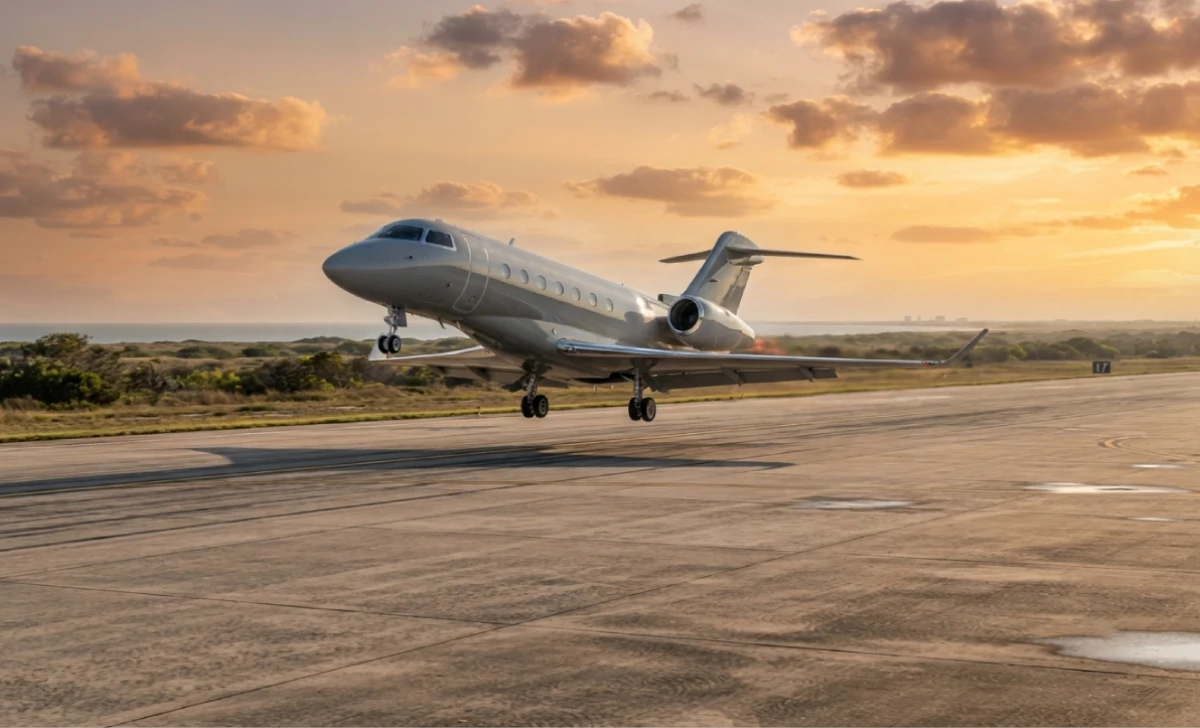
Big liquidity events have always moved the private aviation market. What is different in 2026 is the size and speed of the money involved.
SpaceX’s IPO raised $85.7 billion, pushing the company’s valuation to roughly $2 trillion after its merger with Elon Musk’s AI firm, xAI. That single event created a wave of new millionaires and billionaires among employees, early investors, and board members almost overnight.
The clearest sign shows up in flight data. Business jet traffic near Brownsville, Texas, close to SpaceX’s Starbase launch site, spiked 177% to 97 flights during the company’s IPO window, according to aviation data firm WINGX. That is not commercial airline traffic. That is private jets carrying executives, bankers, and early employees in and out of a small stretch of the Texas Gulf Coast, a region that barely registered on the private aviation map a few years ago.
AI’s Breakneck Pace and the Death of Commercial Flight Schedules
SpaceX is not acting alone here. Anthropic and OpenAI are both viewed as likely candidates for major IPOs of their own, and investors are not waiting for the paperwork to clear before they start spending. San Francisco, home to both companies, recorded the fastest growth in business jet flights among major U.S. cities, with traffic up about 11% year over year through mid-June, per WINGX data.
Part of this comes down to travel patterns. Fast-moving AI companies run on compressed timelines: board meetings, fundraising trips, and partner visits that do not fit neatly around commercial airline schedules. A private jet turns a two-day round trip into a same-day one, which matters more to a founder managing a company growing at AI speed than it did to a traditional executive a decade ago.
How Exactly Are SpaceX Operations Fueling Jet Traffic? (Real-World Logistics)
The connection between SpaceX and private aviation is not only about founder wealth. It runs through the physical logistics of running a rocket company from a remote launch site.
Starbase sits in an industrial complex near Boca Chica, Texas, well outside the range of convenient commercial flights for the executives, contractors, and government officials who need to be there for a launch. That gap gets filled by charter and private aircraft, which explains why a relatively small coastal region saw such a sharp jump in jet activity during the IPO window.
Hourly charter costs for this kind of travel typically run between $1,500 and $18,500 depending on aircraft size, while buying a jet outright ranges anywhere from $6 million to $70 million based on the model. For a company running frequent trips between Hawthorne, California, Starbase in Texas, and launch-support sites like Vandenberg, those costs add up fast, which is part of why chartering or a jet-card membership often comes before any full aircraft purchase.
Light and midsize jets, the kind that can land on shorter regional runways near Brownsville without much notice, are doing most of the work here. They are cheaper to charter than the ultra-long-range aircraft favoured by established billionaires, and they fit a launch schedule that can shift by days depending on weather and range approval. That flexibility matters more to a rocket company than cabin size does.
Not Just Elon: The Ripple Effect on Suppliers, Investors, and Governments
The people flying into Starbase are not only SpaceX executives. Venture capitalists, board directors, bankers preparing future IPOs, and early employees cashing out are all part of the flow. Aviation lawyer Amanda Applegate said her firm, Soar Aviation Law, has seen business jump 25% this year handling aircraft purchase agreements tied to this wealth.
“I think there are many more people who can afford to travel privately, and that number seems to grow daily,” Applegate said, describing the pace of new clients entering the market.
AI Startups Are Hoarding Jets, but Not in the Way You Think
The instinct is to picture AI founders buying jets outright the moment they get rich. The data tells a more layered story.
Most new private aviation buyers do not start with full ownership. They start with a jet card or a fractional-ownership program, then move toward buying a plane once their wealth and travel needs are more established. Data from aviation intelligence firm Jetnet shows flights through shared-ownership programs rose 11.8% globally in the first five months of 2026 compared with the same period in 2025, while flights operated by private jet owners climbed 13.4%.
Flexjet, which offers fractional ownership, leasing, and prepaid flight-hour memberships, has noticed a shift in who is buying. “Self-made first-generation wealth, like those set to benefit from these tech IPOs, is resulting in a Flexjet customer base that is younger,” said D.J. Hanlon, the company’s executive vice president of sales.
The “Work-in-the-Air” Culture Turbocharging Demand
Jet Linx, which sells aircraft management and jet-card memberships, reported business up 60% year-to-date through May, with especially strong growth in Texas cities like San Antonio, Dallas, and Austin. Its membership structure starts with a one-time fee of $17,500 or an upfront deposit of $250,000, a price point that puts it within reach of newly wealthy tech employees rather than only established billionaires.
Charter company Mercury Jets said demand from technology-sector executives has grown by double digits since the start of the year. Notably, the company began fielding calls from people who had never flown privately before, right after the SpaceX IPO news broke, according to Director of Charter Sales Ryan DeBruyne.
That first-time-flyer detail matters more than it might seem. It signals that this demand wave is not only established wealth trading up to a bigger jet. It includes people with no private aviation history at all, moving straight from commercial coach seats to charter membership within weeks of a liquidity event, a pattern brokers say they rarely saw before this year.
What Does This Mean for the Private Aviation Industry (and the Rest of Us)?
This surge in demand is landing on a private jet market that already had a supply problem before SpaceX and AI wealth arrived.
Pre-owned jet inventory has been shrinking for over a year. Industry data from Sandhills Global shows used jet inventory down close to 8% year over year as of spring 2026, with large jets seeing an even steeper 21.7% decline. Separate analysis from Jefferies and AMSTAT put the total pool of pre-owned jets for sale at around 4% of the global fleet, well below the 10% level generally seen as a balanced market.
Brokers on the ground describe the same shift. One California-based aircraft broker, speaking on condition of anonymity due to ongoing client deals, said technology clients made up roughly one-fifth of his business a decade ago. Today they represent about three-quarters, and they are buying fast enough that resale values have jumped noticeably. “I have sold planes last year that I could sell for 10% to 15% more today,” the broker said, a pattern echoed across multiple dealer networks tracking the same tech-driven demand.
For a sense of how far this market stretches at the very top, Qatar’s recently retrofitted $400 million Boeing 747 shows just how extreme large-cabin private aviation ownership can get once national governments and heads of state enter the picture. Most SpaceX and AI wealth is not operating anywhere near that scale, but it points to the same underlying trend: when buyers want a specific aircraft and are willing to pay for it, sellers have very little reason to negotiate.
Three effects are showing up clearly in the resale market right now:
- Faster sales cycles. Well-maintained, late-model aircraft are selling with little room for price negotiation, since buyers know waiting means fewer options.
- Rising resale values. Brokers report used aircraft reselling for meaningfully more than they did just a year earlier, driven by buyers who would rather pay a premium than wait years for a new-build delivery slot.
- New-build backlogs stretching further out. With manufacturer delivery slots already booked years in advance, more buyers are competing for the same shrinking pool of pre-owned inventory.
The Sustainability Paradox: Who Gets to Complain About Emissions?
Private aviation has faced criticism over its carbon footprint for years, and that debate has not gone away just because the buyers are new. What has changed is who is doing the buying. Many of the people entering this market work at companies whose own environmental commitments, or public image around them, sit somewhat awkwardly next to a fresh jet-card membership. That tension is likely to follow this story as more AI wealth converts into aircraft purchases, and it plays out against a jet fuel market shaped by broader energy shifts, including the supply pressures described in Shell’s 2026 LNG Outlook.
Can You (or Your Business) Tap Into This World?
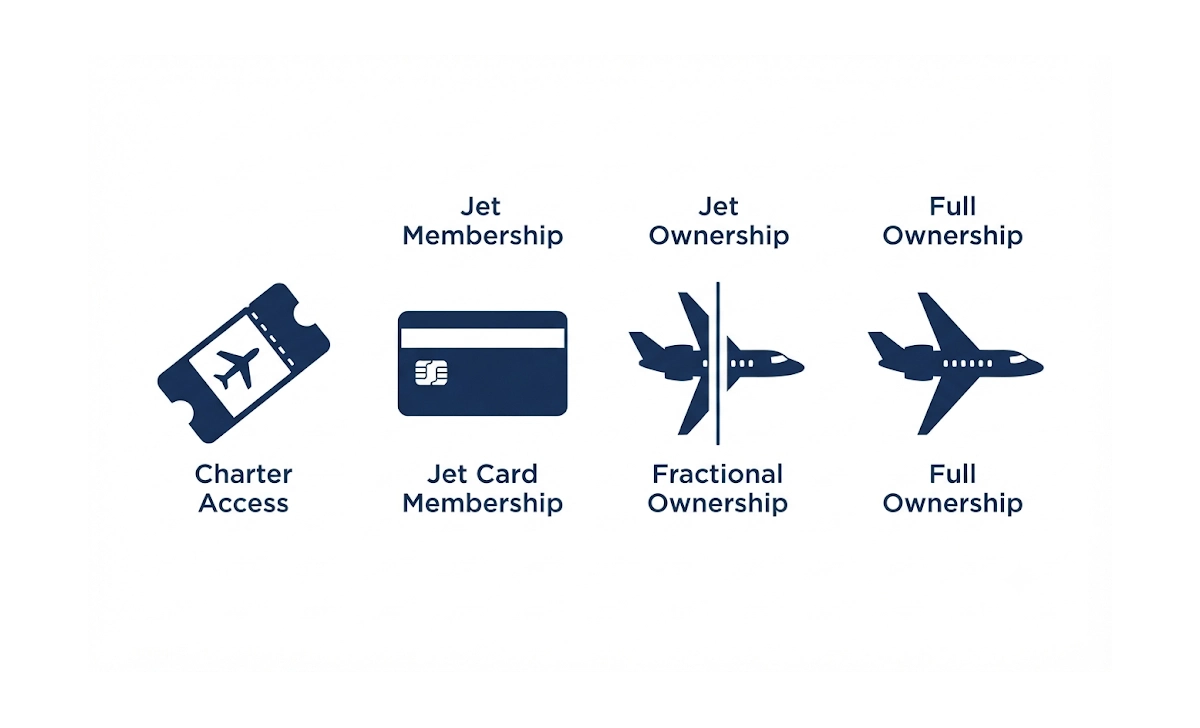
Not everyone reading about SpaceX and AI wealth has $6 million sitting around for a jet. Most people who enter private aviation start much smaller, and the entry points differ a lot in cost and commitment.
| Access Model | Entry Cost | Best For | Flexibility | Typical Tech User |
|---|---|---|---|---|
| On-Demand Charter | Pay per flight, no membership | Occasional flyers, one-off trips | Highest, no long-term commitment | First-time flyers testing private aviation |
| Jet Card | $17,500 membership fee or $250,000 deposit | Frequent flyers who want fixed hourly rates | High, prepaid hours across multiple aircraft | Newly liquid employees after an IPO |
| Fractional Ownership | Typically $500,000 to several million for a share | Regular flyers wanting guaranteed aircraft access | Moderate, tied to a specific fleet and program | Founders and early executives with steady travel needs |
| Full Ownership | $6 million to $70 million+ | Heavy, consistent flyers with dedicated routes | Full control, but full responsibility too | Established founders and long-term SpaceX or AI wealth holders |
The Hidden Opportunity Airports and FBOs Are Racing to Exploit
Smaller airports near tech hubs and launch sites are seeing more traffic than they were built for. Fixed-base operators (FBOs), the companies that manage private terminals, hangars, and fueling at these airports, are expanding services in cities like Austin and San Antonio specifically to keep up with jet-card and charter demand. That buildout is quietly becoming its own investment story inside the broader private aviation trend.
The FBOs handling this well share a common trait: they built repeatable booking, fueling, and ground-handling processes before demand spiked, not after. That kind of preparation is the same discipline covered in this breakdown of repetition as a scaling method, and it explains why some airports absorbed the SpaceX and AI jet surge smoothly while others are still scrambling to add hangar space and staff.



No Comment! Be the first one.