So you’ve got the backyard space, the budget is roughly set, and now you’re stuck staring at two very different products that both promise the same thing: warm water, less stress, better sleep. One costs a fraction of the other. One takes up half the space. And every article you’ve read so far seems to just list specs without telling you which one you should actually buy.
Here’s what this guide does differently. By the end, you’ll know exactly how a swim spa and a hot tub stack up on cost, space, fitness value, and relaxation — and more importantly, which one matches how you’ll really use it, not how you hope you will.
What’s the Real Difference Between a Swim Spa and a Hot Tub?
At the most basic level, a hot tub is built for soaking. It’s a compact, heated pool designed to hold a handful of people at a temperature between 100°F and 104°F, meant for sitting still and letting the jets do the work. A swim spa is a different animal entirely — a long, narrow vessel that combines a resistance current (created by either high-output jets or a dedicated propeller system) with cooler water, built so you can swim, jog, or exercise in place without ever touching the walls.
The gap between them isn’t just size. It’s purpose. A hot tub is a destination you sit in. A swim spa is something you move in.
Size and Physical Dimensions
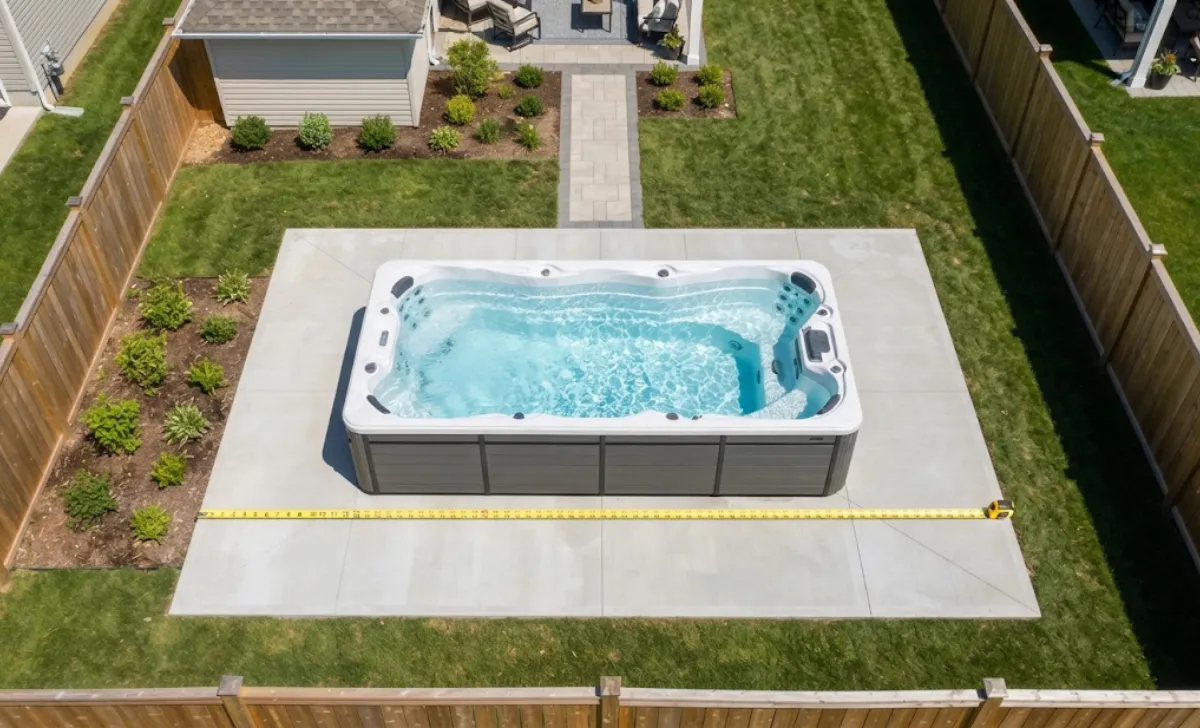
Hot tubs typically run 6 to 8 feet across and hold 300 to 500 gallons of water, fitting comfortably on most decks or patios. Swim spas stretch anywhere from 12 to 21 feet long and hold 1,000 to 2,500-plus gallons — closer in footprint to a small in-ground pool than a spa.
Temperature and Water Volume Differences
Hot tubs stay locked in that classic 100°F to 104°F soaking range. Swim spas run cooler on the workout side, usually 80°F to 85°F, since higher temperatures make sustained exercise uncomfortable and unsafe. Many swim spas solve this with a dual-zone setup — a separate, smaller section heated like a true hot tub, so you get both experiences in one unit.
Feature-by-Feature Comparison
| Feature | Swim Spa | Hot Tub |
|---|---|---|
| Primary Use | Exercise, swimming against current | Soaking, relaxation |
| Size | 12–21 ft | 6–8 ft |
| Temperature Range | 80–85°F (workout zone) | 100–104°F |
| Water Volume | 1,000–2,500+ gallons | 300–500 gallons |
| Seating Capacity | Varies; often 2–6 in hot tub zone | 2–12 |
| Initial Cost Range | $10,000–$50,000+ | $3,000–$15,000 |
| Operating Cost | Higher (more water, more heating) | Lower |
| Installation Difficulty | Complex; concrete pad often required | Moderate; deck or patio-ready |
| Year-Round Use | Yes | Yes |
| Best For | Fitness, families, pool alternative | Relaxation, hydrotherapy, couples |
Pros and Cons at a Glance
Swim Spa
- Pros: Doubles as exercise equipment and family pool alternative; usable year-round; often includes a dual-zone hot tub section
- Cons: Higher upfront cost; heavier installation requirements; seating is functional, not plush
Hot Tub
- Pros: Lower cost to buy and run; easier installation; genuinely comfortable, contoured seating built for long soaks
- Cons: Limited to soaking, no real exercise value; smaller footprint means fewer people at once; usage tends to drop off after the first few months
How Much Does a Swim Spa vs Hot Tub Actually Cost (Including Hidden Expenses)?
Picture this: you’ve narrowed it down to a swim spa or a hot tub, and now you’re staring at price tags wondering if the swim spa is really worth three times the cost. Here’s what you actually need to budget for before you sign anything.
Upfront Cost Breakdown
A hot tub generally runs $3,000 to $15,000 depending on size, jet count, and brand, with installation adding another $1,500 to $2,000 for a deck or patio setup. A swim spa starts around $10,000 and climbs past $50,000 for premium dual-zone models, with installation costing $5,000 to $8,000 — sometimes more.
Here’s the part dealers don’t always lead with: swim spas are heavy enough that standard delivery won’t cut it. Many require a crane to lift the unit over a fence or house, which adds a separate line item to your final bill. And the pad itself? A standard deck won’t hold tens of thousands of pounds of water and equipment. You’re looking at a reinforced concrete pad in most cases, and it’s worth having a structural engineer or qualified contractor confirm your chosen spot can handle the load before you pour anything.
Long-Term Operating Costs (Energy, Chemicals, Maintenance)
This is where the gap keeps widening. A swim spa holds two to five times the water of a hot tub, which means more energy to heat and circulate it, plus more chemicals to keep it balanced. The larger pumps draw more power, and the heater runs longer—especially in colder climates.
That said, newer swim spas do come with better heat insulation than older generations, which helps take the edge off winter utility spikes. But the physics remain simple: more water, more gallons to treat, more equipment running. Hot tub owners, by comparison, deal with a smaller system that costs less to run and takes less time to maintain each week.
Which One Is Better for Exercise and Fitness?
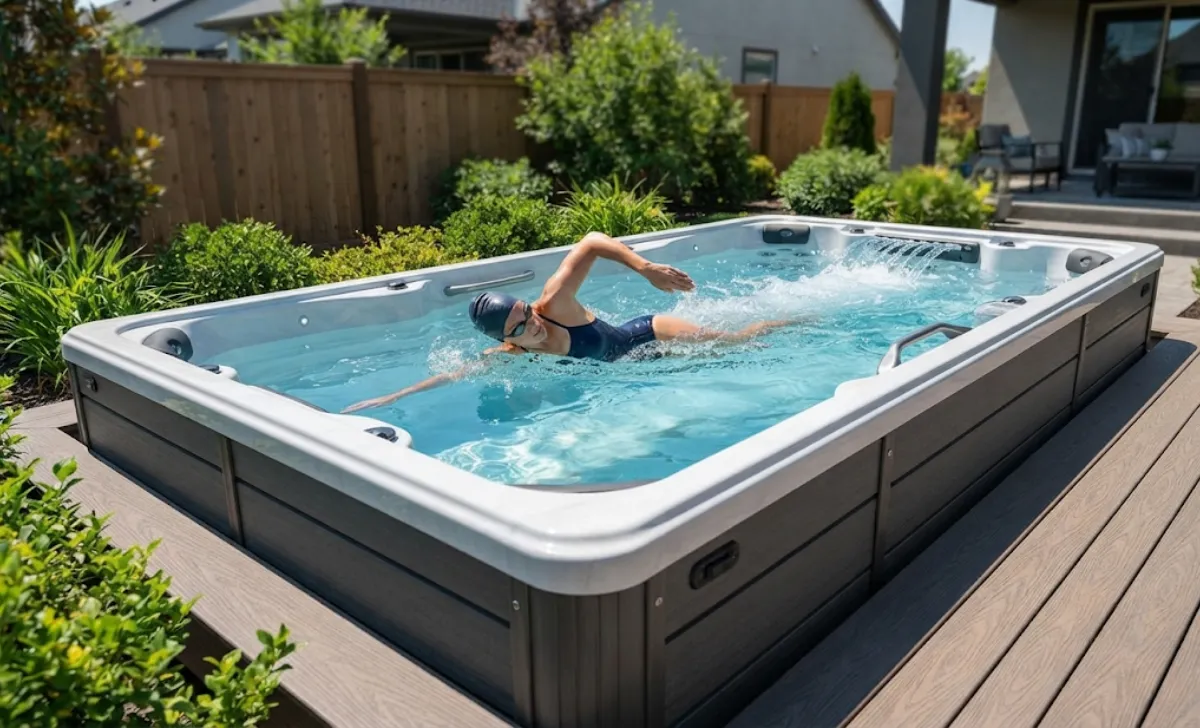
If your goal is a genuine workout, a hot tub isn’t going to get you there — it’s built for stillness, not movement. A swim spa, on the other hand, gives you a current to swim against, attachment points for resistance bands if you want to add strength work, and enough length to walk or jog in place.
For someone managing joint pain or recovering from an injury, that low-impact resistance is a genuine alternative to a gym membership, minus the commute. Physical therapists and physiotherapists often recommend this setup because the buoyancy takes pressure off joints while the resistance still builds strength and mobility. The movement itself also helps release endorphins, which naturally eases stress alongside the physical gains.
That said, the fitness value only pays off if you actually use it that way. In my experience, most buyers underestimate how much discipline a home workout setup requires — a swim spa doesn’t exercise itself.
Which One Offers Better Relaxation and Hydrotherapy?
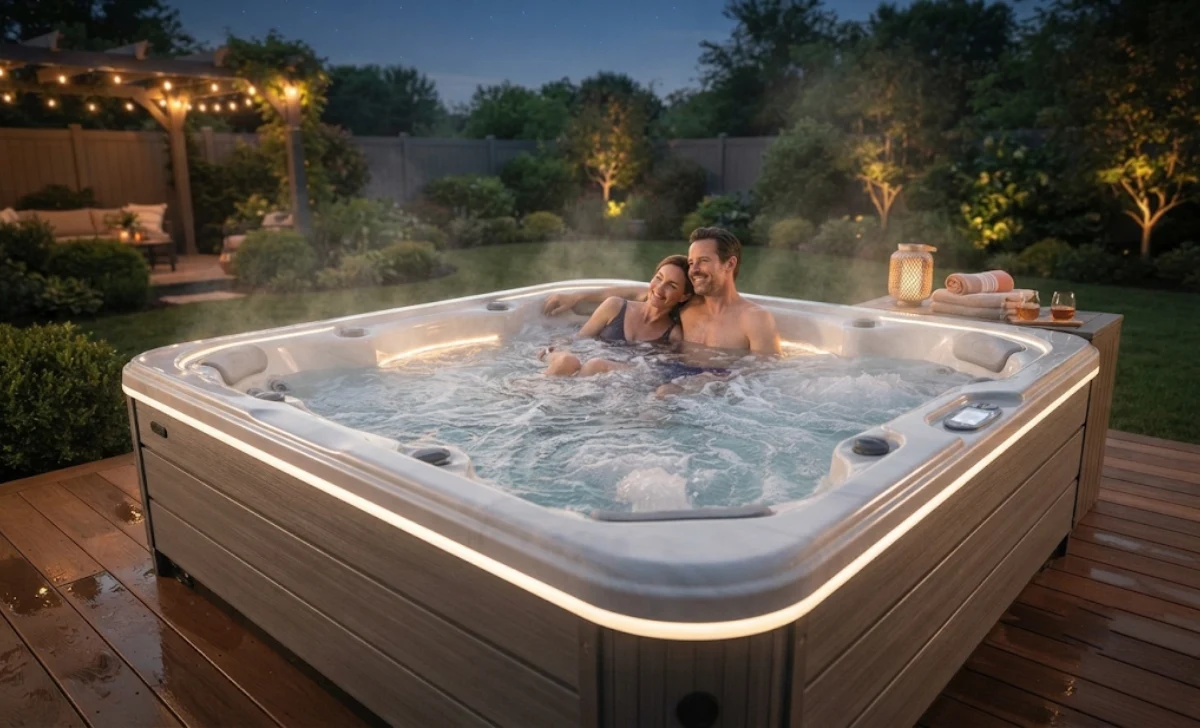
Here’s the thing about hydrotherapy: it’s less about water volume and more about jet placement and seating design. Hot tubs are engineered from the ground up for this — contoured seats, targeted massage jets aimed at your lower back and shoulders, and a temperature built to loosen tight muscles.
Beyond basic muscle tension, consistent soaking has been linked to better cardiovascular function, improved sleep quality for those dealing with insomnia, and noticeable stress reduction for people managing anxiety. Even chronic pain conditions like fibromyalgia respond well to that steady, enveloping warmth, which is why you’ll find hot tubs in so many physical therapy clinics.
Swim spas with a dual-zone section can offer a similar soak, but it’s usually smaller and less elaborate than a dedicated hot tub. And while you can dress either unit up with LED lighting, a waterfall, or even a sound system, those extras don’t change the core reality: if pure relaxation is your top priority, a hot tub does it better, and it does it for less money.
How Do Installation and Space Requirements Compare?
Indoor vs Outdoor Installation
Both products can go indoors or outdoors, but a swim spa’s size makes indoor installation far more limiting — few homes have a room built to hold a 15-foot vessel. Outdoors, a hot tub can usually sit on an existing deck or patio with minimal reinforcement, while a swim spa almost always needs its own dedicated pad.
Structural Requirements You Can’t Ignore
A full swim spa can weigh tens of thousands of pounds once filled, which means a standard deck won’t cut it — you’re looking at a reinforced concrete pad in most cases, and you’ll want a contractor or structural engineer to confirm the site can handle it. Hot tubs are lighter and more forgiving, though even they need a level, load-bearing surface. Before you buy either one, get a professional to confirm your intended spot can actually hold the weight—and check your delivery path for crane access while you’re at it.
Which One Should You Pick? A Lifestyle-Based Decision Guide
Best for Families with Kids
If you’ve got young kids and want year-round outdoor time, a swim spa usually wins. It gives kids a shallower, contained splash zone without the depth of a full pool, and doubles as a spot for the whole family to unwind after dinner. Imagine backyard evenings where the kids are swimming against the current while you soak in the dual-zone section a few feet away — that’s the appeal.
Best for Fitness Enthusiasts
If your main goal is a daily low-impact workout, the swim spa is built for exactly that. The adjustable current lets you swim in place for as long as you want, and it works well for anyone managing joint issues who still wants to stay active.
Best for Couples and Relaxation Seekers
A retired couple looking to ease joint pain after a round of golf, or two people who just want a quiet soak before bed, will almost always get more day-to-day value from a hot tub. It’s built for exactly that use case, it’s cheaper to run, and the seating is simply more comfortable for long sits.
Best for Smaller Backyards and Moderate Budgets
If your outdoor space is tight and your budget sits closer to $5,000–$10,000, a hot tub is the more realistic choice. It fits smaller decks, needs less structural work, and gets you into hydrotherapy without the five-figure investment a swim spa demands.
What Do Owners Wish They Knew Before Buying?
Common Swim Spa Regrets
Several owners in spa forums admit the seating isn’t as comfortable as they expected — functional for exercise, but not the plush lounge feel of a dedicated hot tub. Operating costs also tend to run higher than first-time buyers anticipate, especially through winter months. And the fitness angle, while real, only holds up if you stay consistent — plenty of owners say the “workout novelty” faded within the first year.
Common Hot Tub Regrets
Usage is the biggest one. What starts as a daily soak often drops to once or twice a week within a few months, once the initial excitement wears off. Maintenance also feels more constant than people expect — checking chemical balance, cleaning filters, and monitoring water levels becomes a small weekly chore. And first winter energy bills catch a lot of new owners off guard.
Before You Buy: A Quick Checklist
- Measure your intended installation space, including clearance for delivery equipment
- Confirm your deck, patio, or pad can bear the full weight of your chosen unit—and factor in crane access if needed
- Set a full budget that includes installation, not just the sticker price
- Be honest about how often you’ll realistically use it — daily, weekly, or occasionally
- Get a written quote on ongoing energy and chemical costs from your dealer
- Review the warranty terms for both the shell and the mechanical components
- Visit a showroom and sit in both a swim spa and a hot tub before deciding
Final Thoughts
A few things worth carrying with you:
- A hot tub costs less to buy and run, and wins on comfort and hydrotherapy.
- A swim spa costs more but adds real exercise value and works as a family pool alternative.
- The right choice comes down to how you’ll actually use it, not which one sounds more impressive.
If you’re still torn, visit a local showroom and sit in both. The difference between functional seating and comfort seating is something you feel, not read about — and no spec sheet will settle that for you.
Drop your questions in the comments, and we’ll help you figure out which one fits your backyard.
FAQs
Can a swim spa be used as a hot tub?
Yes, if it’s a dual-zone model. These units include a separate, smaller section heated to standard hot tub temperatures, giving you both a workout zone and a soaking zone in one unit.
Is a swim spa the same as a Jacuzzi?
Not exactly. Jacuzzi is a specific brand that makes both hot tubs and swim spas, but people often use the term generically for any spa with jets. A swim spa is a distinct product category—longer, built for exercise, and often with its own current system.
How much does a swim spa cost compared to a hot tub?
Hot tubs generally run $3,000 to $15,000, while swim spas start around $10,000 and can exceed $50,000 for larger, dual-zone models. Installation adds another $1,500–$2,000 for a hot tub versus $5,000–$8,000 for a swim spa, and crane delivery can add even more.
Which is cheaper to maintain — a swim spa or a hot tub?
A hot tub is cheaper to maintain in almost every case. Its smaller water volume means less energy for heating and fewer chemicals to keep it balanced compared to a swim spa’s much larger tank. Swim spa owners also deal with regular skimming and vacuuming, which hot tub owners rarely have to do.
What does the weekly maintenance routine actually look like?
For both, you’ll test water chemistry a few times a week and clean the filters regularly. Swim spas add skimming for surface debris and vacuuming the floor—simply because there’s more surface area. Both should be drained and refilled every three to four months to keep water quality in check.
Do swim spas and hot tubs use a lot of electricity?
Both use significant electricity to maintain temperature, but swim spas use notably more due to their larger water volume and bigger pumps, especially in colder climates where the heater runs longer. Modern insulation helps, but the volume difference is hard to overcome.
Can both be used year-round in cold climates?
Yes, both are designed for year-round use with proper insulation and a well-sized heater. Winter operating costs will be higher for either product, but swim spas see a steeper increase given their size.
Is a swim spa worth it for a small backyard?
Not usually. Swim spas need significant length and a reinforced pad, which makes them a tough fit for tighter spaces. A hot tub is the more practical choice when square footage is limited.
Which is better for arthritis and joint pain?
Both offer real benefits — a hot tub’s warm water and targeted massage jets help with stiffness and pain relief during a soak, while a swim spa’s low-impact resistance exercise can improve joint mobility and circulation over time. Many buyers managing joint pain end up choosing based on whether they want passive relief or active movement.

Other Articles

Spot Emotional Spending Triggers Before You Click ‘Buy’
Financial Wellness for Everyone: What It Really Means

No Comment! Be the first one.