
Most people save up thousands of dollars and weeks of vacation time for the trip that will finally feel meaningful. I did too — until one summer, a cancelled flight and a refunded hotel booking left me stuck at home with nothing but free time and low expectations. What happened next quietly changed the way I think about travel forever.
That trip — the one right outside my door — turned out to be the backyard travel experience I never knew I needed.
Why We Overlook What’s Right in Front of Us
There’s a strange psychology behind travel. The farther something is, the more valuable we assume it must be. We scroll past the state park forty minutes away to book a flight to a national park across the country. We ignore the old neighbourhood diner to eat at a “must-try” restaurant in another city.
Researchers call this the “familiarity blindness” effect — we stop noticing things we see every day. The same street corner you’ve walked past a hundred times becomes invisible. The creek behind your neighbourhood becomes background noise.
But here’s what I discovered: the moment you decide to travel your own backyard — with the same curiosity you’d bring to a foreign country — everything changes.
What “Backyard Travel” Actually Means
Backyard travel doesn’t mean sitting on your porch. It means treating your local area like a destination you’ve never visited before.
It means:
- Driving to a neighbourhood you’ve never explored, even if it’s 10 minutes away
- Visiting a state or local park you’ve driven past for years
- Eating at a restaurant run by a local family, not a chain
- Talking to people — vendors, shop owners, retirees at the park — like a curious traveller would
When I did this for the first time, I spent three days exploring a 15-mile radius around my home. I found a working-class neighbourhood full of incredible food I’d never tried. I hiked a trail I didn’t know existed. I sat by a reservoir at sunset and felt genuinely moved.
I hadn’t gone anywhere. And it was one of the best trips of my life.
How to Plan a Backyard Trip (Step by Step)
Step 1: Wipe Your Mental Map Clean
Open Google Maps. Zoom in on your area. Now pretend you’re a tourist from another country looking at it for the first time. Where would you go? What looks interesting? Mark those places.
Don’t filter by “things I’ve already done.” Look for what you’ve always passed and never stopped at.
Step 2: Set a Simple Theme
The best travel has a loose theme. For my first backyard trip, mine was: “Find where the locals actually go.” That single idea guided every choice I made.
Other themes that work:
- Historical spots within 30 miles
- Local food from cultures different from your own
- Nature trails rated under 100 reviews online (hidden gems)
- Small businesses that have been open for over 20 years
Step 3: Unplug the Routine
This is the step most people skip — and it’s the most important one.
Block the days off your calendar like real vacation days. Don’t check work email. Don’t run errands. Tell yourself you’re travelling, because you are.
The mindset shift matters more than the destination.
Step 4: Move Slowly
Tourists rush. Travelers linger.
On my second day, I stopped at a roadside produce stand I’d driven past dozens of times. The elderly man running it had lived in the area for 60 years. He told me about a flooded bridge from the 1970s that nobody talks about anymore, and how the whole town changed after the textile mill closed.
I learned more in 20 minutes than I could have from a travel guide.
Step 5: Document Like You’re Somewhere New
Take photos. Write notes. Buy one small local thing as a souvenir. Keep a simple travel journal entry each night.
When you document, you pay attention. When you pay attention, you actually experience things instead of just moving through them.
What I Found That I Wasn’t Expecting
I want to be honest here, because this is the part most travel articles skip.
Not every moment was magical. One afternoon was genuinely boring. One “hidden gem” turned out to be a weedy lot. That’s real travel — the unedited version.
But three moments stood out:
The food discovery. I found a small Eritrean restaurant in a strip mall I’d never entered. The owner came out and explained every dish. I went back twice that week.
The quiet hour. I sat alone in a small cemetery from the 1800s near my neighbourhood. Reading the names and dates, I felt connected to the history of a place I thought I knew everything about.
The conversation. A retired schoolteacher I met at a local park told me she’d never left the state her whole life — and she didn’t feel like she’d missed a thing. That stuck with me.
Common Mistakes to Avoid
Don’t over-schedule. Backyard travel works because it’s flexible. If you pack every hour, you lose the spontaneity that makes local exploration special.
Don’t compare it to big trips. This isn’t a replacement for international travel. It’s a different experience with its own value. Measuring it against a trip to Paris is the wrong metric.
Don’t stick to tourist-approved spots. The local town square and the well-reviewed state park are fine — but the real gems are always slightly off the obvious path.
Don’t forget to tell people what you’re doing. When I told a neighbour I was “travelling locally,” she immediately told me about a waterfall trail she’d hiked for 30 years that I’d never heard of. Other people are your best resource.
Why This Matters More Than You Think
There’s a real cost to always looking elsewhere for meaning. It trains you to believe that where you are right now is never enough. That the good stuff is always somewhere else, some other time, with more money and more planning.
Backyard travel quietly dismantles that belief.
It also costs almost nothing. For my three-day local trip, I spent less than $60 total — on food, one small entry fee, and a locally made candle I bought as a souvenir. The experience was richer than the trips I’ve taken that cost ten times that.
This same low-cost, low-stress approach works beautifully when you’re travelling with kids, too. A local backyard trip removes the pressure of international logistics and gives younger children the slower pace they actually need to enjoy and absorb a new place.
Conclusion
The greatest trip I ever took started in my driveway. It didn’t require a passport, a flight, or a travel agent. It required curiosity, a willingness to slow down, and the honest decision to treat where I already live as a place worth discovering.
If you’ve been waiting for the right time or the right budget to have a meaningful travel experience, stop waiting. Your backyard — wherever that is — has more to offer than you’ve given it credit for.
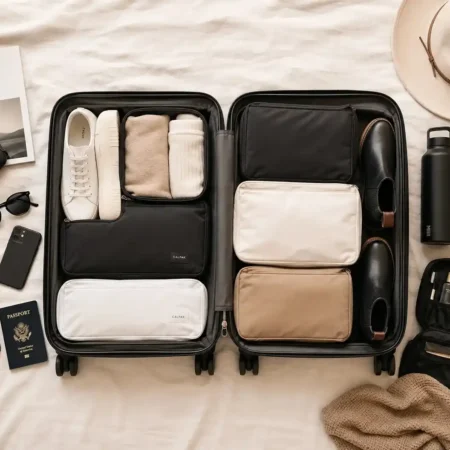
And when you’re ready to take that next step toward a longer trip, the logistics don’t have to be complicated. A solid carry-on packing guide for a 10-day trip is a good place to start — because the same mindset that makes backyard travel work, travelling light and staying present, applies wherever you end up going next.
Key Takeaways
- Backyard travel means exploring your local area with the same curiosity and openness you’d bring to a foreign destination
- A simple theme (like “find where locals actually go”) gives your trip focus without over-planning it
- Mindset matters more than mileage — treat the time like real vacation days
- Move slowly, talk to people, and document what you find — these habits turn ordinary places into genuine experiences
- Local trips are low-cost, low-stress, and often more meaningful than expensive getaways — especially when you stop comparing them to big international travel

Other Articles

Traveling with Kids: Finding Joy in the Beautiful Chaos
Your Phone, Your Passport: The Essential Apps Every 2026 Traveler Needs
No Comment! Be the first one.