
There’s a moment every parent knows. You’re standing in an airport with a stroller, two carry-ons, a snack bag that somehow exploded, and a toddler who has decided right now is the perfect time to lie flat on the floor. Traveling with Kids is not glamorous. But here’s the thing — some of my most vivid, laugh-until-you-cry memories came from those exact chaotic moments.
If you’ve been putting off family travel because it feels too hard, too expensive, or too exhausting, this post is for you. And if you’re already a road-tested family traveller looking for sharper strategies, there’s something here for you too.
Why Family Travel Is Worth the Mess
Traveling with Kids teaches them things a classroom never can. They learn to adapt. They try new foods. They see that the world is bigger than their neighbourhood. Research from the U.S. Travel Association found that children who travel show stronger academic performance and social confidence compared to those who don’t.
But beyond the data, travel builds your family’s shared story. The flat-on-the-floor airport moment? My son still laughs about it at age nine. That’s worth a lot.
And you don’t always have to go far to get started. Some of the best early family travel experiences happen close to home — a trip through your own backyard can be just as rich and memorable as an international flight, and a whole lot easier to manage with young children in tow.
Plan Less Than You Think You Should
Most first-time travelling parents over-plan. They book every hour, every meal, every museum slot. Then a nap runs long, or someone gets a stomachache, and the whole schedule falls apart.
Here’s what actually works: plan the must-haves, leave the rest open.
Pick one or two anchors per day — a beach, a landmark, a specific restaurant. Everything else stays flexible. Kids thrive when they have some structure, but they also need room to wander, get bored, and discover things at their own pace.
Pro tip for experienced travellers: Use a “yes day” somewhere in the middle of the trip. Let the kids pick one full day’s activities. You’ll be surprised how low-maintenance their choices often are — a pool, a local market, a playground.
Choosing the Right Destination
Not every destination is equal when you’re Traveling with Kids. A beautiful but remote hiking trail with no bathrooms for miles is going to test everyone’s patience.
Look for destinations that offer:
- Short distances between activities (less time in the car or on transit)
- Kid-friendly food options (not just local cuisine that adults love)
- Reliable medical access (important for younger children, especially)
- Pace flexibility — cities or resorts where you can slow down without feeling like you’re missing everything
For first-timers, beach destinations, national parks with visitor centres, and family-focused resorts tend to work well. For seasoned family travellers, don’t shy away from cities — kids in cities learn to navigate, observe, and interact in ways that quiet resort towns don’t offer.
If you’re ready to go somewhere less obvious, there’s a solid list of emerging travel destinations worth considering in 2026 — several of which are genuinely family-friendly, affordable, and far less crowded than the usual options.
Packing: The Art of Bringing Less
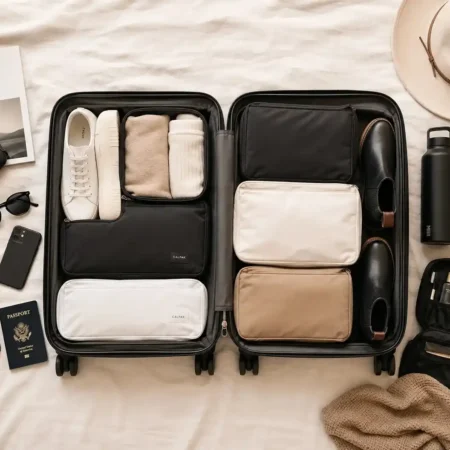
Overpacking is the number one mistake travelling parents make. A bulging suitcase slows you down, costs more in checked bag fees, and ironically means you can never find what you need.
Here’s a practical packing approach that actually works:
For each child, pack:
- 4–5 outfits (plan to do one laundry load mid-trip if needed)
- 1 comfortable pair of shoes + 1 pair of sandals
- A small backpack they carry themselves with their own snacks, a book or tablet, and one comfort item
- Any medications they take regularly, plus basic first aid (fever reducer, bandages, rehydration sachets)
What most parents forget:
- A small nightlight (new rooms can frighten young children at night)
- Printed copies of travel documents (phones die, apps crash)
- An extra outfit in your carry-on for you — not just for the kids
If you’re managing a longer trip, the same logic that works for solo travellers applies to family travel too. A detailed carry-on packing guide for a 10-day trip lays out a clothing formula and toiletry approach that translates well when you’re packing for multiple people with limited bag space.
Let older kids pack their own bags with supervision. It builds responsibility and means they’re invested in what they brought. They’re far less likely to complain about an outfit they chose themselves.
Managing Travel Days Without Losing Your Mind
Long flights, road trips, and train rides are where family travel either holds together or falls apart. A few honest lessons from experience:
On flights: Download shows and games before you leave home — not at the gate when the WiFi is slow. Bring headphones that fit your child properly. Snacks from home are better than airport food — cheaper, familiar, and you control the sugar.
On road trips: Stop every 90 minutes to two hours, even if no one asks. Kids who sit too long become miserable without warning. Use rest stops as mini-adventures — stretch, run, explore. Keep a “road trip bag” accessible from the back seat with snacks, wipes, a small toy, and a change of clothes.
Common mistake to avoid: Don’t drive or fly through nap time, thinking the travel will put them to sleep. Some kids sleep. Others scream for three hours because they’re overtired and overstimulated. Know your child.
Handling Meltdowns in Public (Honestly)
Every parent dreads the public meltdown. But here’s what most travel guides won’t tell you: meltdowns on vacation happen more, not less, because kids are tired, out of routine, and processing a lot of new stimulation.
The worst thing you can do is try to power through it. A child in meltdown mode cannot enjoy a museum. They cannot absorb a historical site. They need a break.
Step back. Find a quiet corner. Offer water and a snack. Give them ten minutes of low-stimulation recovery. In most cases, they’ll reset faster than you expect.
You are not a bad parent. You are a parent whose kid has hit their limit. It happens to everyone — on every trip, in every country.
Eating Well (Without Fighting Over Every Meal)
Food is often the biggest source of travel stress with kids. New cuisines, unfamiliar textures, and inconsistent meal timing can all trigger battles at the table.
A few things that help:
- Keep familiar snacks on hand for bridging the gap between meals
- Let kids order for themselves at restaurants — even pointing at a menu builds confidence
- Don’t force new foods, but do gently encourage one bite of something new per meal
- Eat early — tourist restaurants fill up, and hungry kids waiting 45 minutes in a queue is a setup for disaster
One practical move: Find a local grocery store on day one. Stock your accommodation with breakfast basics and snacks. You’ll save money, avoid morning rush decisions, and have backup food for picky days.
The Memory-Making That Actually Sticks
Here’s something experienced family travellers know that newer ones often discover too late: kids rarely remember the expensive attractions.
They remember swimming in the hotel pool at 8 pm because you said yes. They remember the street food vendor who let them watch the cooking. They remember the funny thing that happened when the luggage got lost.
Build in space for those unplanned moments. Don’t chase the Instagram version of family travel. Chase the version where everyone — including you — actually enjoys the day.
Conclusion
Travelling with Kids is not a polished experience. It’s loud, unpredictable, and occasionally humbling. But it’s also one of the most rewarding things a family can do together. The chaos is not the enemy of the trip — it’s often the best part of the story.
Start small if you need to. A two-night road trip teaches you more about travelling with Kids than any guide can. Build from there. With each trip, you’ll get better at reading what your family needs, and your kids will get better at being travellers.
Key Takeaways
- Plan anchor moments, not every hour — flexibility is your best travel tool with kids
- Pack less than you think you need — one laundry day beats dragging a heavy bag everywhere
- Know your child’s limits — travel days work best when you stop before the breakdown, not after
- Let go of the perfect trip — the unplanned moments are often the ones kids remember most
- Start with forgiving destinations — short distances, familiar food options, and flexible pacing make early family trips more enjoyable for everyone

Other Articles

The Greatest Trip I Ever Took Was in My Own Backyard



No Comment! Be the first one.