
It’s Friday evening. You’ve been invited to a party, and the thought alone makes your shoulders tense up. You imagine loud music, a room full of people you barely know, and the exhausting small talk you’ll have to push through. Deep down, you’d rather be curled up in comfortable silence with a handful of trusted friends. If that sounds painfully familiar, you’re not alone. For introverts, traditional parties can feel like an energy drain, not a fun night.
But what if there were a middle ground? A gathering where the laughter is gentle, the competition is friendly, and nobody ever pressures you to “come out of your shell.” That sweet spot exists, and it’s called an introvert friendly game night. As someone who used to dread hosting because I thought I had to be the loud, high‑energy entertainer, I’ve learned that the best kind of hosting comes from creating a quiet, cozy space where people can simply be themselves. This step‑by‑step guide will show you exactly how to host a no‑pressure game night for introverts—a gathering so comfortable your guests might even forget they’re “socializing.”
The Introvert’s Dream: A No-Pressure Game Night
A no-pressure game night is the opposite of a chaotic party. It’s a safe, low-stimulation space designed around comfort, choice, and connection. Nobody is forced to be the center of attention. The games exist to spark joy, not to prove who’s the smartest or loudest. The evening flows gently, with plenty of room for quiet pauses, meaningful conversation, and even the occasional moment of just watching while sipping tea.
Hosting this kind of evening isn’t about being perfect. It’s about being thoughtful. When you remove the pressure, magic happens: the shy friend who rarely speaks up suddenly giggles over a silly drawing prompt, the anxious guest stays an hour longer because they feel safe, and you—the host—end the night feeling energized instead of drained.
Ready to create that experience? Let’s walk through it, step by step.
Step 1: Curate the Guest List Thoughtfully
The most important ingredient is the people. A no-pressure game night thrives on a small, carefully chosen group. Aim for 3 to 6 guests total, including yourself. This number is large enough for variety but small enough that nobody gets lost in the noise.
Think about the quiet, low-maintenance people in your life. Maybe it’s your coworker who loves puzzles, your cousin who always carries a book, or that gentle neighbor who waved at you for months before you finally talked. Invite people who already respect each other’s space and won’t dominate the conversation. Avoid mixing wildly different energy levels if you can—one high-extrovert friend may unintentionally turn the volume up, and that’s perfectly fine for another kind of event, just not this one.
When you send out the invite, set the tone right away. A simple message like this works wonders:
“Hey! I’m hosting a super low-key game night on Saturday. Think cozy vibes, chill games, and zero pressure to be ‘on.’ Come in comfy clothes. Snacks provided. We’ll probably wrap up around 9 p.m. Hope you can make it, but no worries if not!”
This instantly signals that the night will be gentle, not a high-energy performance.
Step 2: Set the Mood Before Anyone Arrives
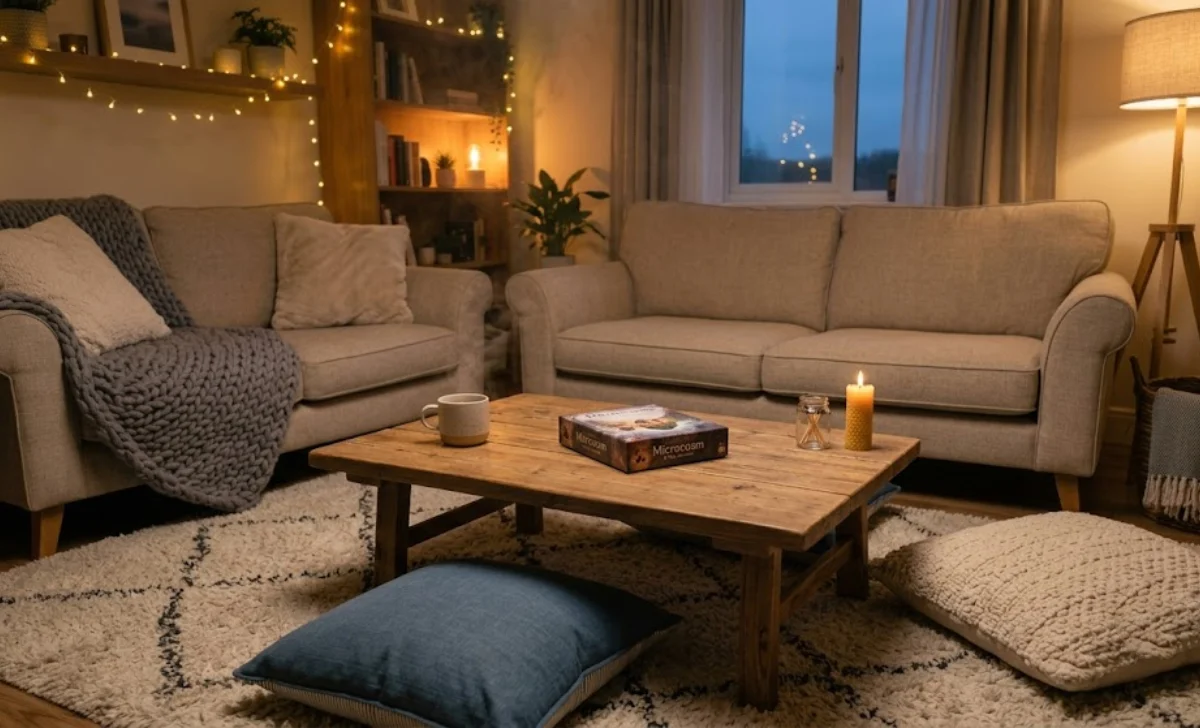
An introvert-friendly atmosphere starts with the senses. You want your space to feel like a warm, quiet hug. Here’s how to set the scene:
- Lighting: Turn off harsh overhead lights. Use floor lamps, string lights, or a few candles (battery-operated ones work beautifully and safely). A soft, dim glow instantly calms the nervous system.
- Sound: Silence can feel intimidating at first, but loud music is overwhelming. Create a low-key background playlist—think instrumental acoustic, soft jazz, or ambient lo-fi beats. Keep the volume low enough that people can hear each other without raising their voices.
- Seating: Arrange seating in a gentle circle or around a large coffee table. Add plush cushions, blankets, and maybe a couple of floor poufs for that “living room fort” feel. Make sure no seat feels isolated, but also leave enough space so people don’t feel cramped.
- Scent: Subtle scents like vanilla, lavender, or fresh-baked cookies create comfort. Avoid strong air fresheners that can overwhelm sensitive guests.
The moment your first guest walks in, they should feel their shoulders drop. That’s the goal.
Step 3: Choose Games That Celebrate Quiet Fun
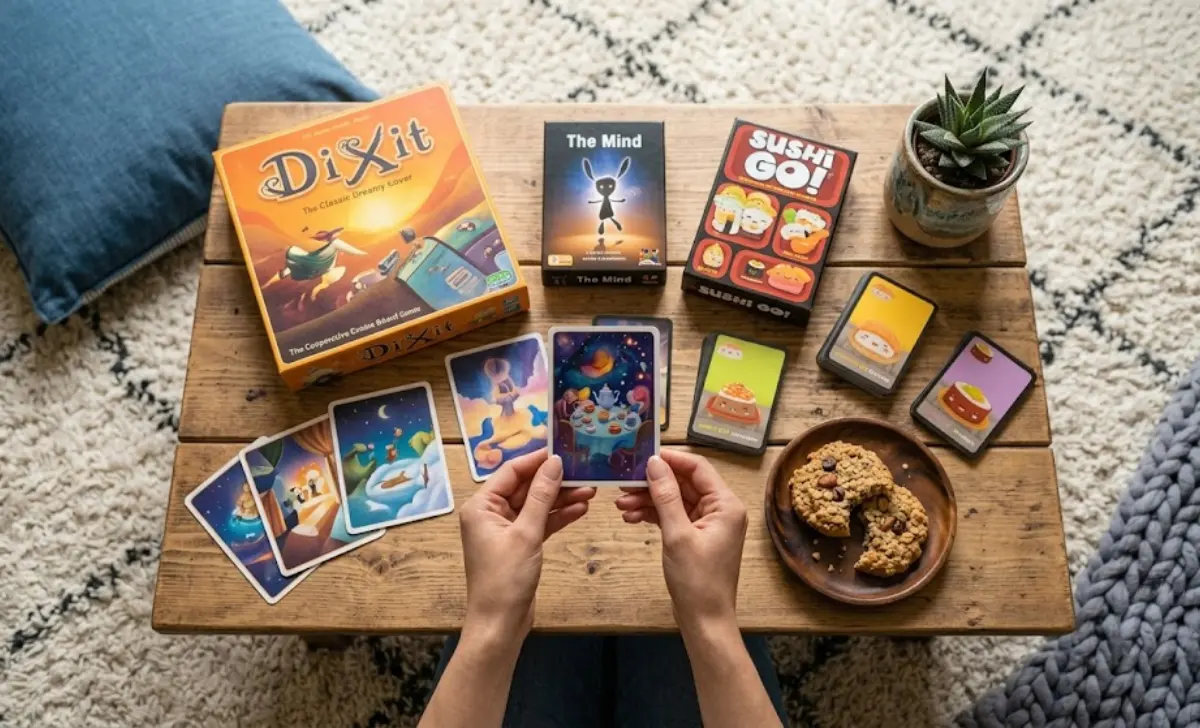
Mainstream party games often rely on quick thinking, loud outbursts, or embarrassing dares—exactly what many introverts dread. Instead, pick games that emphasize creativity, cooperation, storytelling, or gentle strategy. The key is to avoid games with aggressive competition, shouting over one another, or singling anyone out.
Here are some perfect game-night picks for a quiet crowd:
- Cooperative Games:
- Forbidden Island or Forbidden Desert – Work together to escape a sinking island, no player left behind.
- The Mind – A silent card game where players must guess the right order. It requires focus and connection without a single word.
- Word & Creativity Games:
- Just One – A cooperative word-guessing game where everyone helps. You never feel put on the spot.
- Dixit – Beautiful, dreamlike illustrations inspire quiet storytelling. There’s no wrong answer, only imagination.
- So Clover! – A creative word-association game that feels like solving a gentle puzzle together.
- Light Strategy & Card Games:
- Sushi Go! – A fast and cute card-drafting game with adorable sushi art. It’s simple, low-stakes, and satisfying.
- Codenames: Duet – A two-player cooperative twist on a classic, but you can play in teams with quiet discussion.
- Patchwork – A calm two-player game about building a quilt. Perfect for smaller gatherings.
- Low-Key Party Games with Adjustable Settings:
- Jackbox Party Packs – Many games have a “family-friendly” setting and allow silent voting. Turn off the timer, and the pressure melts away.
- Keep Talking, and Nobody Explodes – A cooperative bomb-defusal game that relies on clear communication, not speed.
Offer two or three options at the start and let the group vote. Better yet, start with a game that requires zero explanation and let the group settle in.
Step 4: Lay Down Gentle, No-Stress Ground Rules
Rules sound formal, but when framed with kindness, they create relief. Instead of a strict announcement, weave these gentle guidelines into your hosting. You might say something like, “Just so everyone knows, you can sit out any round, grab a snack, or just spectate. No pressure at all.”
Subtle ground rules to maintain the vibe:
- Participation is always optional. If someone wants to watch a round instead of play, that’s perfectly fine. Introverts often enjoy observing before jumping in.
- No forced spotlight moments. If a game involves sharing something silly, let players show their answer silently or pass without explanation.
- Quiet spaces are okay. Designate a “chill corner” with a comfy chair, a few books, and a low-light lamp. Let guests know they can wander over anytime to recharge.
- Phones aren’t the enemy. Some introverts scroll to self-regulate. A quick “no judgment” approach keeps everyone relaxed.
- The host models the vibe. Be the first to take a deep breath, laugh softly, and show that mistakes are just funny moments, not failures.
One of my favorite memories is from a game night where a friend sat out an entire round of Dixit just to knit quietly at the table. Nobody batted an eye. She later told me that was the moment she felt truly welcome.
Step 5: Offer Simple, Comforting Snacks and Drinks
Food at a high-pressure party often becomes another thing to perform. You don’t need a gourmet spread. What you want is food that feels like a warm blanket on a rainy day. Keep it easy, familiar, and self-serve so nobody has to ask or wait awkwardly.
If you’re worried about overdoing it, try the 1-3-5 rule for overwhelmed people: one main snack, three small sides, and five drink options—but honestly, even half that is plenty. Ideas for a low-fuss snack table:
- A bowl of buttery popcorn mixed with a little chocolate drizzle
- A simple charcuterie board with cheese cubes, crackers, and grapes
- Freshly baked chocolate chip cookies or soft brownies
- Veggie sticks with a creamy dip
- A warm beverage station with tea bags, hot cocoa mix, and a thermal carafe of hot water
Avoid sticky, messy finger foods that require constant cleanup. Drinks can be self-serve from a pitcher of infused water or a few bottles of flavored sparkling water. The goal is that guests can nibble comfortably between turns without missing a beat.
Placing snacks near the game area but slightly to the side creates a natural “pause station.” Introverts appreciate having a reason to step away for a moment without calling attention to themselves.
Step 6: Plan a Graceful Ending (Because Even the Best Nights Need One)
An often-overlooked part of an introvert-friendly gathering is a clear, guilt-free exit plan. Many introverts get anxious when they don’t know when the night will end. You can remove that weight easily.
Set a soft end time in the invitation. For a weeknight, 8:30 or 9 p.m. works beautifully. On a weekend, maybe 10 p.m. When the clock nears that time, gently start winding things down. You might say, “This has been so lovely. I’m going to start packing up in about fifteen minutes, but please don’t feel rushed. Stay as long as you’d like.”
This small cue gives everyone permission to leave without awkwardness. You’ll notice that some guests will naturally start gathering their things, while others might linger for a few more minutes of quiet conversation. Both are okay.
After everyone leaves, take a moment to notice how you feel. Chances are, your home feels like it held a sigh of relief. You didn’t exhaust yourself forcing a party—you cultivated a sanctuary. That feeling is the real reward.
You’re Not Just Hosting—You’re Creating a Safe Harbor
Hosting a no-pressure game night for introverts isn’t about being the perfect host. It’s about honoring the quiet, steady ways people connect. You’re giving your friends (and yourself) a rare gift: an evening where their natural rhythm is not just accepted, but celebrated.
So light those soft lamps, set out the warm cookies, and pick a game that makes people smile instead of sweat. The deep, genuine laughter that follows won’t be loud—but it will linger long after everyone has gone home. And it’s often the micro habits—the tiny, thoughtful choices around lighting, snacks, and gentle pacing—that turn a simple evening into a sanctuary.
This weekend, try just one step from this guide. Maybe it’s sending a gentle invitation, or picking up a cooperative game you’ve never played. Notice how it feels to gather without the roar. Your inner introvert will thank you.






No Comment! Be the first one.