
The streaming algorithm echo chamber has you trapped — and most viewers don’t even realise it’s happening.
You’re Not Bored. You’re Boxed In.
Open Netflix right now.
Scroll for thirty seconds.
I’ll wait.
Same twelve shows, right? You’ve seen most of them. Skipped the rest. And somehow they’re still right there, front row, centre stage, autoplay-ready.
This isn’t a coincidence. This is architecture.
Streaming platforms are not libraries. They are engagement machines. And the recommendation engine isn’t trying to find you something brilliant — it’s trying to keep your thumb from tapping the home button.
Those are two wildly different goals. And you’ve been paying for the wrong one.
What’s happening: Your streaming algorithm has locked you inside a taste echo chamber. It shows you what it thinks you want — based on what you’ve already watched — instead of what you’d actually love.
What changed: The global password-sharing crackdown destroyed your best tool for breaking out. Does that borrowed account have different viewing habits? Gone.
What you can do: There are legal workarounds. There are algorithm hacks. And there is an entire world of extraordinary hidden content waiting for you. This article tells you how to get to all of it.
Why the Algorithm Is Making You a Worse Viewer
Here’s something the platforms will never say out loud.
The recommendation engine runs on completion data. If you finish something, that genre gets weighted higher in your profile. If you bail after eight minutes, it gets buried.
Sounds fair, right?
Except here’s the trap: you’re most likely to finish things that feel familiar. Safe. Comfortable. Genre-adjacent to what you already love. So the algorithm keeps feeding you those. You keep finishing them. The loop tightens.
You didn’t become a person who only watches procedural crime dramas. You were gradually pushed into being one.
This is called a filter bubble. And in streaming culture, it’s gotten quietly catastrophic.
The Password Sharing Ban Quietly Made This Worse
Nobody talked about this angle. But it matters.
Before Netflix, Disney+, and the others cracked down on shared accounts, people were accidentally getting smarter about what they watched.
Your older sister’s account had a thing for slow French films. Your roommate was obsessed with Korean thrillers. Your cousin’s dad had somehow discovered every great 1970s Italian western in existence.
You didn’t even know you were being enriched. You’d just borrow the account, get bored with your usual stuff, and stumble into something completely unexpected.
That cross-contamination of taste? That was genuinely valuable. And now it costs extra.
The result: we’re each sealed inside our own algorithmic silo. Watching the same genres. Building the same blind spots. Missing everything that falls outside our data profile.
It’s not dramatic to say the password crackdown made streaming culture worse. It just did.
How to Share a Streaming Account — Legally — Right Now
The rules changed. The doors didn’t all close.
Netflix lets you add an “Extra Member” slot at a reduced monthly rate. That person gets their own profile, their own login, their own algorithm. This is actually the smartest move: two people, two wildly different taste profiles, two recommendation engines running in parallel. Pay for it for one month. Inherit the algorithm fallout forever.
Disney+ has a profile transfer option. If someone’s losing access to your plan, their entire viewing history — watchlist, ratings, everything — can migrate to a new account. Their taste data doesn’t disappear. You keep the breadcrumbs.
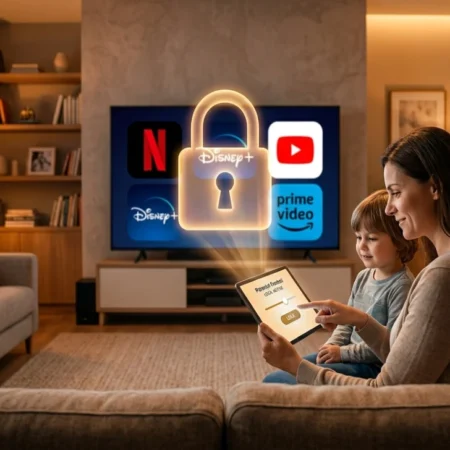
Apple TV+ is still the most flexible of the major platforms. Family Sharing through Apple One covers up to six people. If you live in the Apple ecosystem, this is the cleanest legal multi-person setup available right now. Worth noting: if you’re setting up shared profiles for a household that includes children, it’s worth reviewing parental controls across the major streaming platforms before handing over a profile — the defaults vary quite a bit between services.
Max (the platform formerly known as HBO Max) continues to have the softest household verification policy of the big streamers. Profile sharing within a plan remains generous.
The sneaky play: Pay for an Extra Member slot for one month. Give it to someone with completely different tastes. Let them watch freely. Cancel after thirty days. Their viewing history has already rewritten a chunk of your recommendations.
Totally legal. Surprisingly effective.
Let’s get specific. These work.
Search by award, not genre. Instead of typing “thriller,” search “Cannes Palme d’Or” or “BAFTA Best Film Not in the English Language.” You will immediately surface titles that the algorithm has never once suggested. The results will feel alien. That’s the point.
Go by country of origin. Every major platform lets you filter content by country. Pick somewhere you have never watched content from. Argentina. Poland. Senegal. South Korea (if you somehow haven’t been there yet). Just commit. You will find something that surprises you within two searches.
Use the random year trick. Pick any year between 1960 and 2005. Search it directly. Watch whatever slightly interests you. Vintage content is algorithmically invisible because it drives zero marketing spend. That invisibility is exactly why it’s worth finding.
Follow critics, not curators. Letterboxd. MUBI’s editorial picks. RogerEbert.com. These are maintained by actual humans with genuine opinions. They will recommend films that the algorithm will never surface because those films don’t drive mass engagement. That’s the entire point of recommendation by taste.
Finish something outside your comfort zone. Completion is the data point that matters most. Watch one film or episode from a genre you’d normally skip. Watch it all the way through. Rate it. You’ve just forced the algorithm to update your profile with a new anchor. Give it a week. Watch what happens to your recommendations.
The shuffle gamble. Netflix’s shuffle feature is imperfect and slightly chaotic. Use it anyway. Commit to watching whatever it serves for fifteen minutes minimum. It occasionally surfaces buried catalogue content that nobody — human or algorithm — has pointed you toward in years.
The Hidden Content That Platforms Don’t Want You to Find
Here’s the uncomfortable reality of modern streaming.
Every major platform is loaded with what industry people call catalogue content: older, critically acclaimed, foreign-language, or indie titles that are fully licensed, fully watchable, and completely buried under the algorithmic surface.
They’re not buried because they’re bad. They’re buried because they drive zero marketing spend. There’s no campaign. No trending moment. No algorithm weight. They just sit there, quietly extraordinary, while the same twenty shows rotate through your homepage.
Think: devastating Argentine psychological thrillers. Brilliant Scandinavian crime series from a decade ago that TV critics still talk about. Japanese coming-of-age films that will rearrange your emotional furniture. Italian comedies from the 1980s that are funnier than almost anything that’s come out this decade.
And here’s the thing — once you do find these titles, the experience of actually watching them matters. A lot of older catalogue films were mixed for theatrical surround sound, which means they genuinely benefit from a proper audio setup at home. If you’ve never looked into what spatial audio actually does during a film, that’s worth understanding before you sit down with something made to be heard properly.
All of it is accessible. None of it is visible unless you dig.
That gap between “accessible” and “visible” is your treasure map.
What Fans Are Saying (And Doing) About This
The frustration is everywhere — and people are building workarounds together.
Reddit threads about algorithm fatigue routinely hit tens of thousands of upvotes. The discourse isn’t “I’m bored.” It’s “I feel managed.” There’s a meaningful difference. People sense they’re being steered, even if they can’t articulate exactly how.
On Letterboxd — the social film-logging app that has quietly become one of the most important spaces in film culture — the fastest-growing lists aren’t “best action movies” or “top thrillers.” They’re called things like “films Netflix will never recommend to you” and “the algorithm will hide these forever.” Some of those lists have hundreds of thousands of followers.
Discord servers built specifically around escaping algorithmic recommendations are genuinely thriving. Members post weekly hidden-gem finds. They compare notes on obscure catalogue titles. They do the curation work that the platforms won’t.
The culture is shifting. People don’t want to be passively fed content anymore. The thrill of finding something — of stumbling across a film you’d never have been served — has become its own form of cultural currency.
What You’ve Actually Been Missing
Let’s be direct about the scale of this.
The major streaming platforms collectively hold thousands of films and series that have never appeared in a single recommendation for most subscribers. Extraordinary work. Award-winning work. Work that critics describe in career-highlight terms.
You have almost certainly never seen most of it. Not because you wouldn’t love it. Because the algorithm decided your data profile pointed elsewhere.
Breaking the echo chamber isn’t just a viewing habit hack. It’s reclaiming authorship over your own cultural life.
The platforms give you a catalogue. The algorithm gives you a narrow corridor through it. You’ve been walking the corridor. The catalogue is enormous.
Final Verdict
Yes. Tonight. Right now, if you can.
Pick one tactic from this article. Just one. The country filter. A random year search. An Extra Member slot for someone with completely different tastes.
You will find something unexpected within thirty minutes. Something the algorithm would have taken three more years to surface — if it ever did.
The hidden content is real. The legal workarounds are functional. And the payoff for a little deliberate friction is access to an entirely different tier of what streaming has to offer.
Stop letting a machine curate your cultural life.
Worth doing? Absolutely. No question.
FAQs
Is it actually still legal to share my streaming password with someone outside my household?
On most platforms, direct password sharing outside your household now violates terms of service. But paid “Extra Member” slots are explicitly designed for this — they’re legal, relatively affordable, and give the added person their own full profile and algorithm. That’s the play.
Why does Netflix keep recommending things I’ve already watched or rejected?
The algorithm optimises for completion probability, not novelty. It shows you familiar things because your history says you finish them. The only way to change that is to deliberately introduce new data — finish something outside your usual territory and rate it.
What’s the single fastest way to find something hidden on a streaming platform?
Filter by country of origin. Pick a country you’ve never watched content from. The algorithm has almost no data to steer you here, so you actually get to browse freely. Results within two minutes, guaranteed.
Are there free tools that give better recommendations than the platforms themselves?
Yes. Letterboxd (free), MUBI’s editorial picks (free browsing), and JustWatch (free, aggregates everything) are all maintained by humans with genuine taste. None of them is driven by engagement optimisation the way platform algorithms are. They are genuinely better at finding you great things.
Will actually watching one different show change my recommendations, or is that a myth?
It’s real — especially if you complete the content and rate it. Completion signals a strong preference. One finished outlier doesn’t transform your algorithm overnight, but it introduces a new variable the system has to account for. Do it consistently over two or three weeks, and your homepage will look noticeably different. One practical note: if picture quality seems off while you’re exploring older or less mainstream titles, this guide on fixing blurry 4K streaming is worth a quick read — the issue is often the platform, not the content.

Other Articles

The Real Reason Your 4K Streaming Looks Blurry (It’s Not Your TV)


No Comment! Be the first one.