When Xi Jinping privately told Donald Trump that Vladimir Putin may one day regret launching his full-scale invasion of Ukraine, it was not the kind of remark that gets made lightly in the halls of the Great Hall of the People. China and Russia declared a “no limits” strategic partnership just days before Russia sent troops into Ukraine in February 2022 — making Xi’s candid assessment to Trump a notable departure from four years of careful diplomatic silence.
The comment, first reported by the Financial Times on May 20, 2026, citing people familiar with the US assessment of Trump’s state visit to Beijing, surfaced during wide-ranging bilateral talks that covered Ukraine, Taiwan, the Middle East, and a controversial proposal involving the International Criminal Court. It was the first time Xi had reportedly offered a personal judgment about Putin’s decision to go to war.
In this article, you will learn exactly what was said during the Trump-Xi summit, why Xi’s tone represents a meaningful change, how Trump responded publicly, what China’s dual role in the war really looks like, and what all of this means for the prospects of a negotiated peace in Ukraine.
What Xi Actually Said to Trump in Beijing
During their meeting in Beijing, Xi told Trump that Putin could one day “regret” launching the full-scale invasion of Ukraine. The comment was made during broader talks on global issues, including Russia’s war against Ukraine, according to the Financial Times, which cited sources familiar with the US assessment of last week’s visit.
The two leaders met on May 14, 2026, during Trump’s state visit to China — his first trip to Beijing since 2017. The two sides also discussed the Middle East conflict, the crisis in Ukraine, and the Korean Peninsula, according to the Chinese readout, which did not offer further detail.
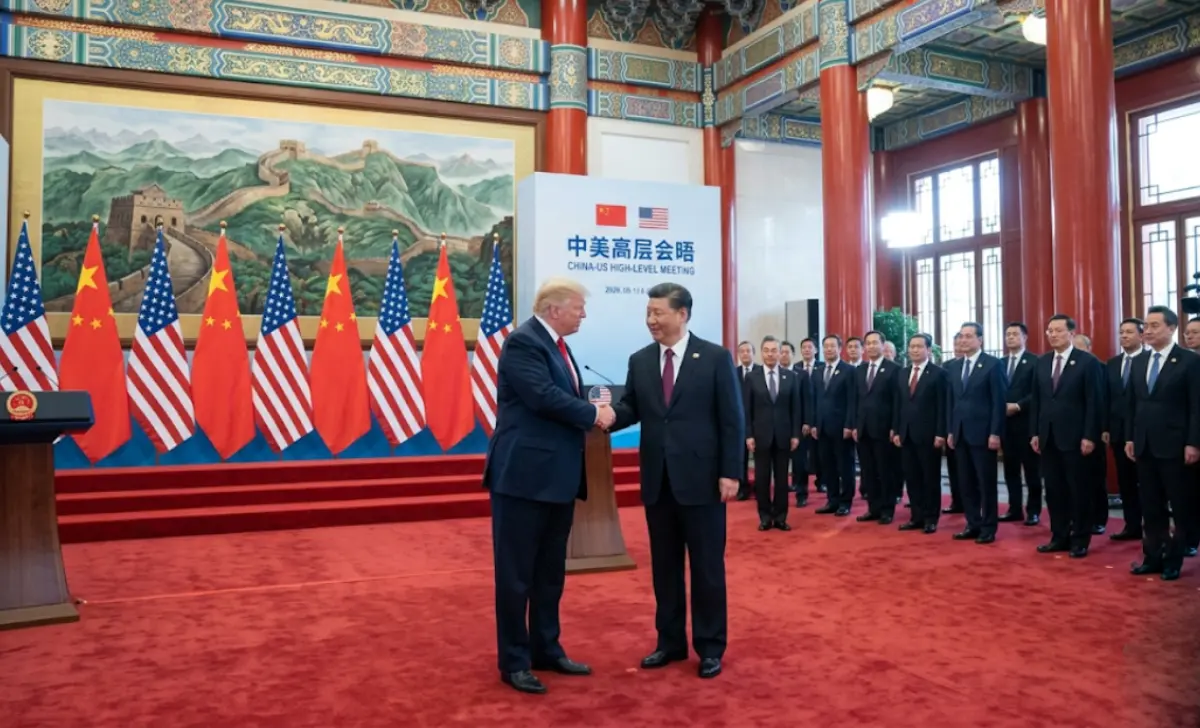
Sources told the newspaper that Xi’s remarks about Putin were noticeably harsher than in previous meetings. One source noted that during Xi’s earlier meetings with former US President Joe Biden, Xi had never made similar comments about Putin or Russia’s 2022 invasion.
This is not a small distinction. For years, Xi’s standard approach to Ukraine in conversations with Western leaders was to call for dialogue without ever placing any moral weight on Russia’s decision to invade. A privately expressed view that Putin may come to regret the war signals that Beijing’s internal calculations are changing — even if its public posture has not.
Why This Signal Marks a Shift in China’s Position
China’s public stance on Ukraine has remained carefully neutral since February 2022. Beijing has consistently refused to condemn the invasion, denounced Western sanctions against Moscow, and positioned itself as a potential future mediator. Behind closed doors, however, the picture appears more complex.
While talks on Ukraine between Xi and former President Biden had been described as “frank and direct,” Xi had stopped short of offering personal assessments of Putin or the war in those earlier discussions.
The change of language matters strategically. If Xi genuinely believes Putin has made a costly miscalculation, it affects how China positions itself as the war drags deeper into its fourth year. A Russia that is economically exhausted and diplomatically isolated becomes a weaker partner — and Beijing has always valued capable, not dependent, allies.
The global energy market has been among the most affected arenas since the war began. Countries across Europe and Asia scrambled to replace Russian energy supplies, accelerating investment in renewables and domestic energy alternatives. In many regions, decisions like deploying solar panels on agricultural land have moved from fringe policy to mainstream infrastructure planning — a direct downstream consequence of the energy security anxieties the Ukraine war created.
[SUGGESTED IMAGE: Map of China-Russia trade flows since 2022 — alt text: “China Russia bilateral trade growth 2022 to 2026”]
Trump’s Denial and the White House Response
Despite the Financial Times report, Trump publicly rejected the account. Xi “never said that,” Trump told reporters at the White House on May 19, 2026.
The White House had previously issued only a summary of Trump’s Beijing visit and declined to comment on the specific details of the conversations, including Xi’s reported remarks and the separate ICC discussion. The denial from Trump creates an unusual situation: a senior US official disputing a report about a private diplomatic exchange that his own administration has not officially addressed in any detail.
This kind of discrepancy between what sources describe privately and what leaders confirm publicly is not unusual in high-stakes diplomacy. Whether Xi used exactly those words or expressed the sentiment in a different form, the broader reporting points to a tone from China toward Russia that differs from what Western counterparts have heard before.
China’s Dual Game: Supporting Russia While Warning Against It
Whatever Xi said privately to Trump, China’s material relationship with Russia has not changed in ways that suggest a serious strategic distancing.
Chinese-made components have become the most common foreign electronics found in Russian Shahed-type attack drones, with their share reportedly rising to 65%. According to the analytical division of the Research Institute of Defence Intelligence of Ukraine, Chinese companies often do not develop original products but instead manufacture exact copies of European microchips, allowing Russia to replace components without changing the drone’s engineering.
Beyond components, Reuters reported that uniformed Chinese military instructors have been training Russian soldiers at an operational and tactical level, with one unnamed intelligence official stating that “China is far more directly involved in the war on the European continent than previously known.” A dual-language Russian-Chinese military training agreement was reportedly signed by senior officers in Beijing on July 2, 2025.
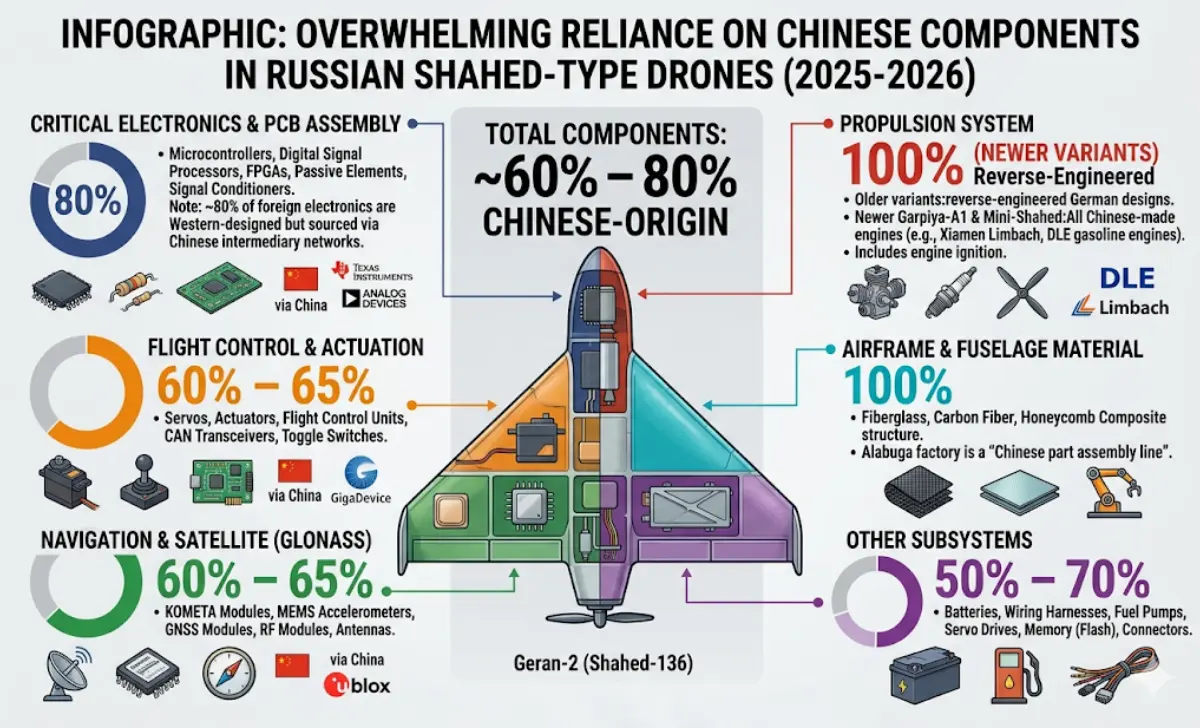
This dual position — diplomatically cautious with the West while materially supporting Russia’s war capacity — defines the core tension in how outside powers should interpret any private signal from Beijing about Putin’s war.
The economic ripple effects of the conflict extend far beyond European borders. Businesses operating internationally have had to adapt to currency volatility, sanctions compliance, and the fragmentation of payment infrastructure. For smaller operators and cross-border merchants, this shift has made tools like a multi-currency payment gateway increasingly relevant as traditional financial corridors become unreliable or politically complicated.
Putin Arrives in Beijing Days After Trump — What That Tells Us
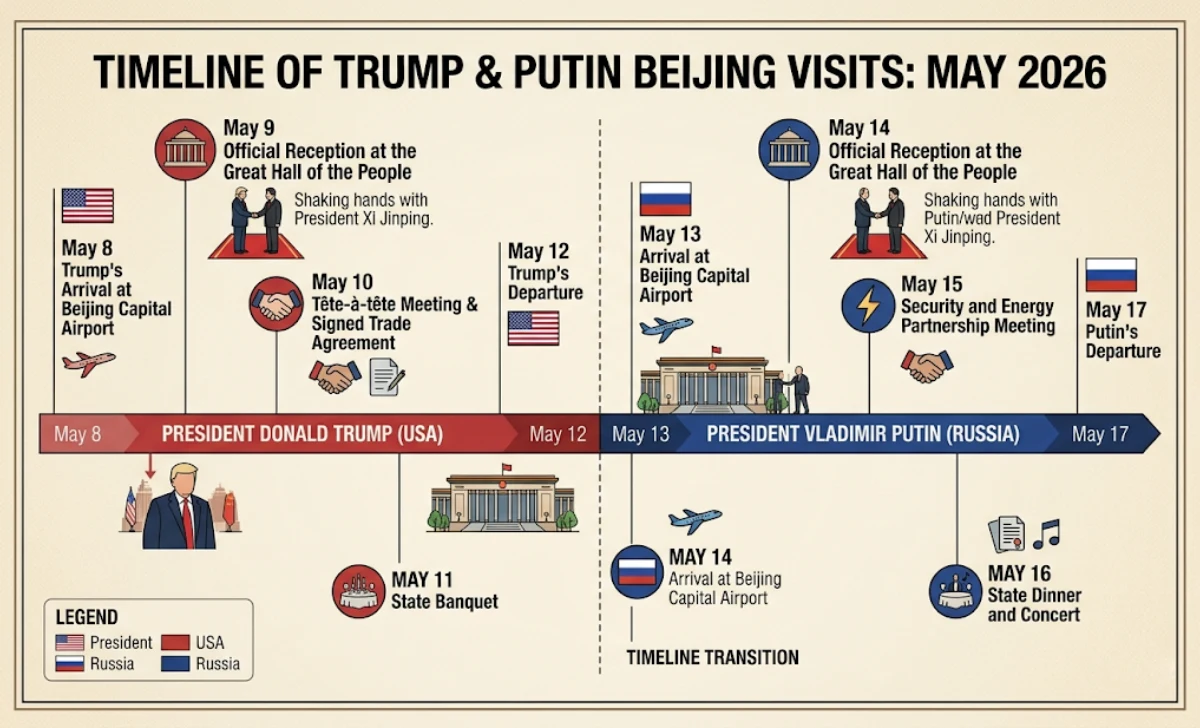
The geopolitical optics of the week of May 14, 2026, are striking. Trump visited Beijing for a state visit with Xi. Less than a week later, Putin arrived for his own two-day summit.
Putin arrived in Beijing on May 19 for a summit scheduled for May 19–20, visiting an ally that had barely had time to clear the ceremonial trappings laid out for Trump just days earlier. The summit marked the second time the Chinese and Russian leaders had met in the past year, as Beijing sought to manage ties with Washington and Moscow while positioning itself as a pivotal power in global diplomacy.
Russia’s invasion of Ukraine in 2022 left Moscow effectively isolated and heavily reliant on Beijing for trade under Western sanctions. “We have very serious expectations for this visit,” Kremlin spokesman Dmitry Peskov told reporters, describing the agenda as advancing the two countries’ “privileged and strategic partnership.”
The sequencing — Trump first, Putin second — is not accidental. Beijing is managing both relationships simultaneously, projecting influence to Washington and reassuring Moscow. That Xi reportedly told Trump that Putin may regret the war, and then hosted Putin days later, is a reflection of the tightrope China is now walking.
The ICC Proposal: America’s Most Controversial Ask
Separate from the Ukraine discussion, the Financial Times report surfaced another significant detail from the Beijing talks.
During the discussions, Trump reportedly suggested that the United States, China, and Russia should cooperate against the International Criminal Court, arguing that their interests were aligned on the matter. While the White House declined to comment on the ICC discussion, the Trump administration has previously criticised the court, accusing it of political bias, overreach, and infringing on US sovereignty. Some US officials have described the ICC as a tool of “lawfare” against American interests.
The ICC issued an arrest warrant for Putin in March 2023 for alleged war crimes related to the deportation of Ukrainian children. Any US proposal to align with Russia and China against the ICC on that basis would represent a sharp turn in American human rights policy — and hand Putin a significant diplomatic shield.
Neither Washington nor Beijing confirmed this element of the talks.
What China’s Shift Means for Ukraine Peace Talks
China has publicly stated support for a negotiated settlement in Ukraine. China stated that it “has always believed that dialogue and negotiations are the only possible way to resolve the Ukrainian crisis” and that it “supports all efforts aimed at achieving peace,” with the Foreign Ministry describing its position as “consistent and clear.”
The gap between that public position and what Xi apparently told Trump privately suggests Beijing may be more willing to apply quiet pressure on Moscow than its official messaging implies. Whether that translates into concrete action — reducing dual-use goods exports, restricting energy financing, or supporting a ceasefire framework — remains to be seen.
Since a fragile trade truce between the US and China in October 2025, bilateral tensions have cooled just enough to stabilise markets. However, the US heads into future summits facing deep vulnerabilities in supply chains tied to rare earth elements and permanent magnets — inputs overwhelmingly dominated by China. That leverage gives Beijing considerable room to make demands in exchange for meaningful cooperation on Ukraine.
Economic Consequences Reshaping Global Alliances
The Ukraine war has now been running for over four years. Its economic consequences extend into areas that may seem distant from the battlefield but are directly connected to the decisions made in capitals like Beijing, Washington, and Moscow.
The prolonged conflict has strained public finances across many Western democracies. Governments have committed hundreds of billions to defence spending increases, while simultaneously managing ageing populations and social security pressures. For many citizens trying to plan their own financial futures amid this turbulence, questions like whether to claim social security early take on fresh urgency as inflation, market volatility, and shifting fiscal priorities make long-term planning harder to rely on.
At the macro level, the war has accelerated several structural changes in the global economy: the fragmentation of the SWIFT-based financial system, the acceleration of yuan-based trade settlement between China and Russia, and the acceleration of energy transition investment across countries seeking to reduce strategic dependence on hydrocarbon exporters.
Expert Perspectives on the Beijing Diplomacy
[EXPERT PERSPECTIVE: Analysts at the Council on Foreign Relations noted ahead of the May 2026 summit that Xi entered the talks from a position of confidence, having successfully countered Trump’s unprecedented tariff escalation in 2025 using China’s rare earth leverage. CFR Senior Fellow for Asia Studies observed that “time and momentum” have been central to Xi’s strategic thinking, and that Beijing’s control over critical mineral processing becomes “more — not less — central as global demand surges.” This backdrop makes any private concession on Ukraine, such as acknowledging Putin’s possible regret, more significant: it costs Xi very little diplomatically but signals to Washington that Beijing can be a constructive partner when it suits China’s long-term interests.]
Key data point: The rapid expenditure of advanced weapons systems in the Middle East and Ukraine compounds deep US vulnerabilities in supply chains tied to rare earth elements and permanent magnets — replenishing missile systems, precision-guided munitions, interceptors, and advanced electronics now depends on even greater access to materials processed or produced almost entirely within China’s ecosystem.
This gives Xi leverage in any conversation about Ukraine that goes far beyond words.
Final Thoughts
What happened in Beijing during the week of May 14, 2026, is a window into a world where geopolitical alignments are becoming harder to read in simple terms. China is simultaneously arming Russia’s war machine, hosting Trump for state-level summitry, and — according to reliable reporting — privately telling the US president that Putin may one day regret starting this war.
The most important takeaway is this: when the leader of Russia’s most important economic partner says privately that the invasion may have been a mistake, the calculus in Moscow cannot remain unchanged indefinitely.
Do you think Xi’s private assessment of Putin’s war will eventually translate into concrete Chinese pressure to end the conflict — or is this diplomatic ambiguity by design? Share your view below.



No Comment! Be the first one.